

The whole side of the mountain dropped and within minutes it started raining rocks and stones. It was like the end of the world. People were shouting and screaming and running for their lives… When I came back to my senses, I imagined my husband fleeing with our children to safety and that we would reunite after a few days. My sad news came after two days.
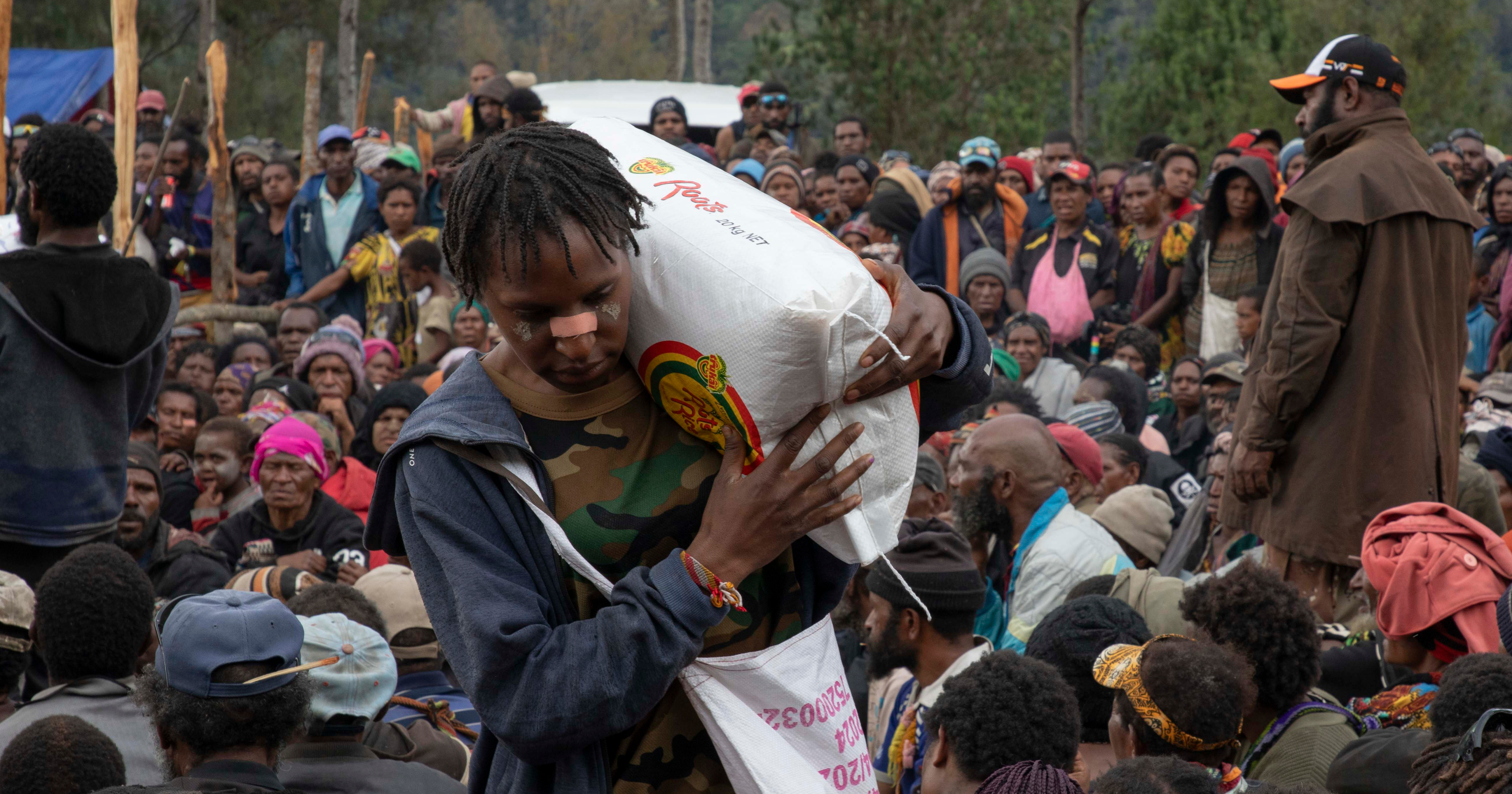
Edlyn’s story highlights the devastating loss and trauma communities are facing following a massive landslide that took place in Enga Province, Papua New Guinea, in the early hours of 24 May. The affected communities in Mulitaka, where the landslide occurred, have been living amidst heightened tribal conflict across the region for years. Internally displaced people fleeing the violence were already sheltering in Yambali ahead of this emergency. Options to recover and rebuild a normal life for many communities had been limited by their displacement, even before the landslide.
CARE has a longstanding presence in the region through its peace-building work, which aims to address ongoing tribal conflict. Working alongside the government and other aid agencies, we have helped to meet the most immediate needs of affected people through the establishment of child-friendly spaces; psychosocial support programs; water, sanitation and hygiene services; and the distribution of essential items. Our team are experienced professionals, but they are exhausted and what they have seen has left them shaken.
Despite efforts thus far, assistance from the international community is still falling short of fully meeting the needs of affected communities. Vulnerable populations such as women, children, the elderly, and people with disabilities are paying the price. We recently conducted a Rapid Gender Analysis which showed that there are systemic challenges to equitable and accessible aid distribution. For example, polygamy is a widespread practice in Enga, and men predominantly collect aid from distribution sites. As a result, some wives and children might be registered as aid recipients while others are not.
People with whom we spoke said that if not all wives are registered, this substantially increases the risk of violence to those who are. Such violence is driven by feelings of trauma and desperation, where wives and mothers who miss the opportunity to access aid feel helpless in providing for their children.
To address this issue, our team distributes aid based on family units rather than individuals, as this approach takes into consideration the realities of the Highlands. This ensures that all wives and children have access to aid. CARE is advocating for other organisations to adopt this approach as well. Concerns about access to aid do not end there: colleagues observed instances of violence against women during the distribution of aid. Despite raising the alarm with authorities, we were met with the sadly all-too-common response, “that’s a family problem”. We continue to urge for PNG Defence Force personnel who are trained as Gender Focal Points to be deployed to the disaster area to ensure women receive assistance without the threat of violence.
In the aftermath of this devastating landslide, survivors are deeply traumatised. The registration and distribution effort is complicated but relief agencies must give priority to reaching the most affected. This means going into communities and actively seeking survivors and hearing their stories. Provincial and district coordination mechanisms must include women representatives at different levels in needs assessments, planning, reviews and decision-making processes. A database needs to be established to understand which relief agencies and government authorities are doing what, where, when, and why.
We have also observed ongoing tensions between displaced and host populations competing for scarce aid. The registration of affected communities has a role to play here as well, by identifying (where possible) directly and indirectly affected people. This transparency would ensure clarity on who receives aid and what kind of aid they receive, which would help manage community expectations and reduce the potential for conflict. Looking ahead, CARE aims to re-engage in previous partnerships with women’s rights organisations in the Highlands to support ongoing recovery efforts. The goal is to support them with institutional and technical capacity building, while facilitating their support for the implementation of activities that counter and protect women from gender-based violence.
There is a significant need for concurrent conflict prevention and peace-building efforts to ensure response and recovery is not blind to these tensions. Despite the need, we have observed a lack of investment in this area both by government and international organisations. As a result, it is expected that ongoing tensions will continue to impede response and recovery efforts. This also has the potential to increase the already-high protection risks to women and girls. Women must be protected from violence both within families and from neighbouring communities.
The situation in the landslide-affected area, both for survivors and for host and surrounding communities, is complex. Prevailing gender norms and practices are exacerbated by existing tribal enmities. Women, children, the elderly, and people who live with disabilities are at increased risk of violence, abuse or harassment. Until there is a safe area to which survivors can be relocated, they will be unable to begin the long and difficult process of recovery.


An excellent article thankfully brought back to the surface by Mecky Jann. Justine has flagged frequently hidden but important “family” issues by no means limited to Mulitaka haus mahn/haus lain in Enga province. The same issues arise paying out plantation wages in Western Highlands Province or mining royalties in Western Province. A ripple effect of the same gender, status and authority issues occurs everywhere every day.
What I see is a clash of culture and norms. The Western notion of family may bear little resemblance to the norms of folks in other places. Traditionally men and women in PNG represented distinct sub-cultures (men’s and women’s business) with separate roles and authority in community the group. They still do. Within gender roles some areas of authority remain exclusively under the leadership of women.
Women always were and still are the traditional care givers, early childhood educators, food producers and the societal glue that works under the radar to defuse disputes and maintain social harmony. By contrast men are orators, keepers of tribal lore, political negotiators and when necessary, the fighters. It follows that on this basis political leadership, policy development and administration for the ministries of health, education, food security and social development should at all levels be led by women.
But the foreign system of representation bequeathed at independence to oversee the distribution and management of nation building assets gifted what is essentially an exclusive boys club to oversee this: the national parliament with carriage of policy and service delivery to provincial, local level and ward level. Where in all of this is the women’s equivalent structure to cater for their needs, their children, their gender roles? Attributing equivalence to men and women within a western parliamentary model has simply not worked and given customary law it never will.
When I read articles of the type presented eloquently by Justine, I am compelled to reflect on how inappropriate cultural norms imposed no doubt with the best of intentions, through culturally oversight removed the authority of women in the new normal. And we see the price paid for this every day.
I’m one of the landslip survivors. I want to know more about Care International.