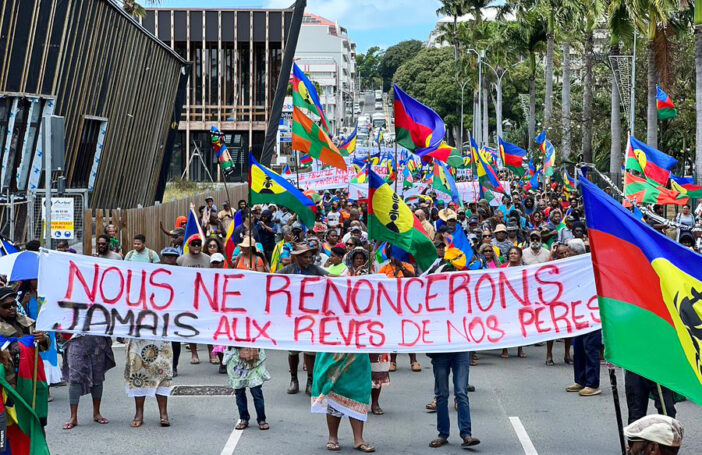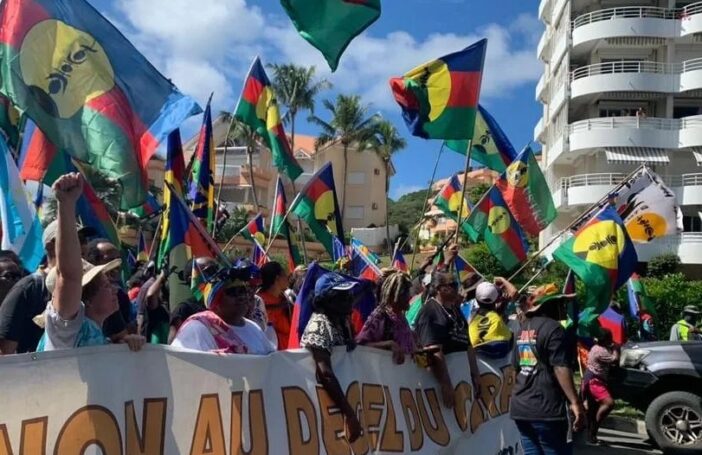
New Caledonians will go to the polls in coming weeks, to elect three provincial assemblies and the national Congress. The elections in France’s Pacific dependency follow the collapse of the Bougival process, the French government’s attempt to forge a new statute to replace the 1998 Noumea Accord.
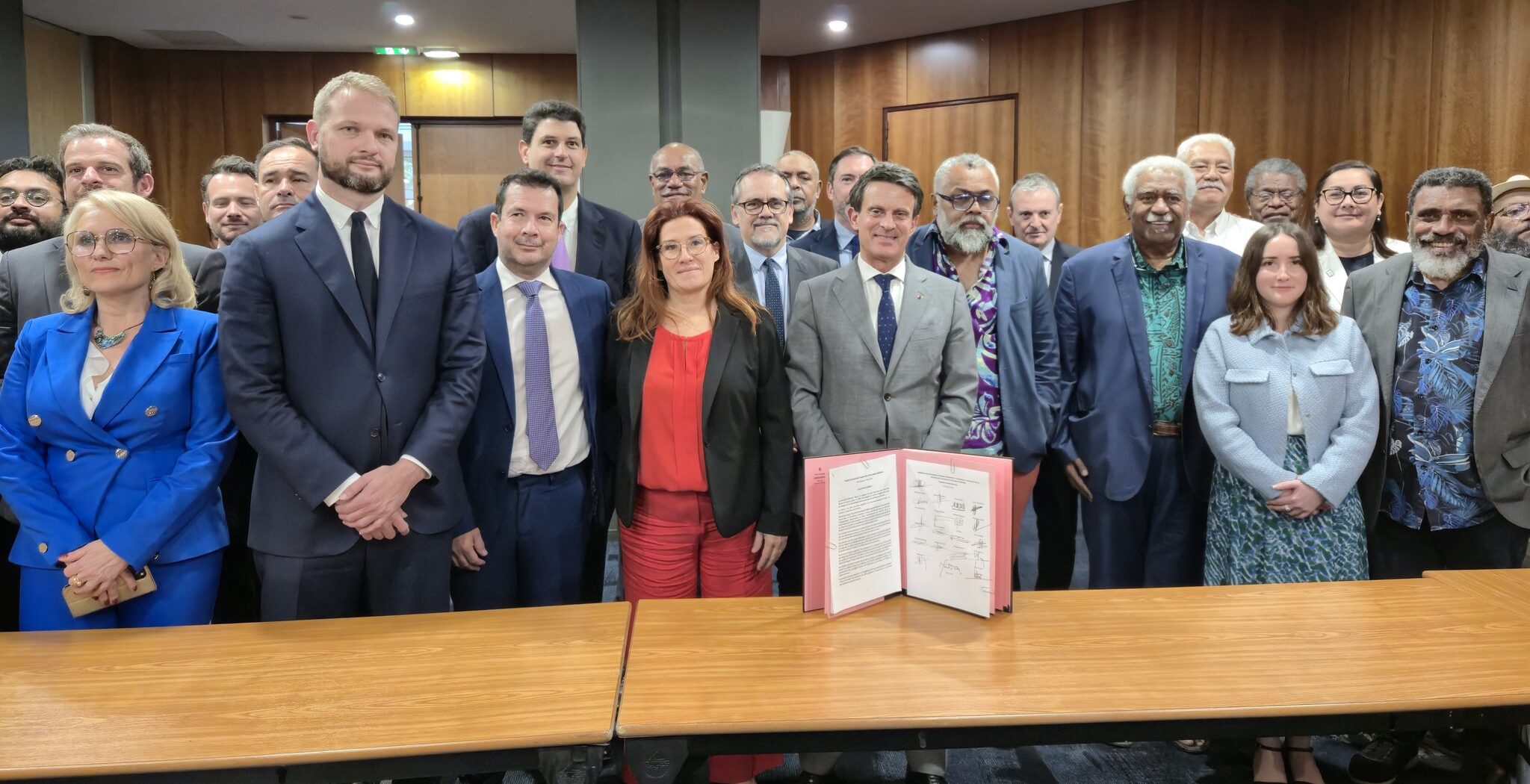
In early 2025, after years of delay, France’s then Minister for Overseas Territories Manuel Valls brought all major New Caledonian parties around the table. The talks aimed to negotiate a new agreement to replace the Noumea Accord, the framework agreement that has governed the islands for more than a quarter of a century. However, initial talks in May 2025 at the Hotel Deva in New Caledonia foundered when Loyalist leaders rejected Valls’s proposal for the transfer of sovereign powers to New Caledonia, followed by a period of “interdependence”.
Last July, Valls reconvened New Caledonian leaders at Bougival on the outskirts of Paris, for another meeting, which developed a new text dubbed “the Bougival Accord“. This text foreshadowed the creation of a State of New Caledonia within the French Republic and the transformation of New Caledonian citizenship into New Caledonian nationality.
The Bougival draft also raised the future possibility of transferring control of foreign policy from the French State to the Government of New Caledonia (although according to the draft text, New Caledonia would be required to conduct its diplomatic actions “in accordance with the international commitments and the interests of France”). Beyond this, Paris would initially retain control of other sovereign powers relating to defence, currency, policing and courts. The agreement included proposals on economic, political and administrative reforms in Noumea, increased seats for the Southern Province in New Caledonia’s Congress and commitments from France on finance and support for the nickel industry — a crucial sector for the economy.
However, despite mendacious headlines in France about a breakthrough deal, the document signed in Bougival was not a final, legally binding accord, but simply an agreement to promote the proposal to supporters at home. The draft text then became mired in controversy — formally opposed by the main independence coalition FLNKS, defended by the conservative Loyalist/Rassemblement bloc, and questioned by other New Caledonian parties, who wanted to amend the draft text even though it had been officially gazetted by the French government on 6 September 2025.
As the Bougival process stalled, French President Emmanuel Macron called for new dialogue in Paris in January 2026. The meeting of five parliamentary groups — boycotted by the FLNKS — adopted a supplementary text known as the Elysée-Oudinot Accord.
Many legal experts questioned the constitutional legality of Bougival’s concept of a State within the French Republic. Others flagged the difficult path that would be required to replace the Noumea Accord, which is entrenched within France’s Constitution (this involves passage of legislation through the French Senate and National Assembly, adoption at a joint sitting of both houses, then acceptance in a “consultation” of New Caledonia voters).
Despite repeated warnings that his government lacked the numbers in parliament, Prime Minister Sébastien Lecornu forged ahead, introducing the constitutional reform that would replace the Noumea Accord with the Bougival/Elysée-Oudinot agreements.
After adoption by the French Senate in February 2026, the constitutional legislation was scheduled to be debated in the National Assembly in April. However, the bill was rejected by the legislature’s legal commission, with opposition across the spectrum, from Left parties to the extreme-Right Rassemblement National. Then on 2 April, Emmanuel Tjibaou, a pro-independence New Caledonian deputy in the National Assembly, moved a resolution that the bill be rejected without debate. His resolution passed 190-107 and, in an interview, Tjibaou told the author: “Today, Bougival is dead.”
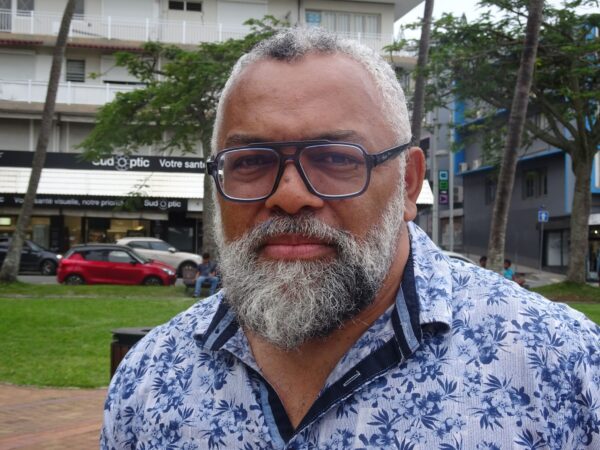
New Caledonian deputy Emmanuel Tjibaou (Nic Maclellan)
With the Bougival process in limbo, elections for New Caledonia’s three provincial assemblies must now be held before 28 June 2026. Originally scheduled for May 2024, the provincial polls have been postponed three times to allow for inter-party dialogue, but French courts have ruled that the elections should not be delayed again.
Now, the vexed question is, “who can vote?” There’s no agreement on what changes — if any — should be made on voting rights, and Prime Minister Lecornu has decided to proceed without consensus.
Established under the 1998 Noumea Accord and confirmed by courts since 2007, a complex system of three electoral rolls complicates life for New Caledonians. There is the general roll, to vote for the French presidency, National Assembly, EU Parliament and municipal councils; a roll used for three self-determination referendums in 2018-2021; and the special provincial electoral roll that lists New Caledonian citizens eligible to vote for the provincial assemblies — in the North, South and Loyalty Islands — and national Congress.
This last, restricted electoral roll excludes an estimated 37,492 French nationals who are registered on the general electoral roll but cannot vote for the local political institutions, a substantial group in a country of 268,000 people. For years, anti-independence parties have lobbied to expand voting rights, by setting a new cut-off date to re-define New Caledonian citizenship. A change to “unfreeze” the provincial rolls could open the way for more French nationals — many opposed to independence — to participate: 5,562 potential voters who have resided in the territory for more than 15 years and 13,790 who have resided for 10 years.
Amongst the thousands of French residents who don’t meet the residency criteria, there are an estimated 10,575 locally born New Caledonians who couldn’t or wouldn’t register on the special electoral roll, comprising 4,145 people under customary law (that is, indigenous Kanak) and 6,430 voters under common law. The anti-independence Loyalists have opposed a compromise proposal that would allow only these locally born New Caledonians to be added to the rolls.
The main independence coalition FLNKS wrote to Lecornu on 12 April, calling for the elections to proceed using the current “frozen” electoral rolls. The Loyalist bloc has recognised that no comprehensive political agreement can be concluded before the next provincial elections, but has called for “the broadest possible opening of the electorate, which is essential to upholding democratic principles in New Caledonia”. A research study by University of New Caledonia scholar Anthony Tutugoro finds that while many New Caledonians are open to different options for electoral reform, the Loyalists’ proposed extension of voting rights to all French nationals received the lowest approval rating at 25% and the highest rejection rating at 63%.
However, since 2022, prime ministers appointed by Macron have lacked a governing majority in the French National Assembly. Macron’s own standing in public opinion polls has collapsed and — echoes of the One Nation party in Australia — the Rassemblement National has mobilised significant support amongst voters. Amidst this discord in Paris, many New Caledonians fear the islands’ current economic and political impasse will continue until the next French presidential elections in May 2027, as France grapples with an increasingly uncertain domestic and geopolitical context.