


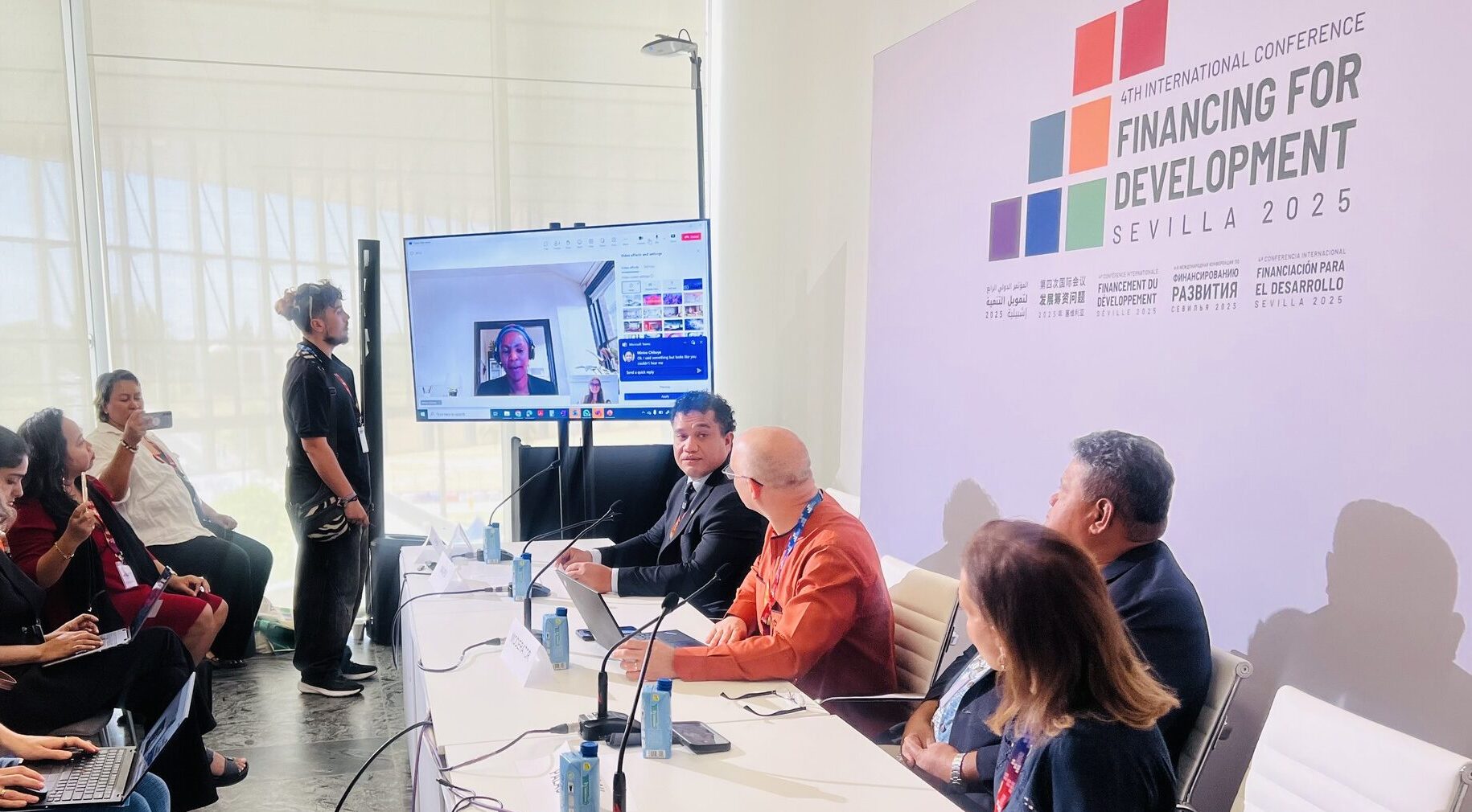
This is the first article in the four-part series Beyond aid: new directions in development finance on key debates at the Fourth International Conference on Financing for Development (FfD4), which was held in Seville, Spain, in June 2025.
In sweltering 40-degree Celsius heat, an estimated 15,000 people — government ministers, UN delegates, bureaucrats, bankers, business leaders, activists and academics, including representatives of the Australian government and the new international development minister Anne Aly — descended on Seville for FfD4. Hosted by the Spanish government and opened in the presence of Spain’s King Felipe VI, the event promised to shape the future of international development finance. On paper, it looked impressive: nearly 60 heads of state and top multilateral institutions and more than 470 side events running alongside the official sessions.
FfD4 unfolded at a moment of intense turbulence in the world of international development. In addition to shrinking aid budgets, estimates suggest that around 60 countries are suffering debt crises. Inflationary shocks, geopolitical rivalries and the economic aftershocks of war have left governments with few options. At the same time, the escalating impacts of climate change and biodiversity loss are forcing a reckoning with the sheer inadequacy of existing finance.
Despite — or perhaps because of that — inside the main hall the mood felt a bit flat. Reuters pointed out that only 50 leaders had shown up, well short of the 70 expected, and there was disquiet around the United States not being in the room. Government representatives dutifully adopted the Compromiso de Sevilla – a 38-page roadmap aimed at closing the US$4 trillion annual financing gap for the Sustainable Development Goals (SDGs), with gestures toward debt reform and reform of the international financial system. Yet the atmosphere was dampened by half-empty rows, sweltering heat and the sense that the document had been stitched up long before delegates arrived. Even the launch of the Seville Plan of Action — a sprawling package of more than 130 initiatives on tax reform, blended finance, debt swaps and financial architecture reform — felt a little like technocratic box-ticking rather than real political momentum.
By contrast, the side events buzzed with energy. Across packed rooms and in makeshift corridor spaces, civil society leaders, academics and policy innovators debated the issues governments seemed reluctant to touch. Campaigners from South Asia, the Pacific, Africa and Latin America pushed on debt justice, calling for global debt swaps and a permanent borrowers’ forum. Feminist groups highlighted how financing reforms must account for care economies and women’s economic agency. Tax justice advocates dissected loopholes and called for global rules to prevent capital flight. Climate activists, meanwhile, linked the urgent need for adaptation and loss-and-damage finance to the lived realities of communities facing floods, fires and extreme heat.
This is where the dynamism lay: not in scripted speeches but in messy coalitions arguing, re-imagining and testing what “financing for development” could mean in a world where ODA is shrinking and climate disasters are escalating.
Ten years after FfD3 in Addis Ababa produced a global framework for financing the SDGs, FfD4 showed how far the landscape has shifted. The official sessions confirmed how little governments are willing to risk politically, while the side events revealed where the intellectual and moral energy for change now resides. As one speaker bluntly put it, “The consensus around aid and development cooperation is dying — the world must coalesce around something new.” What that “something new” entails is likely to be highly contested.
The most interesting debates revolved around three themes, which will be expanded upon in the following articles in this series.
First, reforming the architecture for addressing sovereign debt, against which aid flows pale in comparison. Debt conversations dominated the vibe in Seville. With around 54 countries in debt distress, many spending more on servicing debt than on health or education, the urgency of systemic reform was discussed at length. Civil society and global south leaders pushed for debt swaps, borrower clubs and frameworks that could shift power away from rating agencies and creditors. The call was not for temporary relief but for structural change: reimagining fiscal space, plugging illicit financial flows and confronting the inequalities baked into the global financial system.
Second, moving beyond the failed “billions to trillions” narrative that promised private sector finance would be a panacea to meet financing challenges. The conference reinforced how fragile the “billions to trillions” narrative has become. A decade after Addis Ababa, the hope that private finance would step in to close the SDG gap was dismissed as unrealistic, even dangerous. Blended finance, critics argued, has socialised risk while privatising reward, delivering little for the least developed countries. There was a compelling energy around tax justice and redistribution: global wealth taxes and stronger domestic revenue mobilisation, framed as essential to restoring democratic legitimacy and funding universal social protection.
Third, grappling with climate finance as Europe overheats and Asia floods. Participants heard how climate finance to Small Island Developing States fell by 65% between 2022 and 2023, even as their public debt tripled over the last decade to nearly US$800 billion. Civil society framed this as an “owed obligation” rooted in climate justice: loss and damage finance, they argued, must be public, unconditional and non-debt creating. Country voices sharpened the point — Pakistan called reparations an opportunity for economic transformation rather than short-term aid, while the Philippines reminded the room that the structural adjustment era continues to shape its fiscal policies and debt load.
For South Asia, Southeast Asia and the Pacific, Seville underscored both marginalisation and potential. Despite the region’s staggering US$4 trillion SDG financing gap, it was underrepresented in the official sessions. There also seemed to be fewer organisations from the region represented in side-event discussions and the business platform. Yet the side-event discussions highlighted potentially important conversations for the region, from regional energy connectivity to gender-responsive “investing in care” initiatives to green finance platforms that could shift private capital into climate-resilient infrastructure.
The official declarations may soon be forgotten, but the energy in Seville’s side rooms has already seeded new coalitions and ideas. For the Asia-Pacific, the challenge now is to step more visibly into these coalitions, shaping the ideas and alliances that will define the next chapter of development finance.


