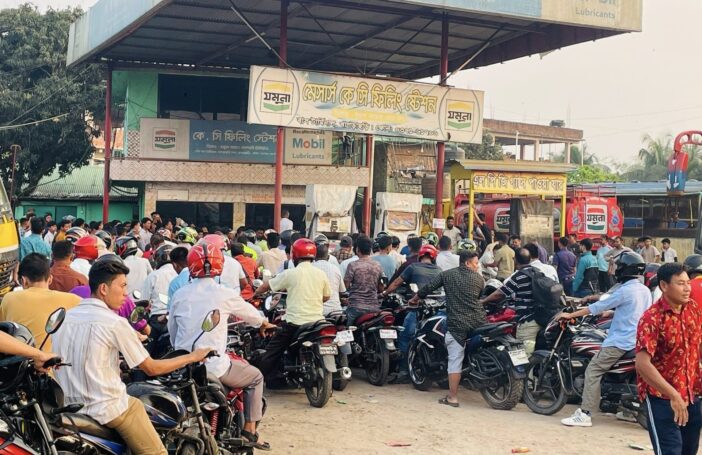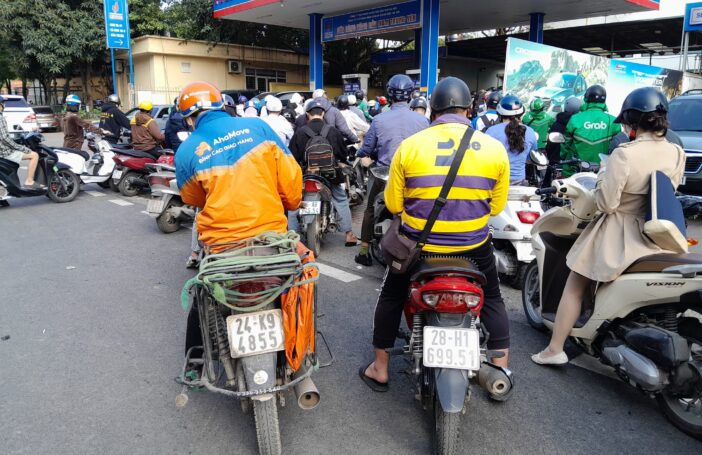
The surge in global oil prices following the US-Iran conflict has exposed the extent of Pacific economies’ vulnerability to fuel supply shocks. At its peak, prices climbed to over US$118 per barrel, placing immediate pressure on the region. In Fiji and Solomon Islands, reserves fell to as little as 20 days remaining, while in Papua New Guinea rising fuel costs sharply increased transport and service prices. The result was inflation and heightened risks for vital sectors such as tourism.
These events highlight a structural reality: Pacific countries must accelerate their transition to renewable energy. Although most Pacific governments have adopted renewable energy targets, dependence on imported fuel has largely persisted. Without scaling up investment and implementation, vulnerability to global shocks will continue.
Oil accounts for roughly 80% of total energy supply across the Pacific, with most of it being imported. In some island systems, imported diesel supplies more than 90% of electricity generation. This dependence is economically burdensome, with fuel spending accounting for between 5% and 15% of the GDP in individual economies. Limited storage capacity compounds the problem, leaving many countries with only short buffers against supply chain disruptions.
Despite this vulnerability, regional progress to move away from fossil fuels has been uneven. There are notable success stories. Tokelau, once fully dependent on diesel, now generates around 75% of its electricity from solar on three atolls and has reduced diesel imports by 80%. In Niue, solar generation and battery storage now supply 38% of the country’s electricity, with plans to increase this to 80%. These cases show that renewable energy can substantially reduce reliance on diesel when national generation, storage and grid infrastructure are planned and developed together.
However, across the Pacific collective progress has been slower and less consistent, with renewables still accounting for only 17% of total energy supply. This is despite many countries setting ambitious targets, including achieving 100% renewable electricity within the next decade.
For most Pacific countries, the primary constraint lies in the high upfront cost of renewable infrastructure and the technical requirements needed to integrate it into existing diesel-based systems. Renewable energy deployment requires more than generation capacity alone; solar and wind must be supported by battery storage, stable grids and ongoing technical expertise. These systems are costly to implement at scale, with solar installations often exceeding US$1,000 per kilowatt and storage significantly increasing total project costs.
While external development funding has grown, it is often delivered through multiple small, stand-alone projects. Australia’s A$75 million (US$53.8 million) REnew Pacific initiative, for example, focuses largely on off-grid and community-scale installations, improving local access but leaving national grids reliant on diesel. The Asian Development Bank’s Pacific Renewable Energy Investment Facility is spread across more than 11 countries and multiple co-financiers, which can make it more difficult to support coordinated, large-scale upgrades.
A more effective response requires stronger regional coordination and system-level approaches that link generation, storage and grid infrastructure into a single functioning network, rather than a collection of discrete projects. This need is already recognised in the Framework for Resilient Development in the Pacific, which promotes coordinated investment, shared procurement and capacity building through mechanisms such as the Pacific Resilience Partnership. The Pacific Regional Energy and Transport Ministers’ Meeting has similarly emphasised regional collaboration, financing and coordinated planning as central to accelerating energy transitions.
Yet these measures have not translated into coordinated investment at the national level. Instead, development financing remains dispersed across numerous donor-funded projects, typically delivered as individual initiatives. Under this model, investments are implemented at a scale too limited to significantly displace diesel generation. Consistent with this, a 2024 report found that most donor-funded renewable energy projects had little measurable impact on system-wide energy transition outcomes in the Pacific region.
The contrast is evident in cases where investment has been coordinated. In the Cook Islands, grid-scale solar deployment on Rarotonga has been paired with battery storage to manage supply, stabilise the grid and reduce reliance on diesel, allowing renewable generation to be used as a primary source of supply rather than simply supplementing diesel generation.
The fragmented delivery of sustainability projects also raises costs. When implemented under this approach, equipment is often procured in lower volumes, limiting opportunities for bulk purchasing and driving up expenses. Greater coordination, particularly through pooled procurement, would allow countries to combine demand for solar panels, batteries and grid equipment, enabling purchases at scale. Pooling demand in this way can reduce equipment costs and improve supply reliability.
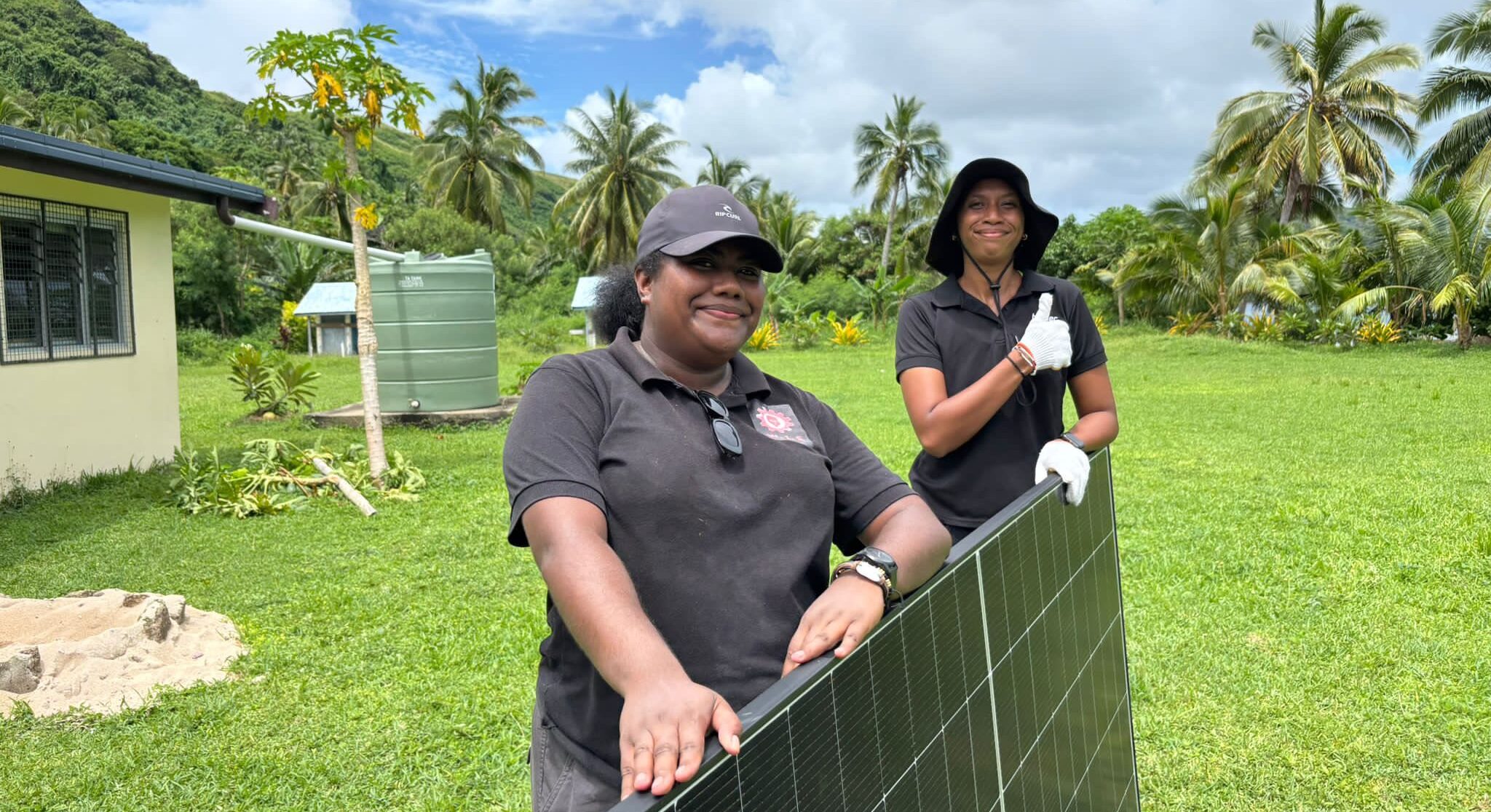
At the same time, moving towards a more sustainable energy system will require greater investment in local technical expertise. Building domestic skills in installation, maintenance and system management will help ensure these systems operate reliably over the long term, strengthening energy resilience across Pacific countries. Programs such as the Pacific Centre for Renewable Energy and Energy Efficiency in Tonga are already supporting this effort by training local engineers and technicians for the renewable energy sector.
Energy planning must also reflect the geographic constraints of the Pacific. Limited land area restricts the scale of renewable infrastructure and reduces the viability of large grid-based systems. As a result, decentralised solutions are critical for accelerating the transition to sustainable energy. Solar mini-grids offer a practical pathway for outer islands where extending national grids is not feasible. This approach is already being implemented in Tonga, where renewable energy deployment in outer islands focuses on solar-powered mini-grids supported by battery storage. By targeting areas beyond the main grid, the project avoids the need for costly and time-consuming grid expansion, allowing renewable systems to be installed more quickly.
Reliance on imported fuel remains a structural vulnerability across the Pacific and continues to expose economies to global shocks. Recent price spikes have demonstrated how quickly these disruptions can affect the region. While renewable energy targets are already in place, progress will depend on shifting from project-based delivery to coordinated investment at scale, supported by local technical capacity and decentralised solutions suited to Pacific geography. Together, these measures can accelerate the transition to renewable energy while reducing costs and strengthening long-term energy security.