

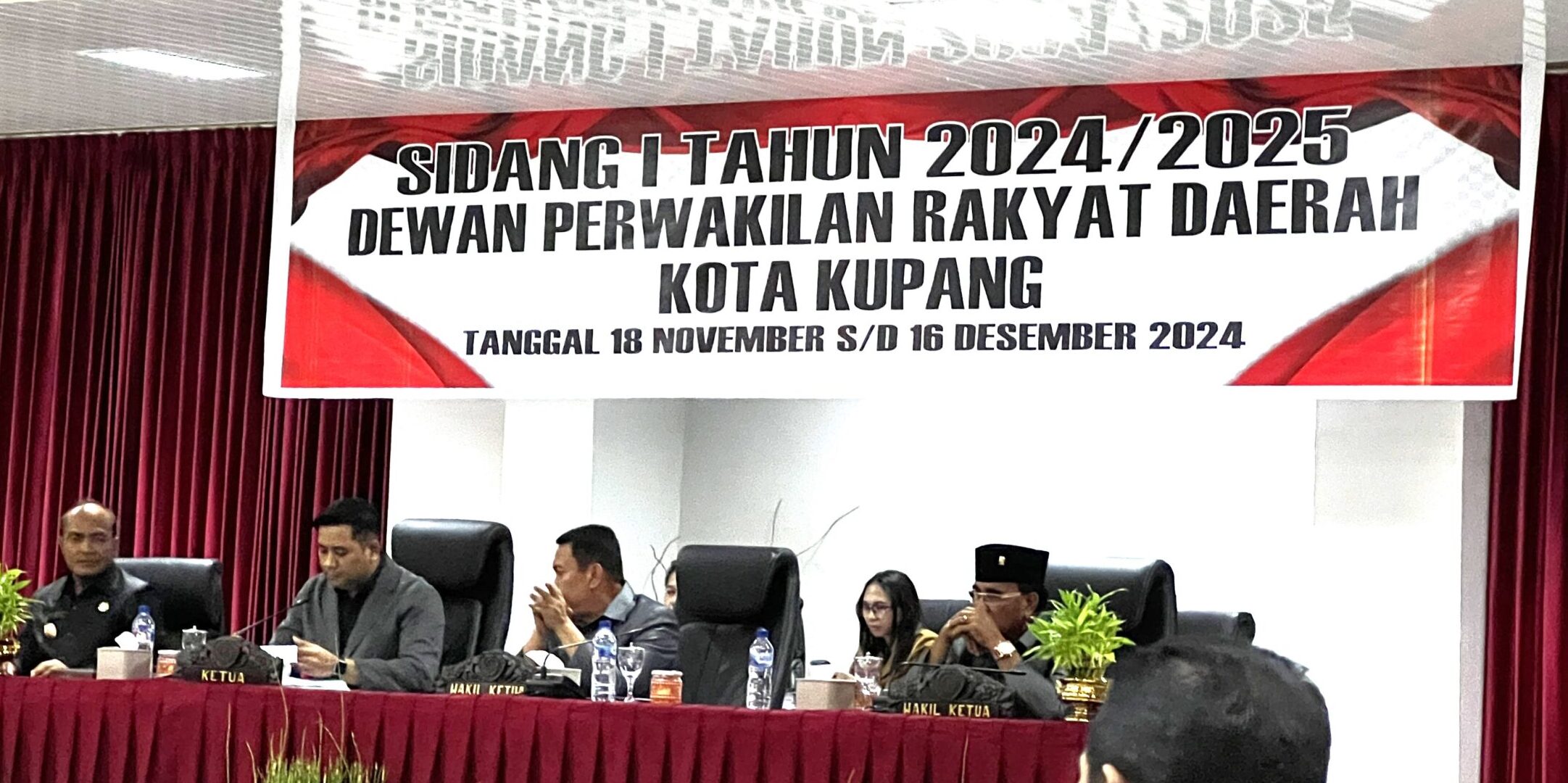
In Indonesia, some careers go beyond simply earning a living and serve as a means of establishing one’s reputation. Attaining a position as a public official, whether as a civil servant or a member of a Dewan Perwakilan Rakyat Daerah (DPRD or local parliament), is often regarded as the peak of achievement. It is more than just a job; it represents high social status.
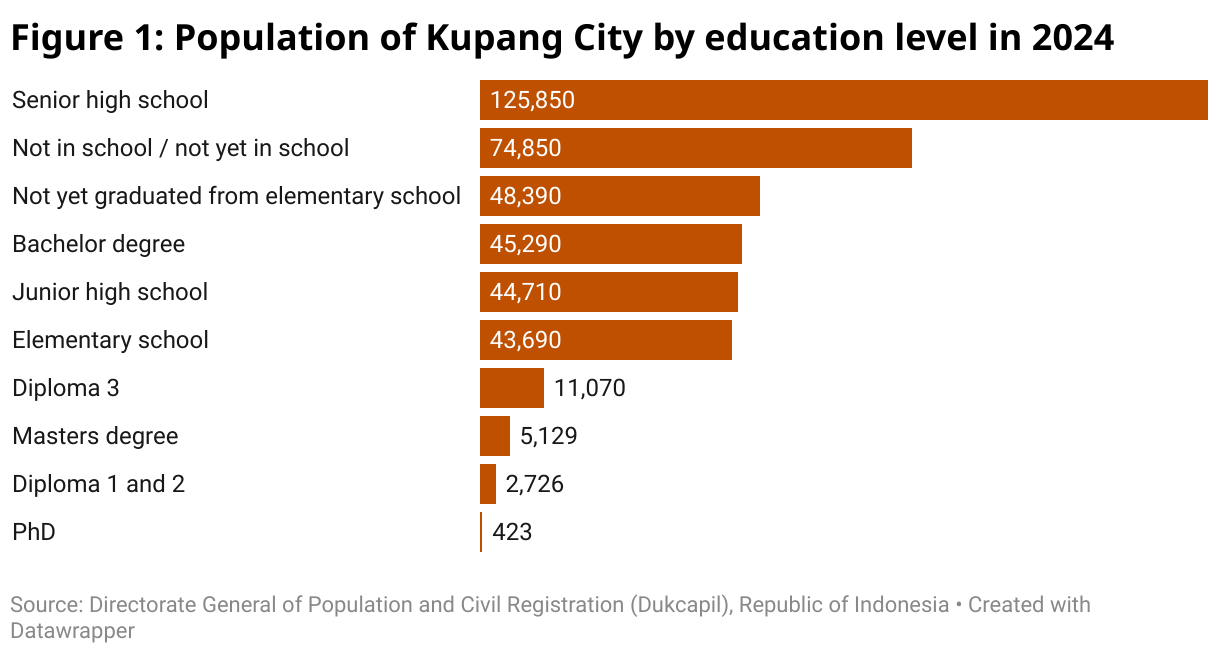
This sentiment is particularly pronounced in Kupang, the capital of Nusa Tenggara Timur (NTT) province. Given limited opportunities, a fragile economy and low average educational accomplishment (Figure 1), getting a government job is cause for widespread celebration among families. The phrase su jadi orang, meaning “now he’s someone”, is frequently heard, signifying that the family has improved its social standing and enhanced its sense of pride.
However, this honour comes with significant responsibilities. Once an individual takes office, numerous requests for assistance begin to be made. These often come not just from immediate family but also from distant relatives, old school friends, neighbours and even members of church groups. Whether it’s help with school fees, financial aid for medical expenses or contributions for a wedding or a funeral, there is an expectation that public officials will provide support, often arriving with cash in hand.
“ … We, as politicians, are ready to accept that. In fact, sometimes we even have to be willing to spend our own money. There are so many family events.” — DPRD member, 2025
Declining a request? In Kupang, that can be nearly impossible. Such a response can jeopardize relationships — and for politicians, it might even cost them votes. Kupang isn’t just an ordinary city — it’s a place that openly laughs at its own challenges. People joke that NTT stands for Nanti Tuhan Tolong meaning “God will help later” or Nasib Tak Tentu which translates to “uncertain fate”. These phrases aren’t just jokes — they reflect real issues like poor infrastructure, slow economic growth and a strong reliance on government for jobs.
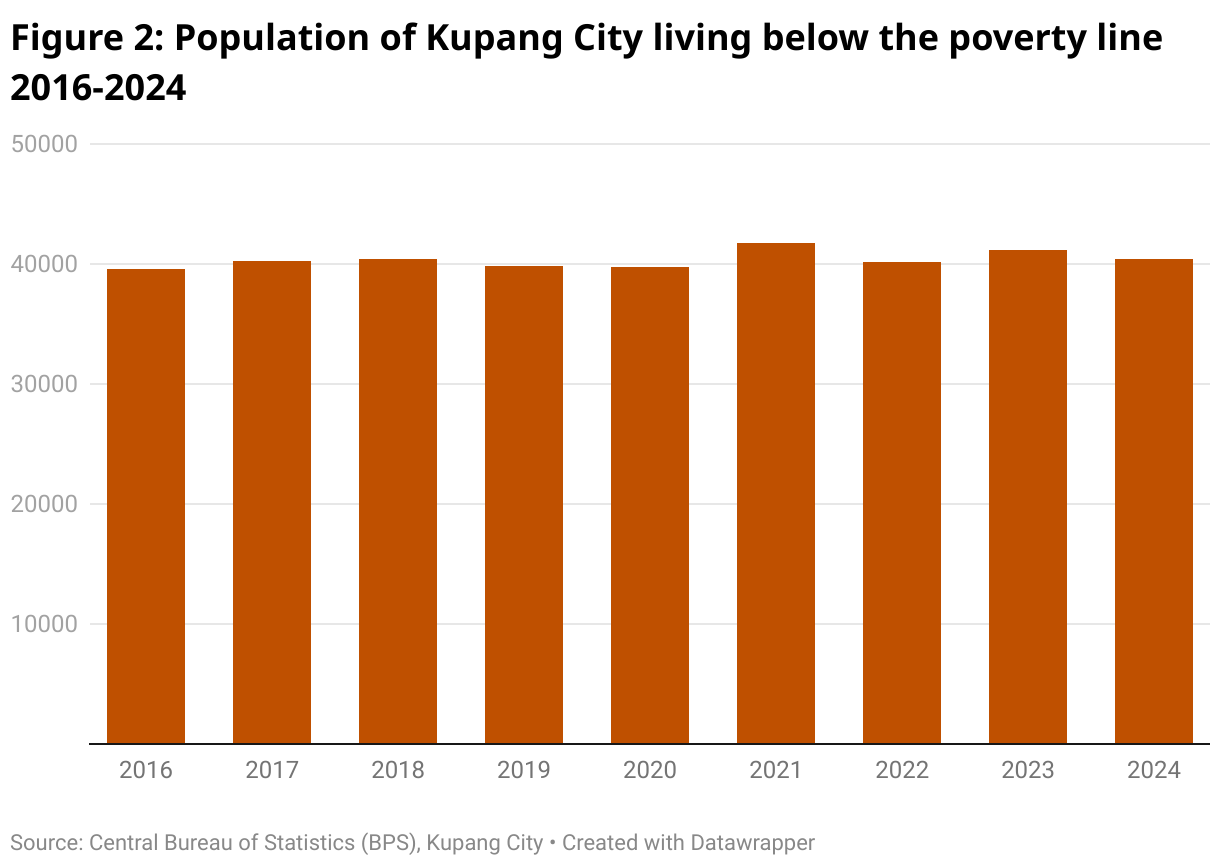
In 2024, Kupang’s population was about 475,000, but only around 5,703 public servants and 40 DPRD members held these sought-after government roles. That’s less than 3% of the workforce. Securing these jobs feels similar to winning the lottery in a region where the unemployment rate remains around 8.6%, even those who do have jobs are often found in informal sectors with modest incomes, and a significant percentage of the population lives below the poverty line (Figure 2). However, this desirable prize does not come with a substantial salary. While civil servants enjoy stable incomes, they fall short of public expectations. DPRD members receive better allowances, but these often prove insufficient to satisfy the overwhelming social demands placed upon them. This illustrates the core issue: low incomes contrasted with boundless expectations.
One of the community leaders summed up the burden of being a DPRD member perfectly:
“My friend is a member of the DPRD, and he has had to change his phone number multiple times. Why? Because people are always asking him for things. Always asking. And how much is his salary anyway? He ends up giving everything until he has nothing left. No possessions, no certificates. Why? Just look at events, even in church. The DPRD members are always present, and during auctions, they are the first ones called on.” — Community leader, 2025
What occurs in such cases? Previous research in Kupang City by Sylvia Tidey revealed that numerous officials seek out “creative” methods to secure additional funds. This might involve inflating project costs, submitting fraudulent travel claims, or directing contracts toward individuals who can reciprocate later. While these actions technically constitute corruption, the situation in Kupang is more nuanced. Here, many residents do not perceive these practices as corrupt. Instead, they view them as a normal part of life, a form of support, or a way to give back to those who helped them advance. A bribe is not labeled as such; it is referred to as uang pelicin (money to smooth over things) or a token of gratitude (ucapan terima kasih diuangkan). Terms like “collusion” and “nepotism” might carry negative connotations, but “returning a favour” feels just and even commendable.
This phenomenon is not unique to Kupang or even Indonesia. For instance, in Papua New Guinea, the wantok system operates in a similar way: those in power share resources with their relatives and this practice is widely accepted. In China, the concept is known as guanxi, while in Russia, it’s referred to as blat. In many places, social obligations often take precedence over formal rules.
Kupang has its own version of this system, influenced by its culture, history and religion. The province is predominantly Christian, with both Protestant and Catholic denominations represented, differentiating it from most of Indonesia. This religious aspect adds another layer to the network of obligations. Religious leaders often serve as intermediaries between communities and political elites, helping to create opportunities such as jobs, contracts or even campaign donations. During my research, I encountered a notable story: a priest asked a youth group to visit a local contractor to collect funds for their activities, having already made the necessary introduction. This practice is not viewed negatively; rather, it is regarded as a normal way of accomplishing things.
Now, here’s the thing: most officials don’t do this out of desire. They do it out of obligation. For them, bending the rules feels like survival, a way to maintain relationships, avoid shame and keep political promises. Anthropologists refer to this as “social bribery”. It’s not about filling your own pockets; it’s about fulfilling what your world expects of you.
These expectations aren’t new. They trace back to independence, when the state became the main source of jobs and wealth in NTT. Bureaucracy gave birth to a new middle class, and with it, the idea that sharing your resources is part of your duty. Today, that norm is deeply rooted and incredibly hard to change.
So Kupang lives up to its nickname: Nanti Tuhan Tolong. People keep waiting. Waiting for development. Waiting for jobs. Waiting for something better. Until then, public office will remain a double-edged sword: a source of pride and a constant source of pressure.
Being a public official in Kupang means walking a tightrope, prestige on one side, obligations on the other. Breaking this cycle isn’t simple, but it’s possible. Start with fair pay so officials don’t feel forced into “creative” solutions. Build stronger social safety nets so people don’t rely on personal favours for basic needs. And design anti-corruption campaigns that speak to culture, not just law, showing that integrity can be as honourable as generosity. Until then, the line between helping and hustling will stay dangerously thin.




PoV:
This is a good article to ponder. Are there any local cultural factors that might play a significant role in this phenomenon?
Thank you, Pak Dwi. You’re right, in Kupang, culture plays a huge role in shaping this reality. Strong kinship bonds, the habit of returning favours, and the influence of church communities all create big expectations for public officials to share what they have. Winning such a position brings not just prestige, but also a deep sense of responsibility to help extended family, friends, and church networks. Saying no can damage relationships or even political chances, yet saying yes often stretches finances to the limit. Here I argue that generosity and reciprocity can blur the line between genuine service and bending the rules.