Studies from the International Water Management Institute on Water User Associations (WUAs) across South Asia show that while barriers for women persist, change is possible and scalable. This article explores why women’s participation matters, the challenges they face, and how processes can be redesigned and scaled to make WUAs truly inclusive and effective.
WUAs were formalised from the 1980s to support decentralised and participatory irrigation management in most South Asian countries. These WUAs often introduced quotas for women of 10–33% to ensure balanced participation in water governance. Yet, decades later, women’s involvement remains uneven. Many are unaware of WUAs’ existence, others are nominal members, and some participate only through proxy representation by male relatives.
Shehnaz, a WUA committee member in Pakistan, said, “Irrigation is the duty of male members of the household. We are not supposed to interfere in these matters”.
In India, similar cultural norms reinforce exclusion. “We don’t go there,” said a woman when asked if she attends the meetings. “The men of the house go to Gram Sabha and discuss and make decisions. It doesn’t look nice for us to go there.”
Even a socially active rural woman in Nepal said: “I was never invited to the general meeting of the water user committee. I am not aware of when it was formed and how members were elected.”
These quotes reflect the norms that discourage women’s presence in water-related decision-making spaces.
Yet, change is emerging.
“As a young woman, I used to sneak out of the house to attend Self Help Group meetings, as we were not allowed to go out of the house and join meetings,” says Sonali from Purulia, India. “Today, our women-led WUA plans for the whole village — land and water resources, equitable access. No decision gets made without us.”
A male farmer says of the female chairperson of their WUA in Nepal: “She shows good leadership, and people believe in her. Even men can’t say no when she asks for help or contribution. The community sees women in leadership as more transparent.”
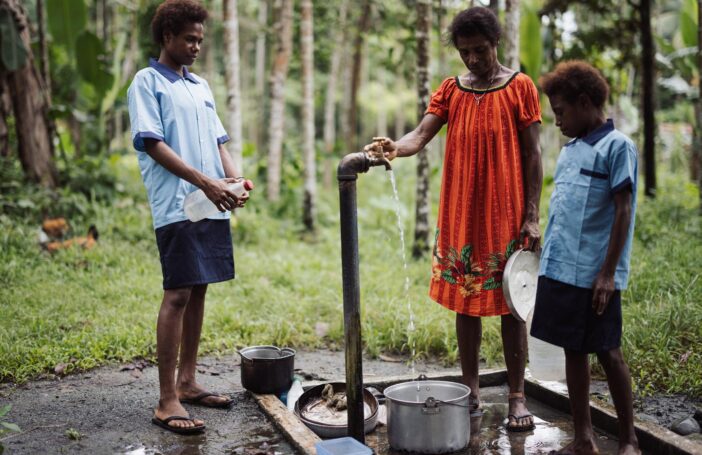
Women play a vital role in water management at every level — from households to farms. In Southern Asia, 71% of women in the labour force work in the agrifood system versus 47% of men. Yet women remain largely excluded from formal water governance. Their inclusion is not only a matter of equity; it strengthens governance, sustainability and resilience.
In India, an increasing number of women are leading farming practices to achieve financial freedom, and being involved in WUA enables better outcomes for their farming. In Nepal, male outmigration has increased women’s requirement to participate in irrigation decisions, it has also added to their overall responsibilities without corresponding institutional support. In Pakistan, 68% of women are employed in the agriculture, yet women’s involvement in decision-making on agricultural issues is only 3% and only 9% of men acknowledge that women can suffer from water shortages.
Policies in India, Nepal, and Pakistan acknowledge the disparity but implementation lags. Quotas are a starting point, without enabling environments, representation risks becoming symbolic rather than transformative.
WUAs have a long legacy in South Asia, evolving through farmer-led participatory irrigation management, government programs and donor-supported projects. They were designed to function via executive committees to implement decentralised water governance.
In India, WUAs oversee nearly 17 million hectares of irrigated land through about 87,000 associations, supported by legislation in 18 states and practiced in an additional 10 states. Yet only six Indian states mandate women’s participation. Nepal’s irrigation policy has enabled WUAs to manage over 570,000 hectares of land and introduced gender quotas (20%) in 1992, increasing them to 33% by 2013. Pakistan’s extensive irrigation network covering 13 million hectares, which was shaped by colonial-era laws, incorporated 33% gender quotas through the National Gender Policy, which also extended to water governance bodies.
Despite policy reforms and quotas, systemic barriers persist. Membership often depends on land titles, excluding women who rarely own land. In Pakistan, irrigation rights tied to land ownership leave most women out, while in India similar rules marginalise women farmers even in states with quotas. It is also assumed that such participation could serve as a gateway for women to claim land rights.
Even when women are included, their roles often remain ceremonial. WUA elections favor men with strong networks, and women are frequently nominated to meet quotas but represented by male relatives — a practice known as proxy participation. This undermines the spirit of inclusion and perpetuates male dominance in decision-making.
Time poverty adds another layer: women juggle household duties, farming and care work, leaving little time for WUA engagement. Cultural restrictions further limit their interaction with extension agents, reducing access to technical knowledge. Intersectionality compounds these challenges, as quotas often benefit women from dominant groups, sidelining marginalised voices and reinforcing inequality.
These patterns reveal a common challenge: quotas alone cannot deliver gender equity. Institutional intent often stops at representation, without addressing structural barriers and institutional design that prevent active participation.
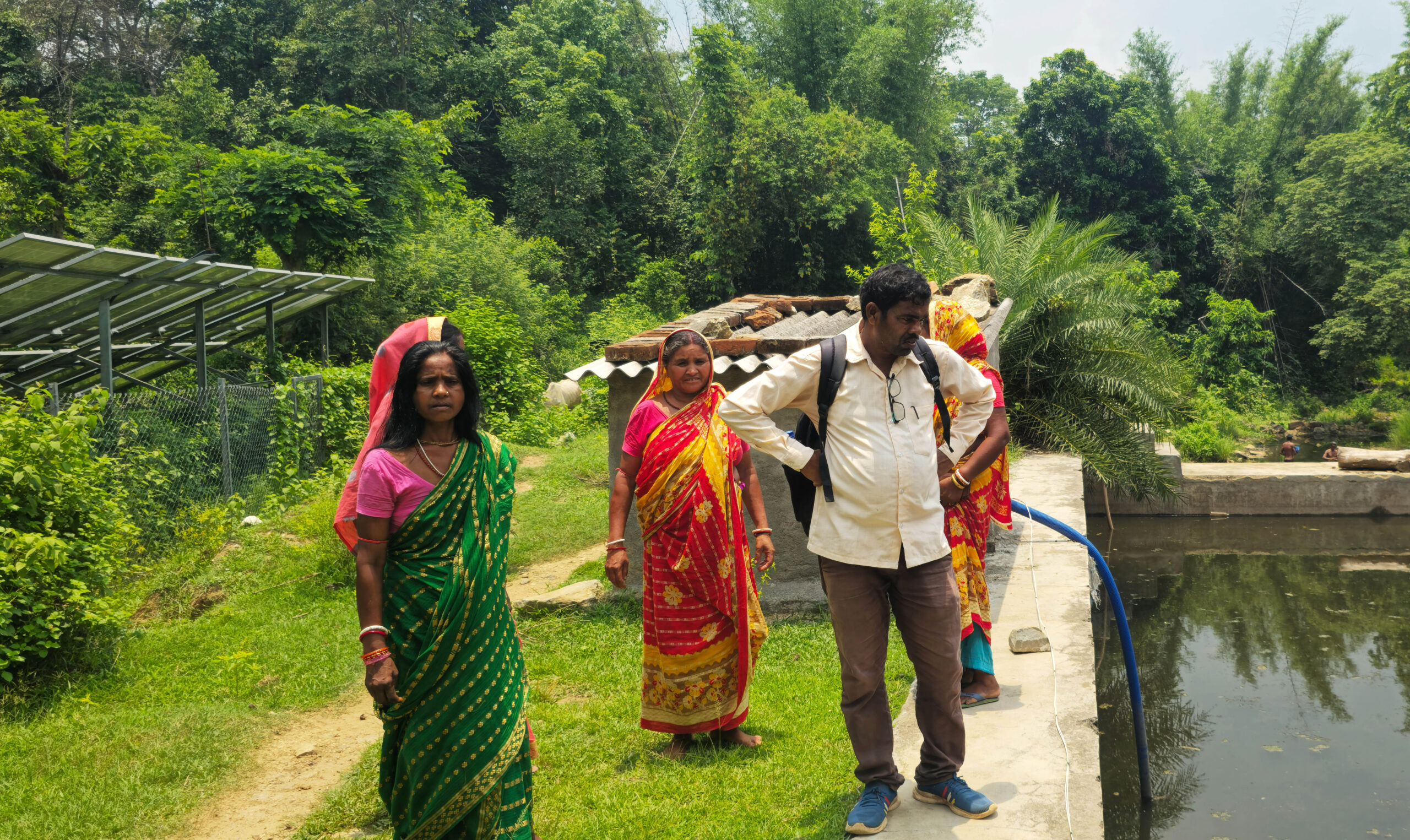
Despite these barriers, examples across South Asia demonstrate that intentional design is an effective approach. In Purulia, West Bengal, women-led WUAs formed by PRADAN with support from the West Bengal Accelerated Development of Minor Irrigation Project managed irrigation, revived fallow lands and promoted high-value crops — boosting incomes and reducing child marriage rates. Improved institutional design, such as WUA meetings in the afternoons, made a significant difference in women’s involvement.
In pockets of Nepal, women-led WUAs peer support and projects that built women’s confidence through economic empowerment are allowing them to develop transparent water planning and income strategies, such as fisheries and collective farming, which foster community trust and improve social indicators. In Pakistan, progress is emerging through policy reforms mandating women’s representation.
Building on this momentum through gradual context-based institutional reforms, peer-support groups and men who strengthen women’s meaningful participation can turn tokenism into a transformative force.
Inclusive water governance is not symbolic — it is strategic. As climate risks intensify and irrigation systems face mounting stress, scaling gender inclusion in WUAs is critical for food security, resilience, and equity. We need to move beyond quotas to implement structural reforms, provide social support, and design institutions that are gender-transformative. Quotas alone cannot achieve this; structural reforms, social support and gender-transformative design of institutions are essential.
Successful examples from India and Nepal demonstrate that while intentional design takes time to take root, it ultimately delivers transformative results. Measures such has flexible meeting schedules, women-only spaces and redefining land requirements and rights can make WUA participation feasible and meaningful. Oversight via gender audits and participatory monitoring can ensure accountability. Finally, empowering women is not enough; men also need to be involved to create gender inclusive spaces
Scaling such models requires investment in women-centered institutional design, peer networks to support the work burden of leading and involvement, as well as empowerment and capacity-building programs to strengthen confidence and technical knowledge.
Empowering women in water governance is not just a policy goal — it is a pathway to stronger institutions and more resilient communities. By dismantling structural barriers, shifting institutional design, and fostering leadership, WUAs can evolve into inclusive platforms that reflect the realities of those who manage water daily and create engines of social and economic progress.