Solomon Islands is scheduled to graduate from the UN list of Least Developed Countries (LDCs) on 13 December 2027.
The prospect has prompted considerable discussion at home, much of it asking whether external assistance and preferential treatment will fall away once the country graduates. A closer look at what graduation actually changes gives a more complicated answer.
Graduation from LDC status is not the same thing as losing eligibility for official development assistance. Development partners will not halt aid to Solomon Islands in December 2027, nor will the country be denied concessional development financing because its UN classification has changed.
The United Nations updated assessment of the likely consequences of graduation finds the overall impact will be relatively limited, partly because Solomon Islands has taken steps to protect trade preferences that might otherwise have been lost.
Earlier World Trade Organization (WTO) analysis was less reassuring. Using Solomon Islands’ 2016–18 trade structure, the WTO estimated that the loss of LDC trade preferences could reduce merchandise exports by about 4.2%. Processed fish was identified as particularly exposed, because it would have lost duty-free entry to the European Union and faced the tariffs applied to other suppliers.
That estimate no longer describes the position Solomon Islands will be in by 2027. The country joined the EU–Pacific Interim Economic Partnership Agreement (EPA) in 2020, under which its exports have permanent duty-free and quota-free access to the EU market. Graduation will not remove that access.
This matters for the tuna industry and for the country’s ambition to do more processing at home. The agreement includes a “global sourcing” provision for processed fisheries products: subject to the agreement’s requirements, fish brought ashore by foreign vessels and processed in a Pacific EPA country can qualify for duty-free and quota-free access to the EU. The European Commission reported that in 2024 exports from Solomon Islands and other Pacific EPA countries continued to enter the EU on those terms. Because of the country’s arrangements with the EU and the United Kingdom, the UN assessment concludes that the tariff increases once anticipated in those markets are no longer expected.
The picture for development assistance is similar. An OECD assessment of Solomon Islands transition finance found that the partners it consulted, including Australia, Japan and New Zealand, did not anticipate reducing support after graduation, and that LDC status was not an eligibility criterion for the assistance they provided. The UN’s assessment likewise expects the effect on official development assistance and South-South cooperation to be limited. Some support mechanisms are reserved for LDCs, and Solomon Islands will in time cease to qualify for those.
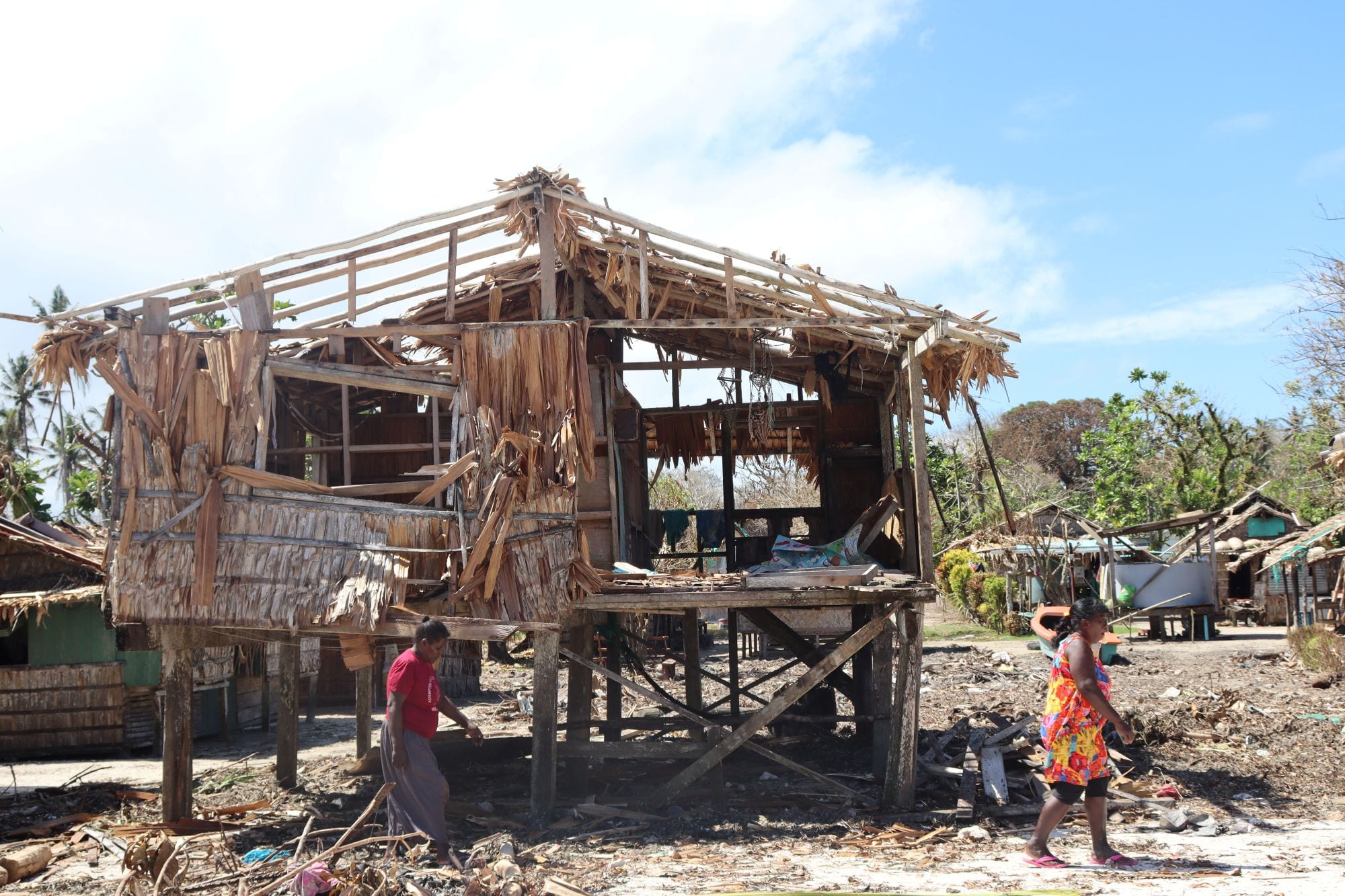
Climate finance is the clearest loss. Solomon Islands will eventually lose eligibility for the Least Developed Countries Fund, even though its climate vulnerability will be unchanged. It qualified for graduation through improvements in gross national income per capita and its Human Assets Index, but it did not meet the graduation threshold under the Economic and Environmental Vulnerability Index. The country remains exposed to cyclones, sea-level rise, coastal erosion and changing rainfall patterns, and to external economic shocks.
The challenge for the current government coalition, the Government for Reform, Empowerment, Accountability and Transformation, is to ensure that losing LDC-specific climate support does not reduce the capacity to finance adaptation. That means making fuller use of the climate finance mechanisms open to developing countries and Small Island Developing States.
Other changes will be gradual. WTO members agreed in 2024 that graduating countries can keep accessing LDC-specific technical assistance and capacity-building programs for three years after graduation.
If aid largely continues, export markets remain protected and some support measures carry transition periods, why does graduation matter? Solomon Islands’ own Smooth Transition Strategy, adopted in 2025, points to the answer. Gross national income has improved, but the strategy projects economic growth of around 2.8–3.0% in the short to medium term against population growth it puts at about 2.7%, leaving little room for sustained gains in income per person. International estimates of population growth are lower, closer to 2.5%, but the gap between the two rates remains narrow on either measure.
The economy remains narrow. Logging, long one of the largest export industries and sources of government revenue, cannot contribute what it once did. Distance from markets, high transport and energy costs, infrastructure constraints, a small domestic market and exposure to natural disasters all continue to limit growth.
On trade, the priority is to hold and expand market access while increasing domestic value addition, mainly in agriculture and fisheries. On development financing, the government should identify which LDC-specific programs will end, when, how much money is involved and what can replace them. The loss of LDC-specific climate support needs the same treatment.
For most Solomon Islands businesses, domestic conditions will matter more than the country’s UN classification. Electricity and transport costs, access to finance, infrastructure and the overall cost of doing business will determine whether firms can grow, compete and employ people.
The government appears to recognise this. At the 2026 National Trade Fair, it named domestic production, fisheries, tourism, manufacturing, downstream processing, value addition and reduced import dependence as priorities for the post-LDC economy.
The larger challenges after 2027 will be much the same as those of today: creating productive employment, diversifying exports, improving infrastructure, reducing the cost of doing business and building resilience against economic and climate shocks.
Graduation will be a national achievement, but it is not the end of Solomon Islands’ development challenges. The question is whether the country can use the time before December 2027 to address the vulnerabilities that will remain long after the LDC label is gone.