

A nuclear-capable Chinese ballistic missile, launched from a nuclear-powered submarine in July 2026, arced over several Pacific nations and landed without warning in waters close to Tuvalu’s exclusive economic zone. Tuvalu’s government called the incident a “grave and serious concern”, and Pacific civil society groups urged leaders to reject militarisation. Yet at the Pacific Islands Forum (PIF) foreign ministers’ meeting in Suva, the region could not agree on a joint statement.
Is the Pacific Way still serving the Pacific, or has it become cover for silence?
The phrase was coined in the early 1970s by Fiji’s first prime minister, Ratu Sir Kamisese Mara, playing on “Pacific” the region and “pacific” the adjective, as discussed in Pacific Dialogues. It describes an Oceanian approach to problems: dialogue over diktat, family-style decision-making and time for reflection rather than rushed votes.
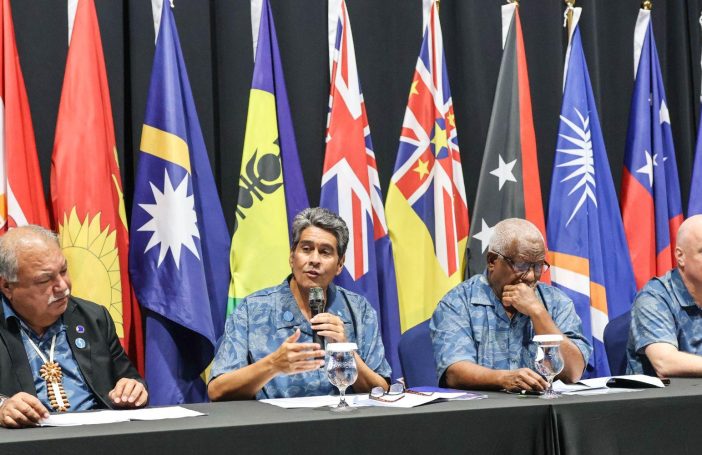
Critics have long warned that the same method has a dark side. Within the PIF, the drive for consensus has at times given each member a de facto veto, weakening collective unity. That is what played out in Suva.
Australia and others pushed for a joint statement condemning the missile test. Some members used the consensus requirement as a veto, prompting New Zealand’s Winston Peters to say, “We made it clear that wasn’t the Pacific way”. The outcome was no statement and no regional position on an incident that directly threatened one of the smallest members. PIF Secretary-General Baron Waqa declined to name positions, referring only to “differing views”.
Tuvalu was closest to the impact, with the missile landing near its EEZ and sparking fears of a tsunami. It was among the first to speak out, joining Palau and Vanuatu in condemning the test and calling for the Pacific never to become a testing ground. The state with the least power experienced the most risk, while the institution meant to protect its interests cannot agree on words.
The two states most often named as blocking consensus were Naoero and Kiribati. The PIF Secretary-General said they had not blocked the statement but had “honestly placed their position”. Either way, if the Pacific Way allows a member to veto a collective response to a missile landing near a neighbour’s EEZ, the principle of “family” becomes a shield for bilateral convenience. Naoero and Kiribati have every right to dissent. The question is whether a process that lets dissent override collective interest still serves the region’s most vulnerable members.
Pacific civil society did not wait for ministers. Regional groups condemned the test and urged leaders to reject actions leading to a military build-up. If civil society could find its voice, why not the Forum?
Three tensions stand out. First, process versus purpose: the Pacific Way is a method for collective action, not an end in itself. Second, respect versus abdication of responsibility: respecting sovereign choices, as recognised in the Agreement Establishing the Pacific Islands Forum, cannot mean leaving the smallest to face threats alone. Third, diplomacy versus urgency: when a nuclear-capable missile lands near a member’s EEZ, delay is neither appropriate nor neutral.
Several reforms would help. Distinguish “consensus to act” from “consensus to block”, allowing majority positions on security issues while noting objections, as suggested in regional governance analyses and in the Forum’s own documents. Give the most affected states, like Tuvalu, particular weight in shaping responses, as argued in reporting on the Suva debate. And reaffirm the Pacific as a nuclear-free zone, which status is incompatible with unannounced military activities.
In Tuvalu, families feared for their safety. Fishers wondered whether their waters were now a target. Young people asked why their country must be a chessboard.
After the meeting, the Chinese Embassy in New Zealand accused New Zealand’s foreign minister of “seeking to rally an attack on China” and cast the absence of a Forum communiqué as a “slap in the face” to Wellington. That framing turns the debate into a contest between New Zealand and China. For Pacific countries that narrows and distorts the issue: the fact is that a nuclear-capable missile crossed the region and landed near Tuvalu, in a Blue Pacific leaders have described as an “Ocean of Peace”.
Beijing calls the launch a routine, lawful training activity, and allied media dismiss criticism as “megaphone diplomacy”. For communities in Tuvalu who feared a tsunami and saw a nuclear-capable system land near their EEZ, the concern is physical safety and the precedent. A Pacific-centred response does not require choosing between New Zealand and Australia, on the one hand, and China on the other. It requires insisting that any state operating in the region respects the Pacific’s commitment to remain nuclear-free and never again be treated as a convenient testing ground.
Tuvalu’s stance, seen in regional coverage and in statements from like-minded governments, shows what the Pacific Way looks like in practice. The question is whether the Forum will follow, or hide behind a consensus that protects only the comfortable.


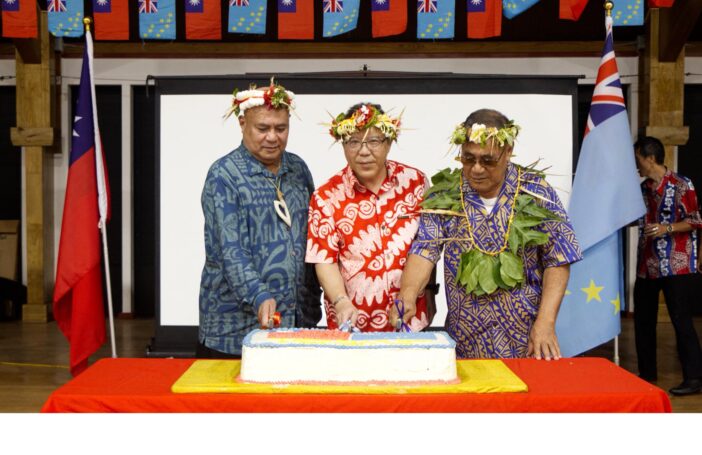

President Adeang’s recent ‘discovery’ of Chinese ancestry is clearly pushing Naoero further, and further, into the Chinese Web and the Island’s people will eventually suffer. In the meantime there is no Ombudsman after more than 10 years, his son is head of the finance department, Australia pours money into a bottomless pit, the police wear riot gear out of a science fiction movie, and government members constitute 17 out of 19 members of Parliament. Naoero is turning into an authoritarian state and there’s no clear way back. Hammer must be turning in his grave.