“We sweat and cry salt water, so we know that the ocean is really in our blood.” The late scholar and poet Teresia Teaiwa understood what our ancestors always knew: the ocean is not simply around us — it is in us.
As descendants of oceanic voyagers who traversed the farthest reaches of the Pacific guided only by celestial paths, the ocean swells and their collective fortitude, we understand that prospering through difficult journeys requires absolute unity. Our modern voyage runs through economic turbulence, volatile commodity markets and profound climate disruptions. Navigating it demands that national governance and communal responsibility walk hand in hand, turning our collective wealth into lasting security for every citizen.
Last year, I shared the news that more than 19,000 I-Kiribati had been lifted out of poverty. Today I want to share something less celebrated but just as important: how we keep it that way.
Our Kiribati Development Plan 2024-2027 and our 20-Year Vision set out our goal of a healthier, wealthier and more peaceful nation, and they rest on one conviction: our people are our greatest and most enduring asset. Social protection is not a discretionary expense here. It is positioned at the very heart of our national economic framework.
These resources stem from the ocean that defines our geography. Fishing licence fees have brought in more than A$210 million a year in recent years, and our 2027 budget assumes about A$220 million. Rather than allowing these sovereign windfalls to remain locked away in bureaucratic channels, we chose to reinvest a significant share directly into the livelihoods of our people. Counting social assistance benefits, the copra price subsidy and the annual leave grant (a cash payment made once a year to each worker, long paid to public servants and extended to private-sector employees in 2023), close to one in every three dollars of recurrent spending now reaches households directly. On the IMF’s measure, that makes Kiribati the largest spender on social assistance in the Pacific relative to the size of its economy.
That commitment takes shape across four core safety-net areas. The Senior Citizens Allowance reaches more than 9,500 elders (A$22 million), while the Disability Support Allowance (A$2.85 million) supports over 4,000 citizens. The Support Fund for the Unemployed (SFU), which peaked at A$27 million during the pandemic, absorbed the impact as remittances dried up and our supply chains broke down. It has now settled at A$23 million as expanding labour mobility schemes and the annual leave grant draw people into paid work at home and abroad. Meanwhile, the copra subsidy — which reached about 9% of GDP in 2025 and is budgeted at A$30 million in 2027, and which is disbursed in the outer islands through Kiribati Coconut Development Ltd — alongside targeted sea-freight subsidies (A$600,000), protects outer-island livelihoods and eases the pressure to move to South Tarawa.
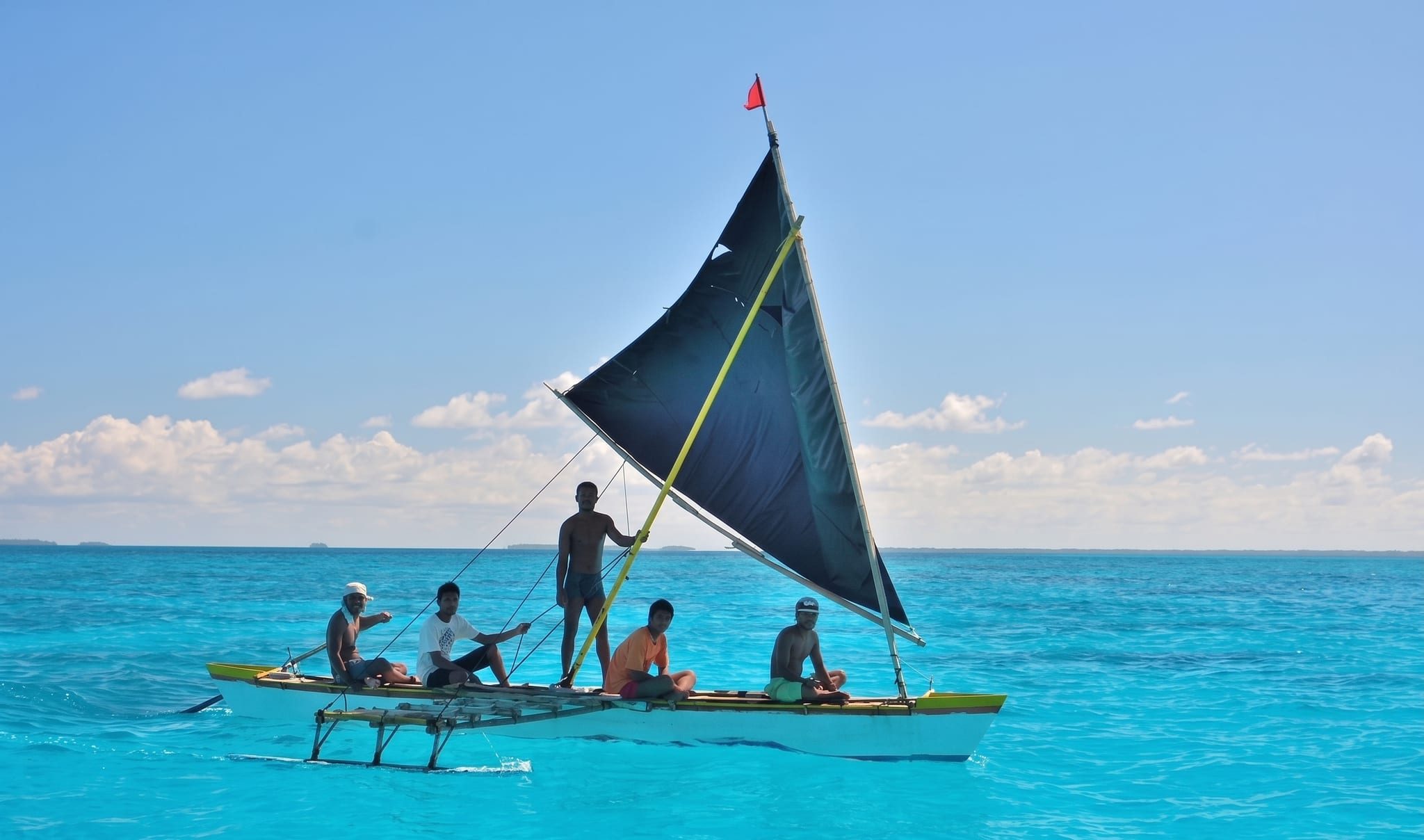
These programs are best understood through the lived experiences of citizens who have used public support to unlock personal initiative. In South Tarawa, Nei Toka, a single mother of four caring for her elderly mother, saved part of her monthly allowance to build a modest cushion. Pairing that discipline with Kindling Kiribati’s business training and microloans, she purchased her own sewing machine and scaled a thriving Mauri wear enterprise. Her journey illustrates how social protection, reinforced by grassroots enterprise support, fosters genuine financial autonomy. On Makin, the island pooled contributions from every resident to acquire a second community vessel, 60% of the capital coming directly from SFU recipients. That vessel now supplies reliable cargo, fresh food and fuel while opening wider markets for local fishermen and growers.
It should not be thought our people are passive recipients; many are active investors deploying public capital into productive local assets. The ultimate measure of economic resilience is not how long a safety net catches someone, but how effectively it propels them forward. True resilience is built by backing the agency of our citizens — turning social transfers into engines of self-reliance, community enterprise and long-term economic independence.
But compassion alone does not keep a boat afloat, or a safety net funded. Global conditions remain volatile, and our fisheries revenue rises and falls with climatic and oceanographic cycles we do not control. We welcome the analysis offered by the World Bank and the International Monetary Fund. They find that the copra subsidy does reduce poverty, but becomes less effective the larger it grows, and that cash transfers targeted at poor outer-island households would deliver more poverty reduction per dollar. We are examining what that means. Yet these decisions remain ours to make — grounded in the evidence, with our outer island families at the centre of the ledger.
Our 2027 Fiscal Strategy establishes a clear roadmap to preserve national net worth, curtail public debt and balance the national accounts, anchored in two fiscal rules. Operational departmental spending is capped at 50% of total recurrent expenditure. Liquid cash reserves are preserved at no less than three months of total government operations.
By mid-2026, our cash reserves stood at A$286.8 million, approximately eight months of expenditure coverage. Our 2027 budget projects revenue and expenditure of A$430.5 million, balanced with a modest surplus of A$34,111. Within that, grants and subsidies for senior citizens, people with disabilities and the copra sector are maintained at A$80.1 million. By deliberately choosing this prudent course over expansionary alternatives that would have incurred a A$17.9 million deficit, we have shown that social commitments need not compromise macroeconomic stability.
The Revenue Equalisation Reserve Fund, created to secure the destiny of future generations, reached A$1.74 billion by July 2026 and maintains momentum toward A$2 billion by the end of 2027. To protect its real value, we have reduced annual dividend withdrawals from A$78 million to A$45 million. Crucially, drawn funds cannot be spent on everyday departmental consumption. They are reserved exclusively for Cabinet-approved initiatives that generate productive social, human or physical infrastructure.
Benefit payment administration is being centralised under the National Economic Planning Office, thereby mitigating duplicate claims and ensuring verification against national registries, with support from an integrated financial management system. The modernised Income Tax Act, Value Added Tax (VAT) amendments and the shift of the import VAT benchmark from Free on Board to Cost, Insurance and Freight are broadening our tax base without overburdening low-income families. These same reforms in tax administration and public financial management are what our development partners, including the World Bank and the Asian Development Bank, require before they release grants paid straight into the national budget. On that basis the 2027 budget anticipates A$35.4 million in such partner budget support.
This is far more than fiscal restraint — it is generational stewardship. Te Mauri, te Raoi ao te Tabomoa: health, peace and prosperity are not three competing ambitions; they are one promise, and our national budget is where that promise is honoured. When ocean wealth becomes a sewing machine in South Tarawa, a community boat on Makin, a secure pension and a child’s education, public money does what it was meant to do. Navigating these tides requires a warm heart, a disciplined mind and an unshakable hand on the helm. By joining disciplined state stewardship with the agency and self-reliance of our people, our voyage remains steady, ensuring that no island, no village and no citizen is left behind.