

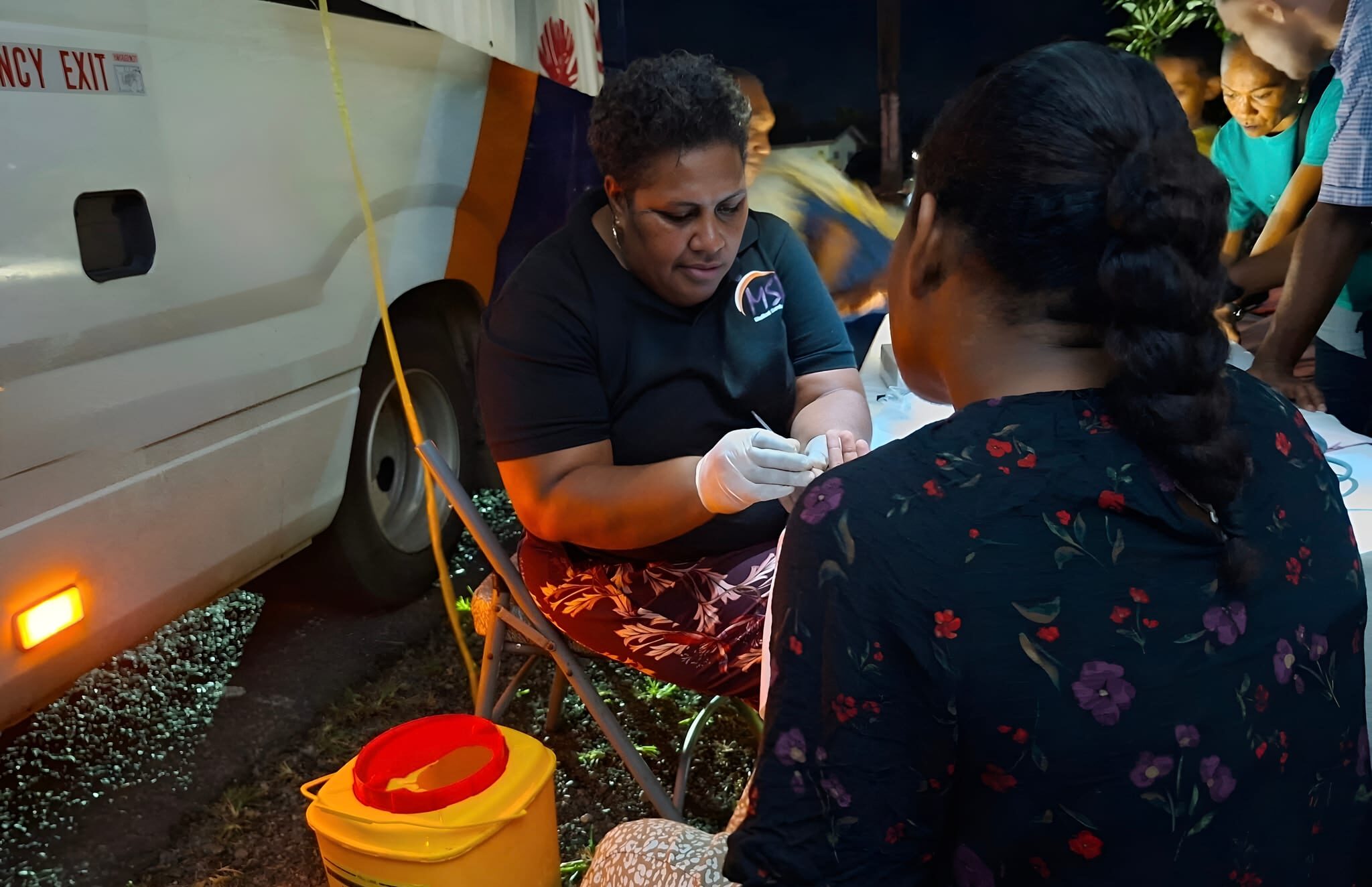
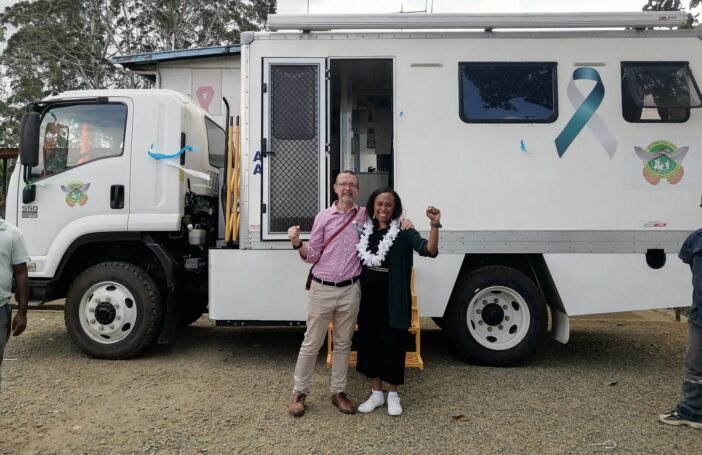
After midnight in Suva, a van parks near a settlement. The lights come on. A team steps out. People approach — some cautiously, some with urgency, some because a peer educator they trust has spent weeks building the relationship that makes this moment possible. Within two hours, the Moonlight Clinic has tested dozens of people for HIV, linked a reactive case to care, and distributed condoms, counselling and information that most of these individuals have never before been offered in a setting that felt safe.
This is Medical Services Pacific’s Moonlight Program. And it is quietly demonstrating something that health systems across the Pacific need to learn from.
Fiji is facing a public health crisis. New HIV cases rose by 281% between 2023 and 2024, reaching 1,583 diagnoses in a single year. Young people aged 15 to 29 account for 60% of new infections, and 93% of those diagnosed in the first half of 2025 were iTaukei Fijians. These numbers are not abstract. Behind them are communities — sex workers, men who have sex with men, transgender individuals, people who inject drugs — failed by health systems that were not designed for them and which have, in many cases, actively turned them away.
Medical Services Pacific (MSP) is an implementing partner of International Planned Parenthood Federation under Voices of Resilience — IPPF’s Pacific-wide HIV program funded by the Australian Government through the Department of Foreign Affairs and Trade and the New Zealand Government through the Ministry of Foreign Affairs and Trade. The Fiji sub-grant of $125,000 supports exactly the kind of work the Moonlight Program represents: mobile, targeted outreach to key populations who cannot be reached through conventional health facilities. Between December 2025 and March 2026, MSP conducted 1,464 HIV and STI tests through its Moonlight Program across three divisions. The reactive case rate was 8.9%. Nearly one in ten people tested positive. For the vast majority of those people, it was the first time they had been tested.
That reactive rate deserves to be read carefully. It is not evidence of a poorly targeted program. It is evidence of a precisely targeted one. Conventional health facilities test general populations and find general prevalence rates. The Moonlight Clinic goes where HIV is concentrated — to the places, the hours and the people that the health system has systematically failed to reach — and finds the epidemic where it actually lives.
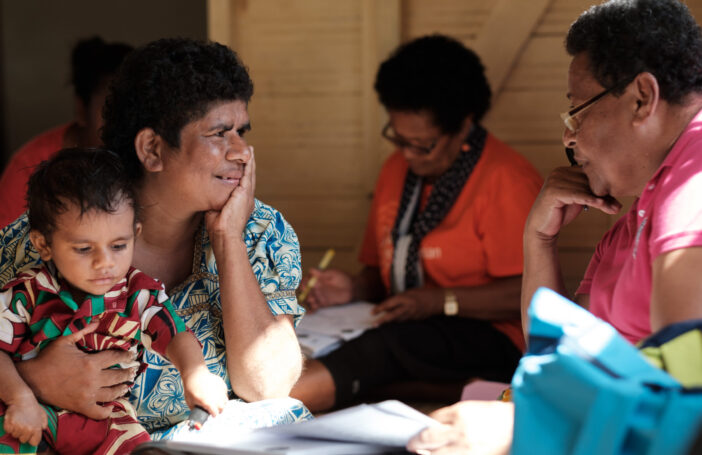
What makes this approach work is not medical technology. Rapid HIV tests have been available for years. What makes it work is the deliberate, painstaking construction of trust. MSP’s outreach teams include peer educators connected to SAN Fiji, which supports sex workers, and Rainbow Pride Foundation Fiji, which works with LGBTQI+ communities. These partners do not merely refer clients — they are the reason clients come at all. In communities where HIV testing has historically meant exposure to stigma, discrimination or worse, a peer educator’s presence signals something the health system alone cannot: this is safe. You will be treated with dignity. Come.
The program’s data tells the story across demographics. Of those tested, 41% were under 25 years old. In a country where 60% of new HIV infections are in this age group, that proportion matters. The service is also reaching a balanced gender mix — 48% male, 47% female, 5% other gender — which suggests it is genuinely serving the diversity of key populations rather than defaulting to the most easily accessible group.
But the most important number in MSP’s March 2026 data may be the smallest: 44. That is the number of clients referred to the Ministry of Health for HIV management and antiretroviral therapy initiation in the quarter. 44 people who tested reactive were not left with a result and a pamphlet, but accompanied — literally, in some cases — through a referral pathway to ongoing care. In harm reduction programming, the distance between a positive test result and treatment initiation is where people are most likely to be lost. MSP’s program is designed to close that gap.
This is what effective donor-funded health programming looks like in practice. It is not a clinic building or a training workshop. It is a van, a team of trusted community workers, an evening schedule designed around the lives of people who cannot access daytime services, and a set of relationships built over months and years with civil society partners who hold the keys to community trust. MSP’s ground-level work sits within a larger architecture: the Voices of Resilience program, which combines sub-grants for service delivery with a regional mass media campaign — the FOR THEM campaign — to drive awareness, normalise testing and reduce stigma at scale across the Pacific. The clinical encounter in the Moonlight van and the social media post that reaches a young person in their feed are two parts of the same response.
There are lessons here for Pacific health programming more broadly. The first is that reach and access are not the same thing. A facility can be technically available to a population while remaining functionally inaccessible due to stigma, operating hours, cost or the simple absence of the relationships that make people willing to walk through the door. Programs that cannot measure their own inaccessibility cannot address it.
The second lesson is that peer-led outreach is not a supplementary component of HIV prevention — it is the infrastructure on which clinical effectiveness depends. MSP’s 8.9% reactive rate would be impossible to achieve without SAN Fiji and Rainbow Pride Foundation Fiji. The health system needs to resource these partnerships as core program investments, not as optional extras.
The third is that the Moonlight model is not unique to HIV. Its logic — meeting people where they are, at times that work for them, through trusted community intermediaries — applies equally to immunisation, maternal health, mental health and reproductive health services across the Pacific. The question is whether health systems and their funders are willing to design for the populations they are not currently reaching, rather than continuing to optimise for those they already serve.
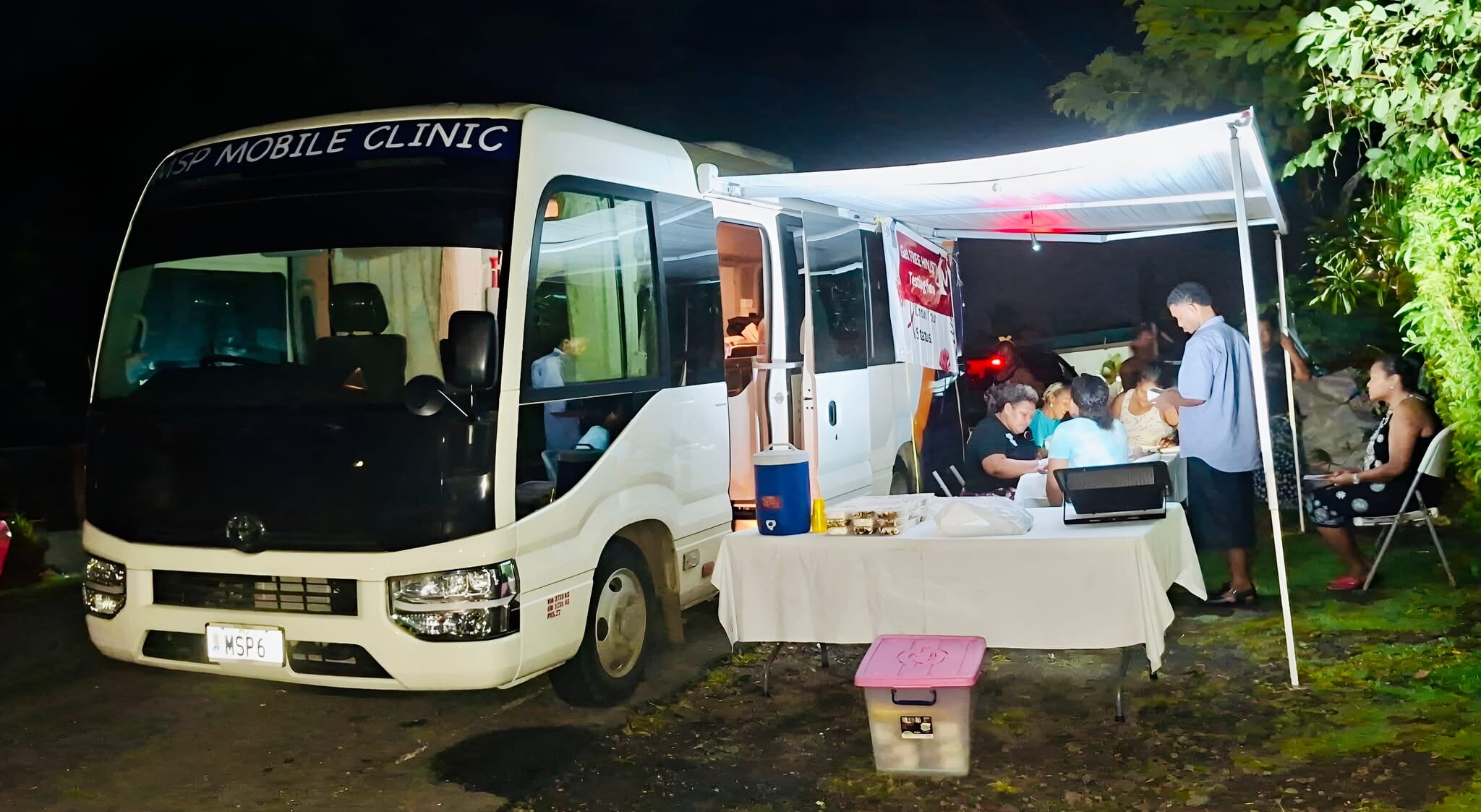
The Moonlight Clinic provides HIV testing in Suva, Fiji (Medical Services Pacific)
44 people started treatment. 130 reactive cases were identified and linked to care. A young woman, tested for the first time after watching MSP’s van from across the street for six weeks, received her result and learned there was a path forward. A group of young men told their friends: go and get tested. The van is safe. They went.
That is what the data looks like as a story. And it is the story that needs to be told, clearly and repeatedly, to the policymakers, donors and health system leaders who decide what Pacific healthcare looks like after midnight.



What a brilliant and informative piece Uate. Kudos to MSP and IPPF for walking the talk. When alot has been said about HIV increases in the last few years in Fiji, the actions of this moonlight initiative is addressing exactly the fight against prevention and action on HIV. Thank you for shedding light into the trusted work and important work of Peer educators whilst also addressing the need for trust, relationship building and creating a safe space to access this services where it’s needed the most. All the very best to the team in navigating and providing services to the most marginalized members of our society.
Vinaka for sharing about such important, needed work on HIV services and the deeply considered approach to finding a model that works to reach those who need the services the most.
Thank you for the kind sentiments. Hopefully it reaches the policy makers and influences change.