This is the second post in a three-part series on the work of a program seeking to strengthen relations between citizens and the state in Papua New Guinea.
In my previous post, I looked at several examples of community-level initiatives that have helped to open up aspects of governance in PNG. Here I focus on several case studies relating to sorcery accusation-related violence (SARV). SARV affects hundreds of communities in PNG, as people (often women) are accused, persecuted, driven out of their communities or worse. It’s a wicked problem, but the Australian government-supported Building Community Engagement in PNG (BCEP) program has made some inroads.
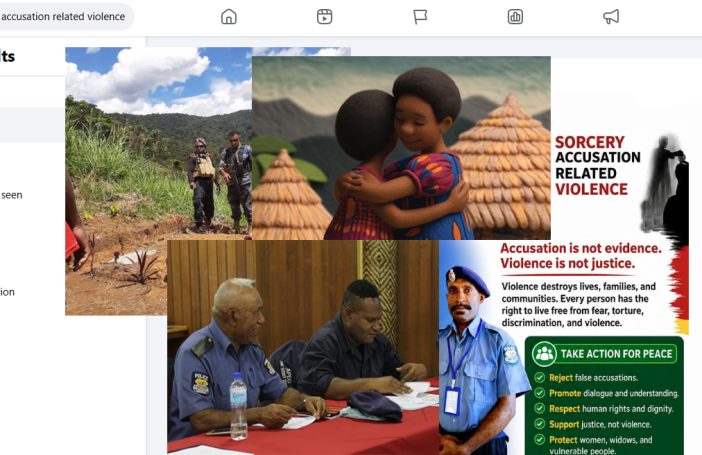
The SARV Summit. Sometimes meetings can drive change. In July 2024, 30 leaders from seven provinces met for two days for an unprecedented discussion on SARV. Those attending included high-level politicians, church leaders, the judiciary, police and activists. Frontline human rights defenders presented examples of successful support and intervention, testimonies, and a series of specific asks for decision makers.
External participants (including DFAT and BCEP staff) were invited to attend on Day 1, but then asked to leave for the second day, allowing local actors the space to thrash out the detailed commitments from the summit.
Although other programs have worked on SARV, this initiative which asked local partners what they needed, rather than assuming money was the answer, and being led by their responses, was something new for PNG.
The commitments are impressively specific and detailed against all three of the summit asks. Provincial administrators and police commissioners agreed to separate Gender-Based Violence (GBV) and SARV funding (because, for example, people affected by SARV often have to flee as entire families, making GBV safe houses unsuitable for them). They agreed Provincial and District (PSIP and DSIP) funding should go directly to frontline organisations. And they agreed to establish SARV multistakeholder rapid response teams within police forces at the provincial and district levels, involving police, churches, healthcare workers, magistrates and social workers.
A Joint Outcome Statement from the summit goes into remarkably granular detail on how these commitments will be met, with signatures of specific officials committed to supporting frontline organisations with funding applications or committing 10% of law and order funding in particular provinces. Agreement on holding another summit should ensure follow up on the commitments made in July 2024.
Working with churches on SARV. Despite their prominence in PNG society, the churches have not engaged that much with influencing the wider policies of government. Churches can be part of the solution as well as, sometimes, by not acting quickly to counteract ideas of sorcery, part of the problem.
BCEP identified the Melanesian Institute as its focal institution in working with the churches on SARV. MI has been working on the issue for 40 years, but its exclusive focus on research meant its influence on the wider SARV discussion was limited. According to Brother Martin Tnines, MI’s director:
BCEP tried to gauge the strength of MI, and what staff can do. It was an eye opener for me. They were saying “OK, you are the researchers; how do you make change with that research? You could go directly to government authorities, but why not go through the Churches? That will have more impact”. For me, this was a really helpful direction.
In looking to help MI influence government indirectly via the churches, BCEP helped it produce shorter, more policy-relevant documents, engage with the media and zero in on a narrower set of high priority recommendations in its policy engagement with government departments — for example, with the National Department of Health, the Department of Justice and the Attorney General and the Department of Community Development and Religion.
The first result of this new approach was Why SARV Matters for PNG Churches, a policy brief published in February 2024. In a marked change of tone, the brief was unacademic in style and described the churches as a “sleeping giant” on SARV, a giant that needed to wake up. According to Brother Martin, this might have appeared quite critical but:
I could say this because the phrase was already being used in internal conversations. I am happy to make them uncomfortable as long as they don’t put me in jail or chase me away!
The accessible tone and format of the policy brief greatly boosted media interest, according to Brother Martin:
When we involved the media, this is when we saw the value of BCEP. Before, MI was working with churches but did not engage others. But when BCEP exposed us to the media, we generated a lot of attention and support from Church leaders.
MI’s understanding of the media landscape in rural PNG led to a focus on rural radio stations, including those in local languages, often run by different Christian denominations.
MI also broke new ground in working with some of the new, and rapidly growing, Pentecostal churches, who are sometimes criticised as being among those churches fuelling SARV through their belief in possession, and therefore cut out of conversations about addressing it. MI’s strategy was first to understand the differences between the numerous Pentecostal denominations and then build bridges to those most likely to oppose SARV.
MI identified the Foursquare Church as a promising partner. According to Foursquare Health Secretary Matthew Leo, “the problem of sorcery and GBV are foreign ideas, as our cultural norms promote protection”. According to Leo, Foursquare will train all its health workers on SARV-related issues, as well as setting up safe houses and counselling facilities.
Norm change on an issue as deep-rooted as SARV will always takes time, but Brother Martin is optimistic that MI’s new role will yield results:
Before, people in base Christian Communities often said it was a spiritual/family matter, but now they are saying SARV contradicts Christian principles of love and care. We are opening up more conversations.
Adaptive advocacy. In discussions with frontline activists to prepare for the SARV Summit, BCEP needed to abandon some of its default models of advocacy around SMART (specific, measurable, achievable, relevant and time-bound) demands backed by research and evidence. The frontliners explained that decision makers do not operate like that in PNG. Instead, they said, “we are going to tell stories about the problem, and invite decision-makers MPs to make offers on what they can do to engage”. The resulting commitments often went further than the asks.
This adaptive approach shows how BCEP is supporting locally led change on even the most sensitive and challenging issues. By respecting local knowledge about how change happens, supporting partners to find their own pathways to influence and being willing to abandon “best practice” when it doesn’t fit the context, BCEP is helping to address deep-rooted social challenges.
In the final post in this series, I’ll explore how churches are moving from service delivery to becoming advocates for systemic change across PNG.