

For more than two decades, Indonesians have celebrated decentralisation as one of the most meaningful outcomes of reformasi or the Reform era. Regional autonomy was supposed to dismantle the hyper-centralised legacy of the Suharto era, empowering governors, regents and mayors to lead their territories with greater independence and accountability. Direct local elections gave them legitimacy, and administrative authority was devolved to the periphery. Yet beneath this democratic promise lies an enduring imbalance: fiscal power remains concentrated in Jakarta. Political and administrative autonomy exist in form, but without fiscal autonomy, they amount to little more than a facade.
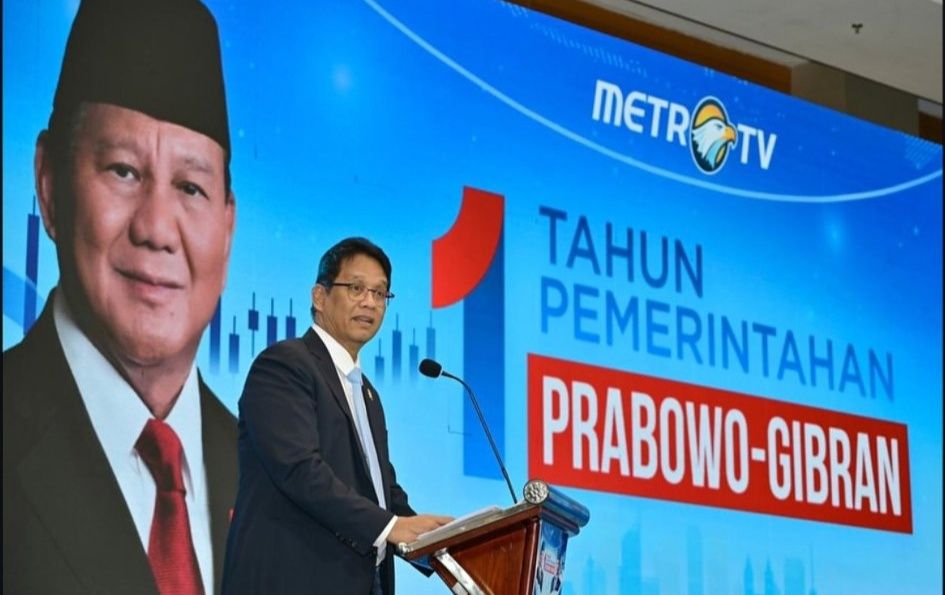
Under President Prabowo Subianto, the government’s drive for budget “efficiency” has reinforced central control over spending. Local governments are expected to deliver ambitious mandates but lack the financial means to do so. Struggling to meet obligations, some turn to unpopular measures, such as local tax hikes, triggering public anger. This is not mere incompetence at the local level; it reflects the structural dependence of regional governments forced to extract more from citizens because the central state monopolises productive tax sources.
The magnitude of fiscal transfers shows how dependency persists despite the rhetoric of autonomy. Total transfers to regional governments, known as TKD, reached Rp881.4 trillion (A$80.47 billion) in 2023. The following year, in 2024, the figure stood at Rp863.5 trillion, roughly a 2% decline. For 2025, the government has allocated Rp848.52 trillion, after cutting about Rp50.59 trillion across key components as part of efficiency measures. By August 2025, only Rp571.5 trillion had been disbursed, just 62% of the total and only 1.7% higher than the same period in 2024. Despite the vastness of these nominal sums, their share of national expenditure continues to shrink. TKD now represents about 25% of total government spending, down from previous years as central government spending has expanded.
These numbers make one thing clear: transfers remain large but their role as fiscal equalisers is diminishing. The funds, while essential, function more as subsidies than genuine instruments of fiscal empowerment. They are conditional, top-down and dependent on the central government’s approval or project criteria. In essence, they compensate for the lack of fiscal rights rather than strengthening them. True fiscal transfers would provide local governments with both the authority and predictability to plan development independently, much as in systems where local administrations have stable, rules-based access to shared tax revenues.
Even provinces with special autonomy status, such as Aceh, Papua and West Papua, operate within this constrained framework. Dana Otonomi Khusus or Special Autonomy Funds provide additional funds beyond regular transfers, yet those funds are earmarked and heavily monitored by central ministries. Far from granting real independence, special autonomy often replaces political subordination with fiscal dependence: more money but under tighter scrutiny. It is autonomy in name, not in substance.
This structure generates a dangerous paradox. Citizens expect local leaders to improve schools, hospitals and infrastructure, yet those leaders lack control over meaningful revenue streams. Their autonomy is largely performative: they hold elections, draft regional plans and run development forums but, when it comes to financing, they remain supplicants at Jakarta’s door. Indonesia’s decentralisation looks democratic from afar but functions bureaucratically at its core.
By contrast, China, often cited as the world’s most centralised state, operates one of the most fiscally decentralised systems. Local governments there are entitled to direct shares of value added tax (VAT) and income tax, ensuring both stable revenue and a strong incentive to pursue growth. This entitlement, not merely an annual budget allocation, has fueled interregional competition, innovation and investment, turning local administrations into engines of national development.
This entitlement-based system provides an important lesson for Indonesia. When regions receive a fixed and predictable share of national tax revenues, particularly from VAT and income tax, they gain not only fiscal stability but also the motivation to expand their own economic base. Each new job created contributes to income tax, and each increase in production value adds to VAT revenue, both of which directly benefit local budgets. This mechanism creates a virtuous cycle: local governments compete to attract investment, build infrastructure and create employment because every unit of growth tangibly increases their fiscal capacity. Over time, this competition would reduce regional inequality and strengthen accountability.
However, it must be recognised that regional capacities vary widely, in administrative competence, transparency and financial integrity. Therefore, a prudent reform path would link entitlement eligibility to measurable standards of governance and accountability. Regions that meet transparency and performance benchmarks should receive greater access to shared revenues, while others continue under conditional arrangements until they improve. This approach combines incentive and discipline, rewarding good governance without compromising national cohesion.
A variant on the entitlement model is Australia’s. Australia has a large vertical fiscal imbalance and, via an independent body, distributes federally-collected goods and services tax revenue to the states according to a complex formula that takes into account each state’s ability to raise its own revenue and its costs of delivering services. But Indonesia’s model has none of the automacity of Australia’s: transfers breed uncertainty, politicisation and clientelism. Without structural entitlement, or at least genuinely rules-based transfers, regional governments depend on yearly negotiations and political favours, undermining accountability and long-term planning. This is not to call for unlimited autonomy, but rather a guarantee of fiscal space, a shared stake in national growth rather than a benevolent allowance from the centre.
The patronage effect of central control distorts local politics. Success in many regions is not defined by innovation or service delivery, but by how effectively a leader can lobby Jakarta, securing additional DAK (Special Allocation Fund) allocations, national strategic project status or state-owned enterprise investment. Governance becomes an exercise in proximity to power, not performance. Meanwhile, local plans follow a routine cycle with forums, proposals, budget lists and disbursements mirroring maintenance rather than transformation. Ambitious visions for agricultural modernisation, renewable energy or industrial clusters remain mere slogans when local fiscal levers are absent.
The latest tightening of TKD allocations compounds this problem. The 2026 draft budget projects a sharp decline in transfers to Rp650 trillion, roughly a 25% reduction from 2025 levels. More than 80% of Indonesia’s regions still rely on central transfers for the majority of their budgets, meaning such cuts will further erode their fiscal flexibility. Regions have just enough autonomy to take the blame when citizens are dissatisfied, but not enough fiscal power to prevent failure in the first place.
Indonesia’s decentralisation is thus a story of political empowerment without fiscal substance. The illusion of autonomy persists, but beneath it lies a structure of dependency reinforced by discretionary transfers. If Indonesia is serious about strengthening its regions, it must redesign its fiscal architecture to include predictable, rule-based sharing of national taxes, particularly VAT and income tax, granted not as temporary grants but as earned entitlements tied to governance performance. This would create a genuine incentive structure for local governments to innovate, attract investment and compete productively.
Until such reform takes place, Indonesia’s regional autonomy will remain a hollow construct. Local leaders may hold the wheel of governance, but Jakarta still controls the engine, and as long as that remains true, decentralisation will be remembered not as a triumph of empowerment, but as a managed illusion of freedom.






Are there more information regarding about this topic for us to research for? Thank you, Regards, Ilmu Komunikasi.
Thank you, Ronny, for your excellent and illuminating analysis. One of the best pieces on decentralisation in Indonesia I have read!