When a new anti-corruption commission begins operating, one question tends to come quickly: how many people have you prosecuted?
It is understandable. Prosecutions and convictions are visible, easy to count and demonstrate that corruption can carry consequences. But they are an incomplete measure of whether an anti-corruption commission is doing its job.
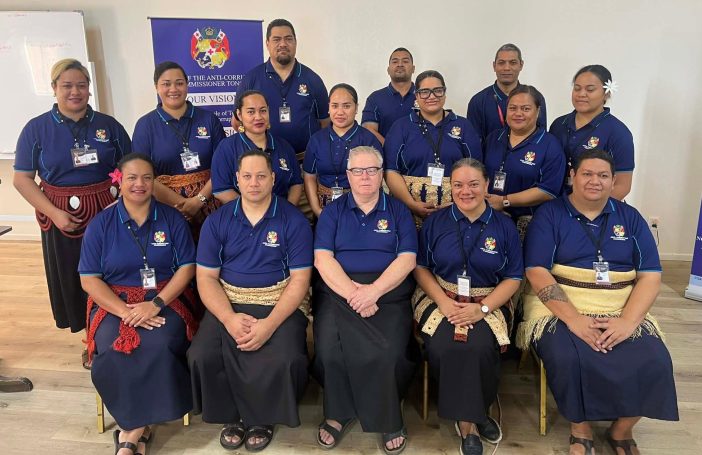
Tonga’s Anti-Corruption Commission (ACC) is one of the newer institutions of this kind. If success is defined too narrowly, the Commission may be judged against outcomes only partly within its control, while much of the work Parliament established it to do remains invisible.
The better starting point is the mandate. Under section 10 of Tonga’s Anti-Corruption Commissioner Act, the ACC’s responsibilities extend beyond investigating corrupt conduct. They include suppressing corruption, educating public officials and the community and enlisting public support in prevention and reporting.
This combination reflects the diversity recognised by the Jakarta Principles and developed in the Colombo Commentary. Anti-corruption agencies may investigate, prevent, prosecute, educate or combine these functions. Their performance measures should follow the model they were created to operate.
An ACC investigation may uncover evidence suggesting a criminal offence. Getting from that point to a conviction involves decisions outside the Commission. Prosecutors consider offence elements, admissibility and the public interest. If charges are laid, a court determines guilt beyond reasonable doubt.
None of this diminishes prosecution. Serious criminal conduct should have serious consequences. The point is attribution. If the ACC conducts a lawful, thorough and fair investigation, identifies corrupt conduct, recommends reforms and refers possible offences, the Commission itself is not necessarily ineffective because prosecution does not follow in a particular case. Over time the pattern still carries weight. If referrals repeatedly fail to produce charges, that says something about the quality of the investigations behind them.
The caution applies in reverse. More investigations or findings do not automatically prove success. Integrity bodies exercise public power. As New South Wales Independent Commission Against Corruption (ICAC) Chief Commissioner John Hatzistergos argued in Guarding the Guards: the virtue of restraint in integrity systems, an address to the Government Solicitors Conference in Sydney in September 2026, restraint is a source of an integrity agency’s legitimacy rather than a limit on it. Quality, proportionality and procedural fairness matter alongside activity.
The framework we work within separates results into three levels.
First are outputs the ACC controls: proper assessment of complaints; timely, thorough investigations; lawful use of powers; procedural fairness; evidence-based conclusions; clear reasons; and delivery of prevention and education work.
Second are outcomes the ACC influences but cannot determine. These include prosecution, disciplinary action and implementation of prevention recommendations. They should be reported, but they depend on decisions by prosecutors, employers and public agencies.
Third are longer-term effects to which the ACC contributes: stronger integrity systems, reduced corruption risks, greater official awareness and confidence in reporting suspected corruption. These may be the outcomes society values most, but they are also the hardest to attribute.
International work treats effectiveness as multidimensional. The International Anti-Corruption Academy’s 2025 research methodology examines institutional inputs and performance across agency functions. The U4 Anti-Corruption Resource Centre’s grading framework scores agencies against the 16 Jakarta Principles, while noting that the principles rest on expert consensus rather than empirical validation. NSW ICAC’s annual reporting covers assessments, investigations, prevention, findings and downstream action rather than prosecutions alone.
Measures of this kind have one weakness that prosecution counts do not: the agency largely reports on itself. That is why they need external testing, whether through audit, independent review of closed files, or scrutiny by Parliament and oversight bodies. Without it, a broader framework can become a collection of favourable indicators and an excuse for weak enforcement.
Take a completed investigation file, as an illustration. A prosecution count would record only that no prosecution followed. A more informative account asks whether the complaint was assessed promptly; conflicts were disclosed and managed; access to sensitive material was restricted; key decisions were independently reviewed; coercive powers were used proportionately; the evidence supported the conclusion; affected people had a fair opportunity to respond; and identified control weaknesses were addressed. One file can reveal investigative quality, institutional restraint and preventive value even without a conviction. Each of those questions can be answered by someone outside the Commission — but this takes work, and that makes the broader approach more demanding than a prosecution count, rather than less.
In small states, anti-corruption results may depend on limited pools of specialist investigators, forensic expertise, prosecutorial resources, disciplinary systems and the capacity of agencies to implement reforms.
Small administrations also operate through close institutional and social relationships. In an earlier blog post, “When everyone knows everyone: independence in practice”, one of us (Mangisi) argued that in such settings independence has to be demonstrated in daily practice rather than assumed. That does not justify a different integrity standard. It makes transparent conflict management, procedural fairness and public legitimacy more important.
Pacific evidence also cautions against reading indicators too quickly. Transparency International’s Global Corruption Barometer for the Pacific, which surveyed more than 6,000 people in ten countries including Tonga, found that 61% considered government corruption a big problem, while 62% thought their government was doing a good job of fighting it and 71% believed ordinary people could make a difference. Those answers point in opposite directions, so no single indicator settles whether an integrity system is working. A rise in complaints may signal growing confidence rather than growing corruption, and a low prosecution count may reflect downstream capacity rather than weak investigation.
For Tonga’s ACC, the principle that follows is to measure what the Commission does, what changes because of its work and the longer-term effects to which it contributes, without confusing contribution with control. In practice that means reporting referrals, prosecutions and convictions alongside investigation quality and timeliness, fairness and lawfulness, corrupt-conduct findings, implementation of recommendations, improvements to controls, prevention and education, and reporting confidence.
For a young commission, choosing the right measures is part of institution-building. The figures reported today will shape what Parliament, government and the public understand as success tomorrow.
View the occasional papers series on Tonga’s Anti-Corruption Commission publications webpage.