

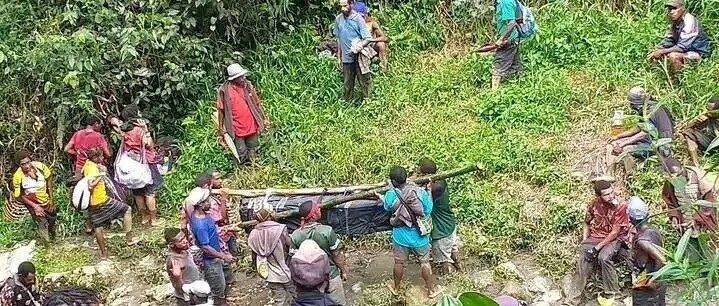
Polopa means “go ahead, I will come after you”. It is the name given to the Polopa-speaking people of the Southern Highlands Province — a population of about 10,000 people living in the Erave local level government area. They live in nine council wards: Kerabi, Balowei, Tiri, Waraga, Waposale, Kele, Puputau (Mt Tawa), Sirigi and Sopuse.
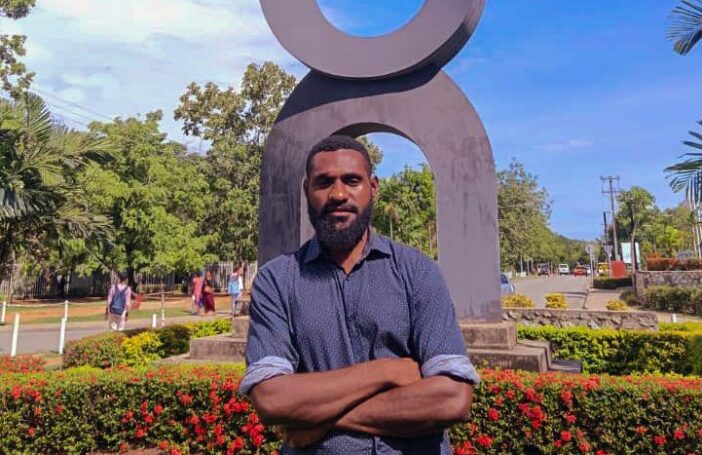
My parents hail from Tiri and the last time I visited the village was around Easter of 2022 when I took my late mother’s body home to be buried. Six months prior, my father was buried there. During those visits, I realised that very little has changed regarding the hardship my relatives have faced in Tiri or the other villages since before independence.
An area of untouched virgin rainforest, lush wildlife and spectacular scenery, most parts of Polopa are shrouded in mystery and hardly touched by modernisation. Despite the presence of churches, particularly the Evangelical Church of PNG, myths and legends play a significant role in shaping the people’s relationship with their land and one another. After 50 years, Polopa remains very isolated, accessible only by foot, air and dugout canoe. As Papua New Guineans look forward to the future, the Polopa people’s dream of being connected to the wider nation remains a vague and unfulfilled one.
This part of PNG has rarely seen much development. Most, if not all, services that were set up are now either defunct or are in a deplorable state due to chronic corruption and neglect. A health centre and two staff houses were constructed in Tiri by Oil Search (now Santos) during the 2007-2012 second term of Southern Highlands Province Governor the late Anderson Agiru.
During that time, Oil Search was the operator of the Gobe Oil Project which is located about 50 to 100 kilometres from Tiri by road. Despite not being direct beneficiaries (landowners) of the Gobe project, the health centre was built after late Governor Agiru was presented with a report by the Erave District Health Authority on the dire state of health in the region.
The health centre is now struggling and barely operational. It serves all the Polopa people but the closure of the Tiri Airstrip a couple of decades ago due to the deterioration of its runway means that medical supplies can only be delivered by government-funded helicopters once or twice a year. Skilled medical officers rarely attend the centre. Emergency cases require the patient to trek (or be carried) through the jungle on foot and travel several kilometres by bus or ten-seater vehicle before reaching Mendi or Mount Hagen for medical attention. The dysfunctional health centre in Tiri means that Polopa people often die from preventable diseases including tuberculosis and malaria.
Despite some airstrips still operating, such as the ones in Mount Tawa, Wopasale and Sopuse, travel on foot between the Polopa villages is still common and a daunting challenge given that they are separated by steep, rugged mountains, rivers and other uncompromising terrain. As a result, many mothers and old people simply stay back and resort to herbal medicines and faith in God.
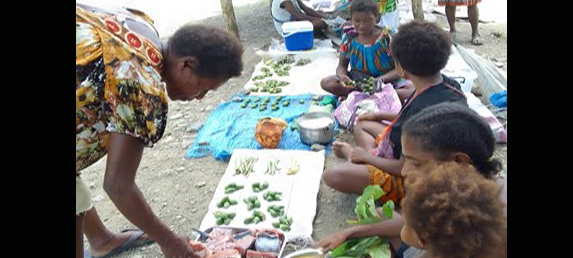
The land is rich and fertile and there is an abundance of food, including protein. Sago, sweet potato and taro are the main staples and pig the predominant form of livestock. Most of the people are subsistence farmers. The isolation of the region makes it difficult for people to trade or market their produce and livestock to earn an income.
Store goods, phones, radios, clothes and funeral caskets reach the villages via the same muddy, rough and leach-infested walking tracks that the people have to use if they want to sell their produce and livestock. In 2022, during the launch of the Gulf-Southern Highlands Highway, Prime Minister James Marape announced to the public that K3 million was allocated to establish an agricultural technical institute in Erave. Until now, Polopa is yet to see anything on the ground.
Aside from Mount Tawa, most of the village schools are shut or operating on an ad hoc basis. Corruption in the form of misuse of school funds and teacher absenteeism are chronic problems. The remoteness of the location is the main reason why most teachers who have been posted to Tiri have not actually taken up their posts. The problem is so great that a whole generation of young people have missed out on getting an education and a chance to realise their dreams. Polopa has a very low literacy rate compared to other areas in Erave. Feeling disenfranchised, young people are resorting to drugs or they migrate into towns and cities lured by the excitement of “town life” and the false premise that they will be able to earn money.
Given PNG’s abundance of natural resources, it is baffling that most parts of the country, like Polopa, are still isolated even at the 50th year of independence.
The Marape-Rosso Government’s Connect PNG program is being touted as a key enabler in “connecting the unconnected”. Unfortunately, it has not connected the people of Polopa. In 2023, the government announced a K3 million Polopa Road Project with the route planned for Wolu to Mt Tawa. Unfortunately, since then, there has been very little information on its progress.
Indeed, the development status quo for Polopa will remain unchanged unless the government either invests money into building a road or rehabilitates and re-opens the region’s airstrips.
As PNG marks 50 years of independence, the people of Polopa have nothing much to celebrate. The first 50 years of independence have failed them terribly. The government has to start focusing on the Polopa people and other similarly isolated groups around the country. Otherwise, the next 50 years will be nothing more than another big failure.
A version of this blog was first published on the PNG Attitude website.



Thankyou for putting it down on paper. Hope this reaches the leaders in that area.
Thank you. Yes, that’s the main idea. To draw attention from leaders in that area and the PNG Govt to address service delivery in Polopa.