Papua New Guinea’s health challenges are too large, too urgent and too complex to be carried by government alone.
Of course, the public sector must remain at the centre of the health system. It has an essential role in setting policy, establishing and enforcing standards, assuring quality and value for money, financing essential services, and ensuring that rural and vulnerable communities are not left behind. But that does not mean government must do everything itself; that is neither practical nor affordable.
Around the world, effective health systems draw on the strengths of many partners, including the private sector. At their best, these partnerships are deliberate, transparent and guided by clear safeguards. They should strengthen the national health system, not fragment it into separate or competing services.
This is not an argument to privatise health care, nor for PNG to replicate the larger commercial health markets found elsewhere. Rather, it is about finding the right balance for PNG’s circumstances, with the public interest paramount and the public system at the centre. Within that mix, the private sector can make important contributions.
The first contribution is shared value: action where business and community interests align, including a mutual interest in controlling the spread of disease and ensuring access to health services. The PNG Business Coalition Against HIV and AIDS provides one of the best illustrations of how this can work. Prompted by modelling of HIV’s potentially dire impact on the workforce and economy, the Coalition was instrumental in helping companies disseminate information, reduce stigma, and connect employees, their families and communities with counselling, testing and care, as well as access to condoms through private-sector distribution networks. The model proved so effective that Businesses for Health PNG later adapted it to address tuberculosis.
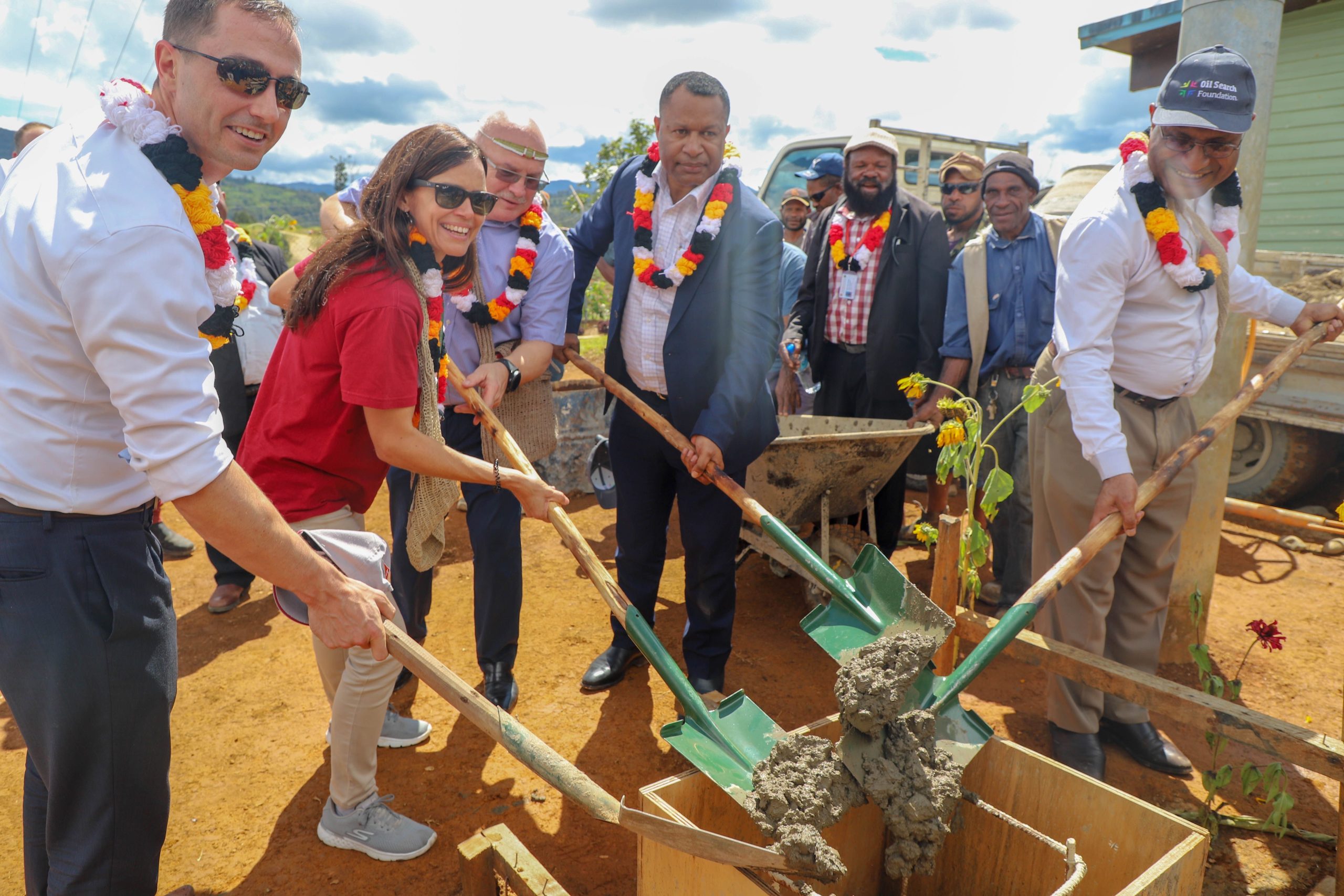
For resource-sector companies, shared value also means ensuring that nearby communities gain tangible benefits from development, recognising that community support is essential to safe and uninterrupted operations. Oil Search (now Santos) and its joint-venture partners allocated tens of millions of dollars to improve access to healthcare in Southern Highlands and Hela provinces. The then Managing Director of Oil Search, Peter Botten, described this investment as “a relatively minor insurance premium” in a “rugged place to work” where a company cannot “just build a wall and keep everybody out”.
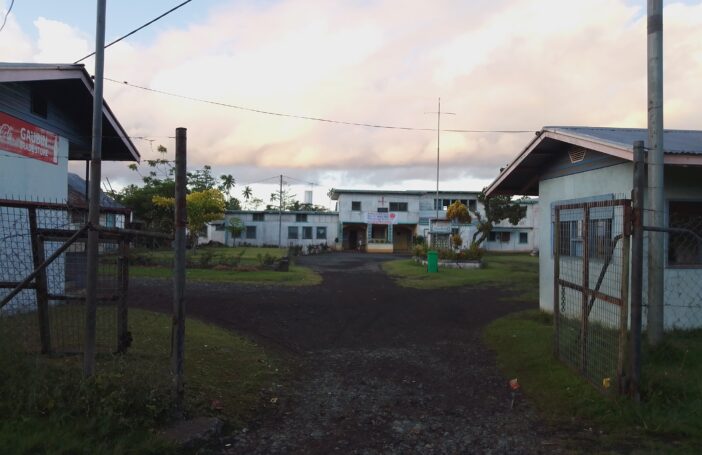
The investment helped prevent the collapse of Hela Provincial Hospital and strengthened the Southern Highlands Provincial Health Authority (PHA). Working through the PNG health system, resource-sector partners supported better governance, improved financial and human resource management and provided technical capability, medical equipment and essential infrastructure.
The impact of this public-private model was reflected in the National Department of Health’s Assessment of Sector Performance 2019-2023, which showed Southern Highlands and Hela had moved from among the country’s poorest-performing PHAs to among the best-performing overall (reconstruction funding after the 2018 Highlands earthquake likely also played a role). Prime Minister Marape acknowledged this progress in a 2025 statement, commending Southern Highlands PHA for its responsible use of National Government funding and its efforts to reach remote communities. While results have not been uniform, and both provinces still face serious health-service challenges, the experience shows what can be achieved when interests align around strengthening the public system.
The second contribution the private sector can make is through its commercial operations, providing more accessible and, in some cases, more reliable healthcare options alongside government services. Public facilities are often overstretched, with staff working under immense pressure and too few doctors and other essential health workers available. Patients may face long waits, inconsistent medicine availability, and limited access to diagnostics or follow-up care.
Private providers can fill part of this gap. While some high-end services remain out of reach for most Papua New Guineans, more affordable private options are becoming available. For example, a growing number of locally owned, lower-cost integrated primary healthcare clinics are expanding access to consultations, laboratory testing, imaging, optometry, dentistry and pharmacy in one connected setting. Increasing demand for these services demonstrates people are willing to pay for reliable care, which helps relieve pressure on overstretched public facilities.
Pharmacies also play a practical role in keeping people well. Pharmacists provide advice on medicines, support adherence, and can be an important entry point and referral pathway into the wider health system. The public health system already relies on private suppliers to procure and distribute many essential medicines. But when medicines fail to arrive through regular channels, PHAs often use their own funds to buy urgently needed supplies from private distributors so patients are not left without treatment.
PNG’s experience with medical-kit procurement reminds us that this process carries risks and underscores the importance of getting safeguards right. A competitive tender alone is not enough to ensure transparency, quality and value for money. Purchases should be well governed, including by independent quality assurance, declarations of conflicts of interest and beneficial ownership, and public reporting on contract awards. With these safeguards, engaging capable private providers can help maintain access to essential medicines while strengthening, not fragmenting, the public health system.
The third contribution is technical capability. The private sector can contribute much more than funding, bringing expertise in procurement, logistics, inventory management, cold chain, digital systems, customer service, financial discipline and governance. Public-private partnerships can also draw on practical business experience in board governance to strengthen PHA boards and other public bodies. That said, where a business representative sits on a PHA or other public board, robust conflict-of-interest arrangements are essential. Boards should apply the same basic governance disciplines expected of PNGX-listed companies: full disclosure of relevant interests, an up-to-date register, and recusal from decisions where a director’s firm has a commercial interest. These disciplines were embedded in the governance frameworks of Oil Search and Santos, whose senior executives have chaired PHA boards; Santos executives continue to do so.
Finally, corporate philanthropy also plays a role. It can fund innovation, reach people who may otherwise miss out and complement government and development partner programs. In Port Moresby, City Pharmacy Ltd Foundation and the Sir Brian Bell Foundation operate Her Health Hub (HHH) — a joint private-sector initiative that provides same-day cervical cancer screening and HPV testing for K20, a fee far below cost, along with on-site treatment for women who test positive for high-risk HPV. Others in the private sector, including ExxonMobil, have donated to HHH to help extend services to as many women as possible.
HHH does not replace the government’s responsibility for women’s health; indeed, Port Moresby General Hospital’s role in the referral pathway is essential, and women needing more advanced treatment are referred to its gynaecology clinic. But it provides an accessible service that builds awareness and demonstrates how screening and treatment can be delivered with quality and affordability.
Alongside government, development partners have an important role in creating the conditions for the private sector to contribute. They have invested substantial resources in PNG’s health sector, but too often see private-sector actors mainly as suppliers, contractors or potential sources of funding. They can help strengthen the public systems that make partnerships safe and effective: transparent procurement and contracting, clear standards and performance measures, quality assurance, and the capacity to manage and monitor agreements. This would enable government and PHAs to engage capable providers with confidence, on terms that protect value for money and the public interest. Without this broader engagement, significant investments risk falling short of their potential.
The question is not whether the private sector should be involved. It already is. The question is whether we can work together more strategically and effectively, with a shared commitment to one outcome: better health care for Papua New Guineans.