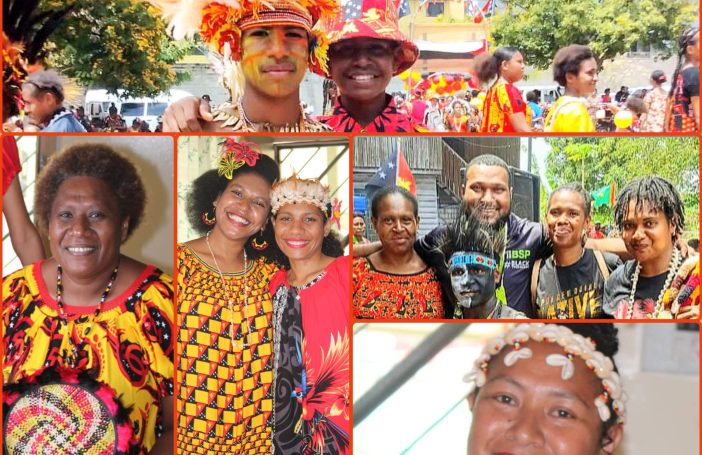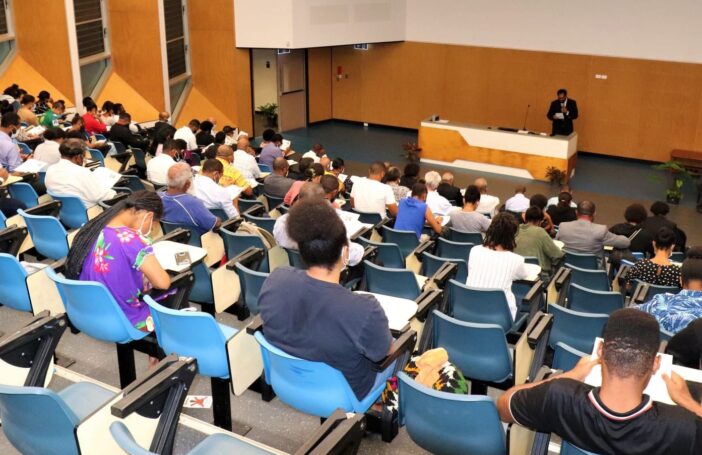
Papua New Guinea’s youth population is substantial — over 40% of the country’s population is under the age of 18. National dialogue has recognised this “youth bulge“, and leaders have stressed the need to mould young people into responsible, civic-minded citizens who understand PNG’s unique identity and can guide the country into the future.
The country’s recent education overhaul reflected this. Primary and secondary curricula were rewritten using a more holistic, standards-based approach, and Christian and Citizenship Values Education (CCVE) was introduced and timetabled for two classroom hours per week.
But curricula alone do not make responsible citizens. Understanding the civic education of teachers themselves — what civic topics they value and how prepared they feel teaching them — can provide insights into what civic knowledge actually reaches students. As the youth population grows and the education system evolves, understanding the outlook of student teachers — those who will spend their careers educating the next generation — is especially important.
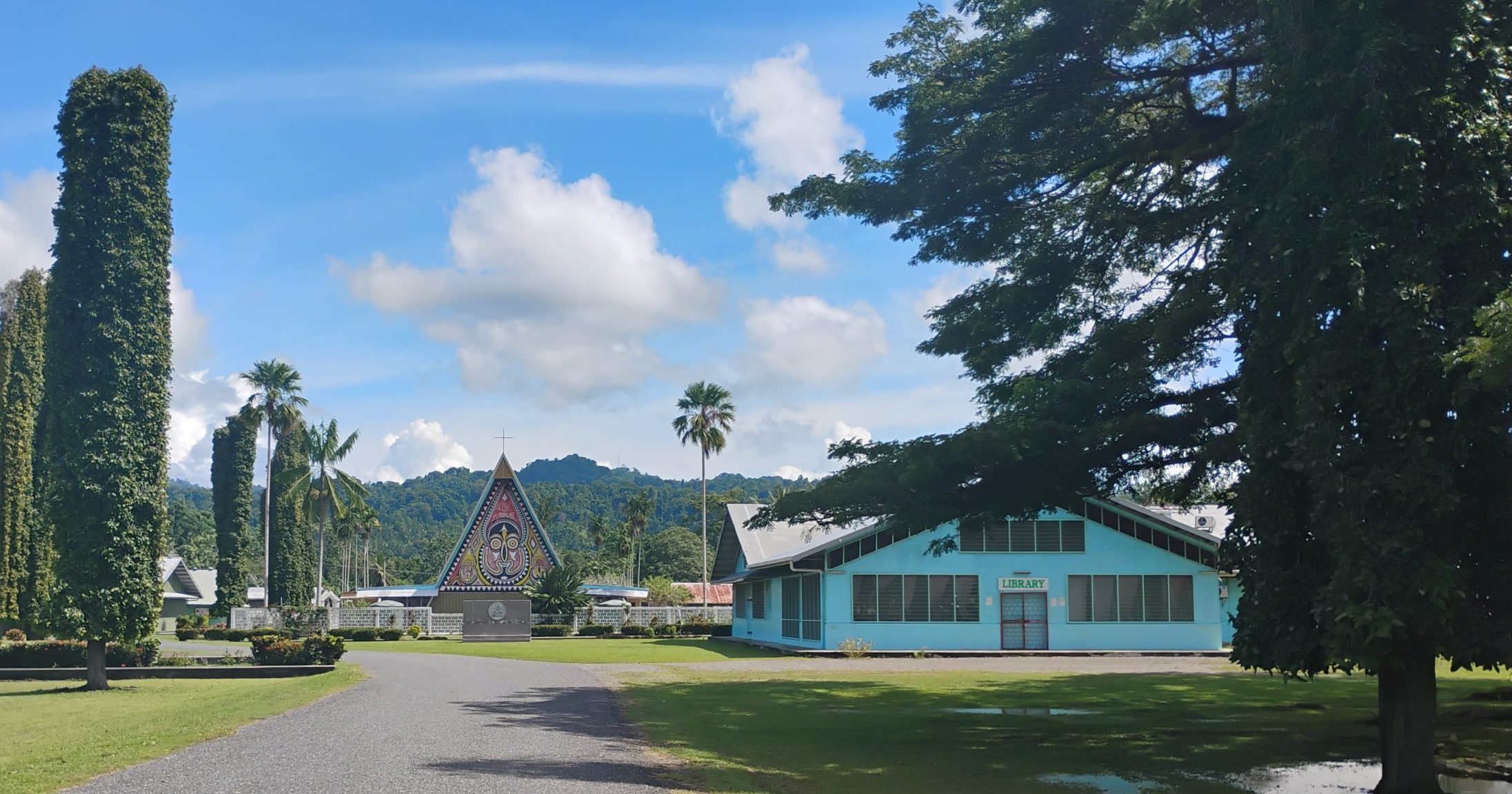
The following study surveyed 51 students at St Benedict’s Teacher’s College in Wewak. Participants, all of whom were studying to become primary school teachers, were asked to rate the importance of nine different civic education topics, chosen based on their prevalence in the social science and CCVE curricula. They then rated the same topics based on how confident they felt teaching them in the classroom.
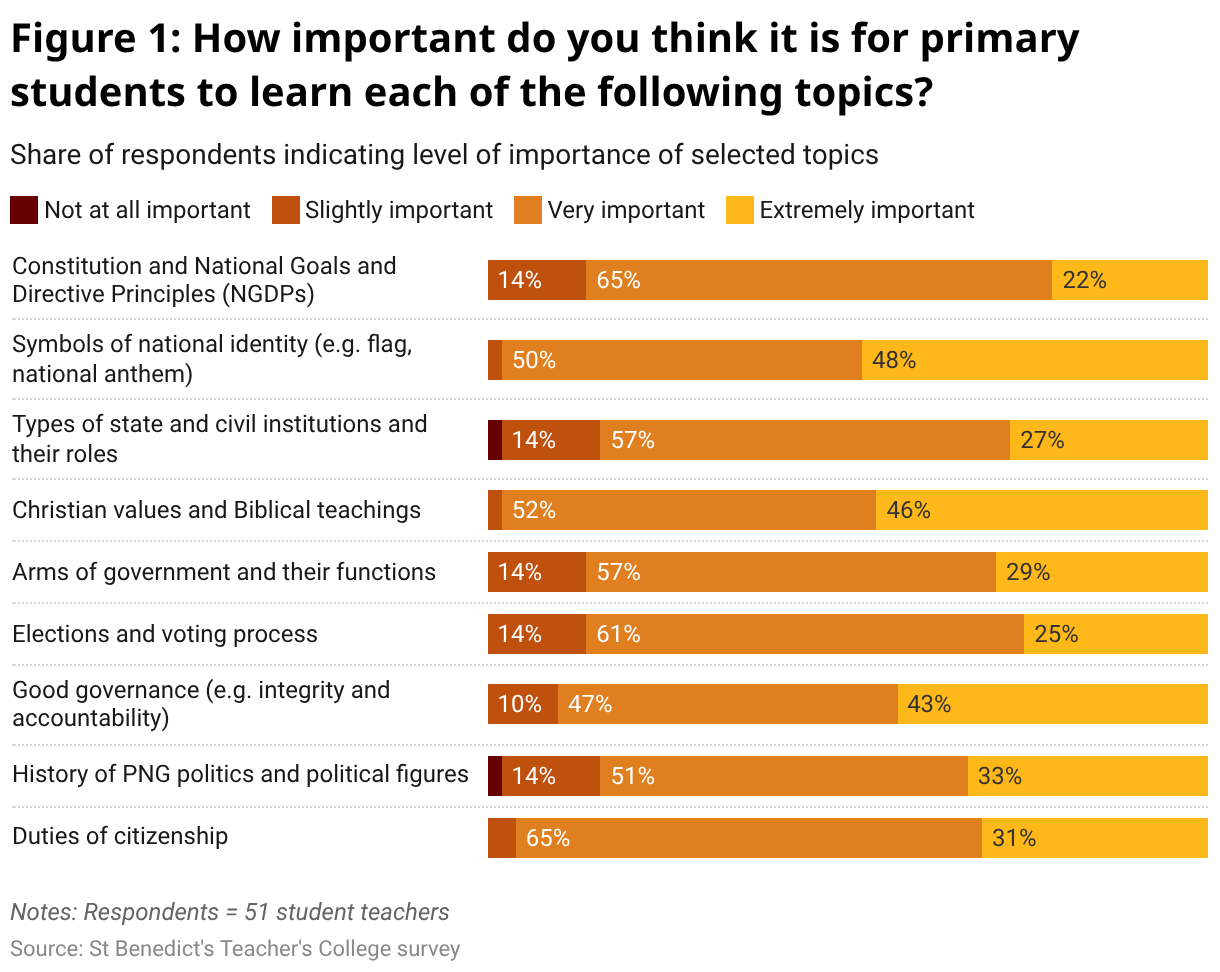
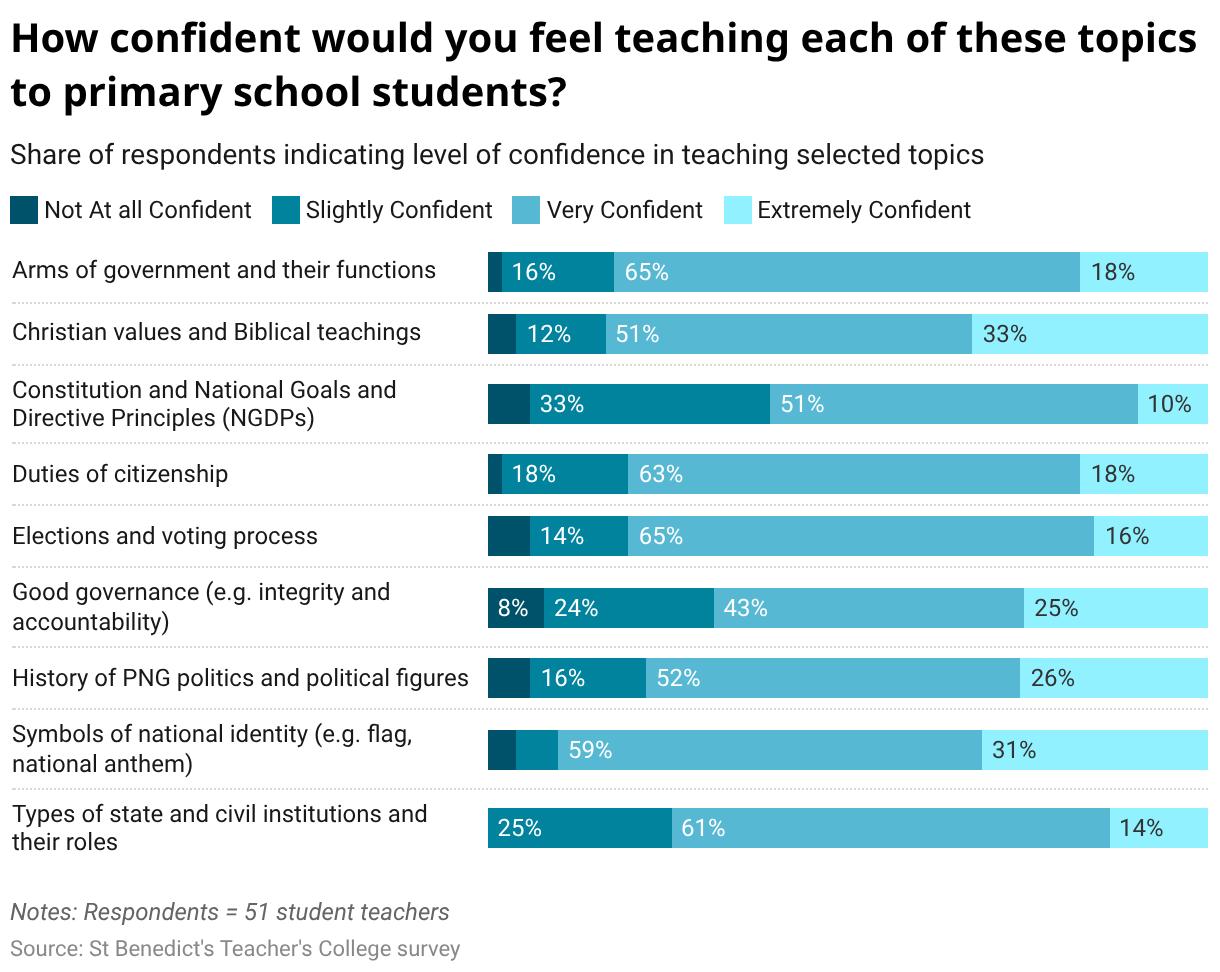
Generally, the topics identified as most important were also the ones participants felt most confident teaching. Symbols of National Identity and Christian Values and Biblical Teachings were the most popular — 98% of participants considered these topics either “extremely” or “very” important, and 90% and 84% felt either “extremely” or “very” confident teaching them in the classroom. At the low end of the spectrum, Constitution and National Goals and Directive Principles (NGDPs) and Types of State and Civil Institutions were rated “extremely” or “very” important by 86% and 84% of participants, and 61% and 75% felt “extremely” or “very” confident.
The results indicate a disparity between the intangible, value-based components of civic education and the more tangible, institutional ones. Student teachers gave priority to and felt more confident teaching topics related to civic norms, like what values form responsible citizens or how national symbols apply to one’s life. But they felt less confident in topics relating to civic institutions, such as the functions of different government agencies or the meaning of the NGDPs.
This disparity could also explain the gap seen in Good Governance, a topic requiring values like integrity and accountability along with knowledge of civic institutions like the Ombudsman Commission. While 91% identified Good Governance as “extremely” or “very” important — the third highest score — just 69% felt “extremely” or “very” confident teaching it, one of the lowest.
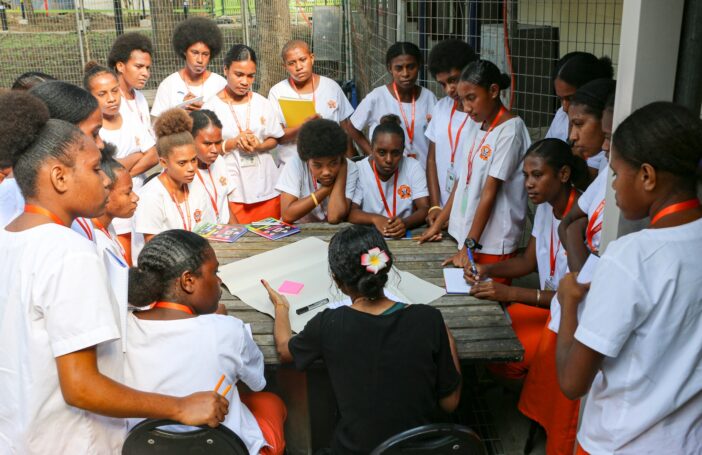
Following the survey, 20 additional student teachers were interviewed in two focus groups. During these sessions, participants debated the meaning of the term “civic education”, discussed challenges to teaching it in the classroom, and outlined strategies and lessons they believed would best serve primary students.
Answers on the meaning of civic education varied, but personal rights and responsibilities were frequently emphasised. Many participants associated civic education with understanding Christian values, traditional customs, or one’s place in their family and society. Though frequent, these responses were not universal. Others asserted that personal relationships are the responsibilities of parents, or that learning traditional customs in class is less relevant as schools become more culturally mixed. Some institutional topics such as the Constitution or PNG geography were also discussed, but topics related to norms were more prevalent, a trend similar to the survey responses.
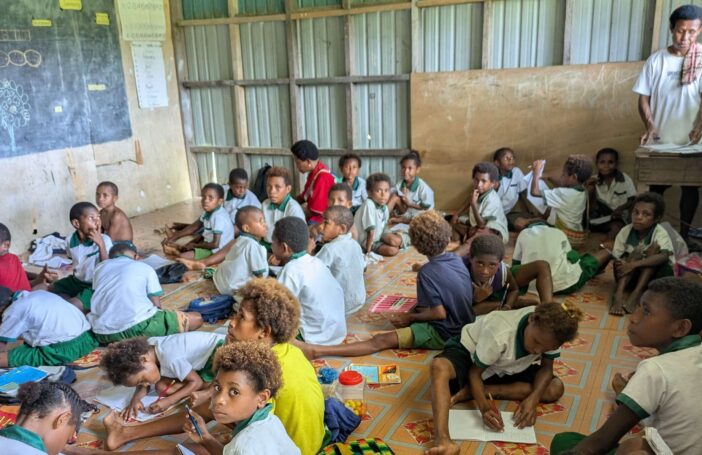
Regarding challenges, participants pinpointed a lack of resources, particularly internet access and up-to-date textbooks. Students — all of whom had at least some degree of in-classroom experience through annual field teaching practice — also pointed out that many teachers currently in the field had not yet received training on the new standards-based curriculum. Their answers identify a possible gap in implementation — while the standards-based curriculum was introduced to primary schools in 2015, some schools have not received the training or resources to fully put this curriculum into practice.
Finally, participants shared civic education teaching strategies, drawing from their training as student teachers along with their own experiences in primary school. Numerous student teachers recalled a Grade 7 lesson in which they labelled the limbs of tree branches as different arms of government. Others mentioned plans to teach the importance of traditional items by recreating them from recycled materials. Altogether, most suggestions involved participatory, hands-on learning. This could reflect a lack of digital tools like laptops and projectors in many schools, or that student teachers believe physical teaching aides are simply more beneficial for primary school learning.
While this study’s findings are detailed, they are limited and do not represent a nationwide sample. St Benedict’s is a private, Catholic university that only offers degrees in primary education. Expanding this study to include secondary education students and public universities would provide a broader picture of the civic education outlook for student teachers across the country.
For the moment, PNG’s leaders can take some measure of comfort. This St Benedict’s sample indicates student teachers feel confident teaching civic-minded values and have a variety of interactive ideas for educating the next generation. But leaders should also note there is much less confidence in teaching the Constitution, government agencies and other topics surrounding civic institutions. And challenges remain in ensuring textbooks and training reach every classroom.