Every few years, the global health community confronts a version of the same crisis. A major donor announces funding cuts, panic ripples through the organisations developing medicines for the world’s poorest people, pipelines freeze and diseases that have held back prosperity for centuries continue unchecked. The 2025 shock was particularly severe: the near-complete withdrawal of US government support was a significant blow to work in low- and middle-income countries. The non-profits that develop medicines for diseases of poverty, among them Medicines Development for Global Health (MDGH), the Drugs for Neglected Diseases initiative (DNDi), the Medicines for Malaria Venture (MMV), the Global Antibiotic Research and Development Partnership (GARDP) and the TB Alliance, were caught in the tsunami of consequences that followed. The community needs a permanent fix to this broken funding model.
Medicines are among the most cost-effective interventions available to improve human health. They ease suffering, prolong life and sometimes eliminate diseases that have persecuted humanity for millennia. Cures for hepatitis C, treatments for HIV/AIDS and chimeric antigen receptor T-cell (CAR-T) therapy for some cancers show what is possible.
Yet pharmaceutical development follows commercial logic: investors commit billions upfront only when a financial return justifies it. Without a paying market, product development does not happen. Of the more than 1,000 new chemical entities approved by the US Food and Drug Administration (FDA) since 2008, only 13 targeted neglected diseases, malaria or tuberculosis. Over the same period, more spacecraft have been sent to the moon than new medicines developed for global health.
Bringing a single medicine to market takes 10 to 15 years and more than US$1 billion, with high rates of failure at every stage. Outside the industry, this process is opaque and poorly understood. The public health community has largely left the work to the private sector, and the gap in medicines for neglected diseases is, in that sense, less a failure of industry than a failure of public health to take responsibility. Pressure applied to industry to fill the gap has generated considerable antipathy. Persistent demands to participate in development, followed by expectations to donate the resulting medicines, represent a fundamental mismatch of purpose. Despite the existence of donation programs, the manufacture of unprofitable products and the sharing of intellectual property, the contributions of industry are rarely seen as sufficient and attract little public acknowledgement. Only the Japan Pharmaceutical Manufacturers Association has been forthright enough to say the current arrangements cannot continue. Others have quietly withdrawn.
The consequences fall hardest on the world’s poorest people. Neglected tropical diseases are neglected precisely because those who suffer from them cannot pay, and over two billion people lack access to even the most basic medicines. These diseases are not a distant problem. Three US states reported local dengue cases in 2024. Scabies appears regularly in nursing homes, prisons and refugee reception centres across Europe, and remains endemic in many remote Aboriginal and Torres Strait Islander communities in Australia. The Buruli ulcer has emerged on the Australian southern coastline. Across our region, elephantiasis (lymphatic filariasis) persists, while leprosy remains a burden in the Philippines and Indonesia. As the climate changes, these diseases are spreading to previously unaffected populations. Aid cuts now threaten to reverse decades of progress, and the populations most affected are those with the least political voice to resist.
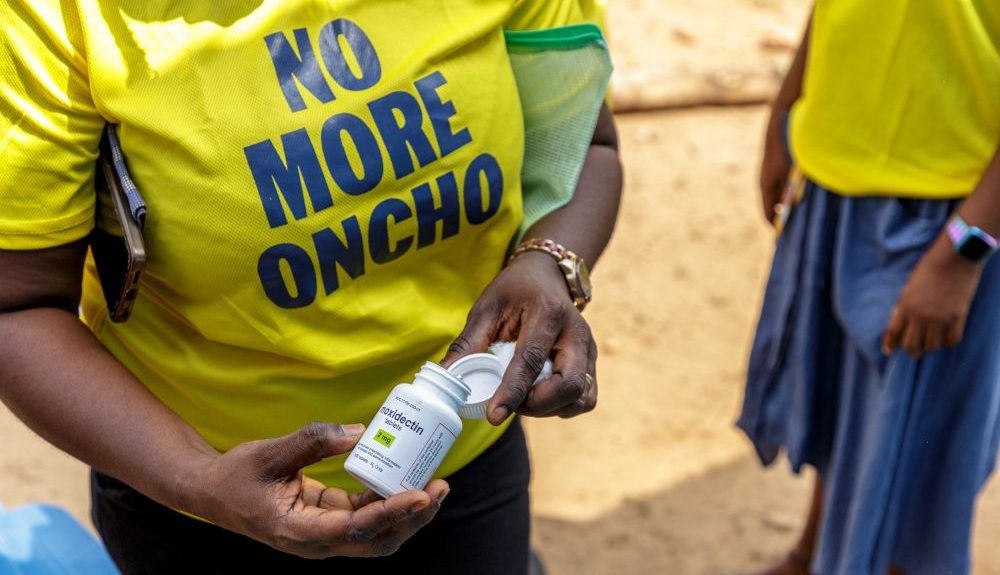
MDGH, an Australian-based not-for-profit pharmaceutical company, was established to address this gap. It developed moxidectin for river blindness in partnership with the World Health Organization’s Special Programme for Research and Training in Tropical Diseases and is now distributing the medicine in endemic countries. It is also working to extend moxidectin to five other diseases and developing a new medicine, dovramilast, for three more. Together, these conditions affect over a billion people.
MDGH has forged two global firsts: it was the first not-for-profit to develop and shepherd a novel medicine through US FDA approval, and the first to distribute its own medicine in an endemic country. In the past year, more than 110,000 people in Ghana and 10,000 in Angola have received moxidectin for river blindness.
MDGH is not alone. DNDi, GARDP, MMV and the TB Alliance, working with pharmaceutical companies, have delivered remarkable results over two decades: the first medicine approved for highly drug-resistant tuberculosis, a single-dose treatment to prevent relapse of Plasmodium vivax malaria and an oral cure for all stages of sleeping sickness. These outcomes have been achieved on a fraction of the normal product development budget.
To date, medicines for diseases of poverty have depended on Official Development Assistance and philanthropy, coupled with access to the pharmaceutical sector’s expertise and financial support. With both pillars under strain, the urgency of finding a more durable funding architecture has never been greater.
In an environment of intense competition for public funding, how to finance medicine development where markets fail remains unresolved. There is little appetite for a new global research and development (R&D) fund of the Coalition for Epidemic Preparedness Innovations variety, where capital is spent down and must be periodically replenished. Procurement mechanisms such as Gavi, the Vaccine Alliance and The Global Fund have shown that funded markets can attract upstream investment, but their own replenishment cycles remain precarious.
Australia’s Medical Research Future Fund offers a more attractive model: public capital invested and left untouched, with only the investment returns deployed for their intended purpose, creating a perpetual source of research funding insulated from annual budget cycles. A similar endowment structure could be established multilaterally as a “Global Health Forever Fund”.
Investors would be drawn from those whose mandates already orient them toward accepting below-market financial returns in exchange for measurable social outcomes: multilateral development banks, sovereign wealth funds with development objectives, governments in both donor and disease-endemic countries and high-net-worth individuals committed to global health philanthropy. For these investors, the proposition is the opportunity to avoid the politics and complexity of medium-term grant commitments to individual organisations and instead collect effort into a single, large-scale capital contribution that is invested, preserved and returned, rather than spent. In addition, a subset of the pharmaceutical sector currently contributes knowhow, medicines and/or finances for global health medicines. Simplifying their contribution into an endowment fund may be an attractive alternative for these organisations.
An illustrative structure might see approximately 15 parties committing US$2 billion each, creating a US$30 billion endowment fund. At a conservative real return of 4%, this would generate approximately US$1.2 billion annually for global health R&D and related measures to facilitate access to medicines in low-income countries, with original contributions repayable after 10 years. Some of the fund’s investments could generate returns to it, though most would not, and such returns would be distributed to the original investors as an inflation adjustment or compensation for opportunity costs. For investors with philanthropic or development mandates, the opportunity cost of committing this capital is materially lower than for commercial investors, and the social return compensates for the concessional financial terms. The Global Health Investment Fund, a blended finance vehicle that mobilised private capital for late-stage global health product development (including the development of moxidectin for river blindness), offers one precedent, albeit at a smaller scale. Other examples of endowment funds in current operation in science include the Wellcome Trust and, in the climate sector, the Tropical Forest Forever Facility.
A fund of this kind would complement rather than replace existing mechanisms. Returns would be deployed through established non-profit product development partnerships using transparent allocation processes and performance metrics. The key distinction is that contributions to the fund are one-time capital commitments, not recurring grants subject to political replenishment cycles. Direct contributions from governments and foundations to individual organisations would remain important, particularly for early-stage or highly targeted work outside the fund’s scope. The fund is designed to provide a stable, predictable base of financing, not to become the sole source of global health R&D funding.
At this scale, governance would be essential and non-trivial. Distributing US$1.2 billion annually across a complex global landscape of scientific priorities, institutional capacities and equity considerations requires a serious institutional apparatus. The Consultative Group on International Agricultural Research (CGIAR), which coordinates and funds a global network of agricultural research centres, offers a relevant model: an independent board, transparent prioritisation criteria, representation from both donor and beneficiary countries and regular independent evaluation. A Global Health Forever Fund would require something similar, with explicit mechanisms to ensure that endemic-country voices shape allocation decisions, and industry-standard metrics for development performance and outcomes.
The withdrawal of some governments from global health funding need not mark the end of an era so much as a prompt to rethink the architecture entirely. Multilateral health funds need not be the exclusive domain of official donors.
The achievements of DNDi, GARDP, MDGH, MMV, the TB Alliance and others demonstrate what a well-resourced, mission-driven not-for-profit sector can achieve. All of these organisations exist for public good rather than commercial gain, with public health need as their first priority. What they lack is sustained, cycle-proof funding to work at the scale the problem demands.
The next generation could inherit something extraordinary: a world where life chances are not predetermined by the lottery of where you are born. If these diseases affected families in wealthy countries, there would be outrage. There should be outrage now. Finding a durable way to fund this work must be a priority.