


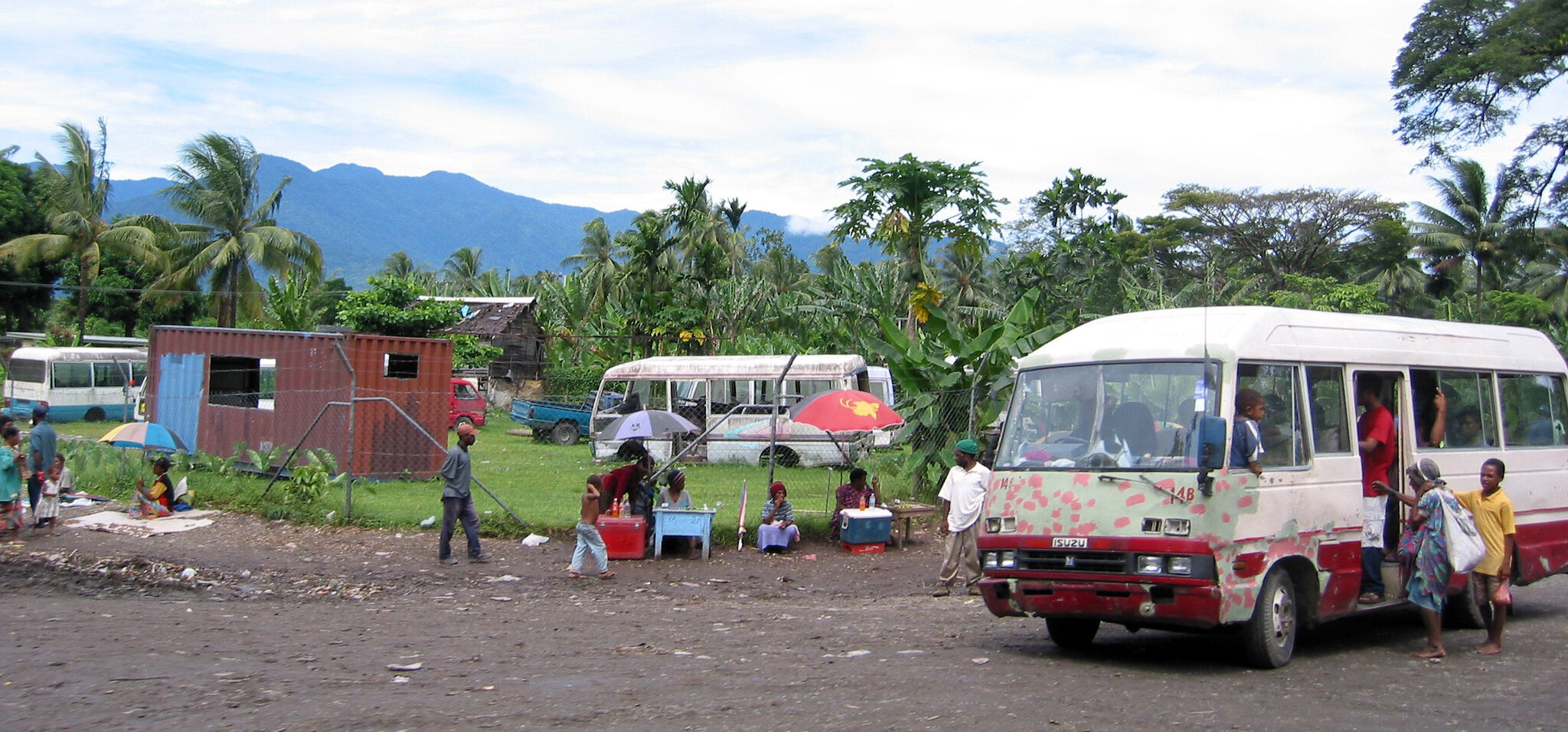
When discussions on security in Papua New Guinea come up, the focus often goes straight to tribal fighting, especially in the Highlands region. That is real and serious, but it is not the only thing that shapes how people feel safe in their daily lives. For many people in towns and cities, the bigger issue is much closer to home: everyday crime.
Everyday crime includes street robberies or pickpockets, bag snatching, harassment, break-ins, car hijacking, assaults in public spaces and hold-ups on transport routes. These are the kinds of incidents that do not always make national headlines, but they shape how people move, where they go and what they avoid doing each day.
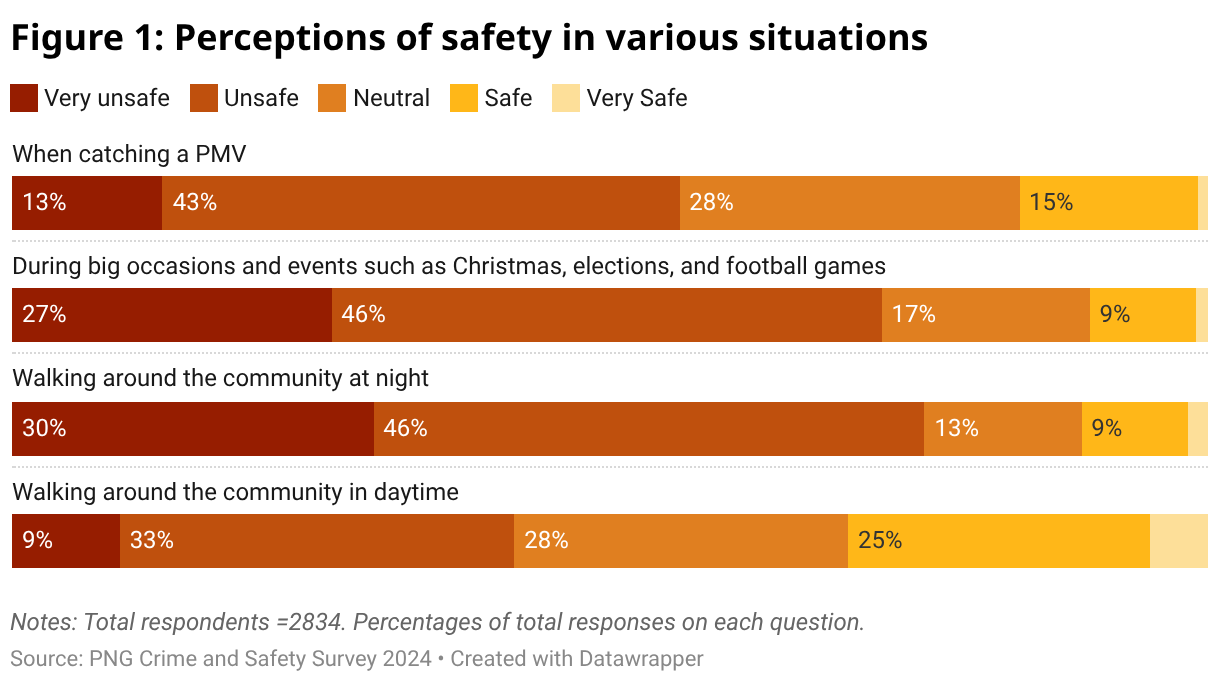
Evidence from the recent report by the authors — Crime and Safety in Selected Papua New Guinea Provinces: A Pilot Study — shows that insecurity is widely felt across surveyed provinces. In urban areas such as Kokopo, Lae and Port Moresby, a large share of respondents reported that they did not feel safe in their own communities, especially after dark (Figure 1). Many people said they changed their routines because of fear, not necessarily because they had already been victims of crime, but because the risk felt constant and close.
That distinction is important. Insecurity in PNG is not only about actual victims, but also about perception. When people expect something bad might happen, even without direct experience, they begin to adjust their behaviour. That is what the study found repeatedly in urban settings: people avoiding movement at night, limiting travel and relying heavily on family networks or informal protection just to feel safe.
Unsurprisingly, the pilot study shows that those who experienced a crime in the previous year are more fearful than those who did not. Almost one third of respondents (27.9%) indicated they had been a victim of crime, the most common being theft, assault or break and enter. In the majority of incidents (67.7%) a weapon was involved. The use of weapons, notably knives and guns, no doubt exacerbates fear both at the time and subsequent to the incident.
The broader national picture reveals a country struggling with both serious and everyday crime, and its impact. PNG’s homicide rate has been estimated at around 9 to 10 per 100,000 people. That is roughly 1.5 times the global average of about 6 per 100,000, and well above the rates seen in neighbouring countries such as Australia (around 1 per 100,000) and Indonesia (under 1 per 100,000). But beyond serious violence, it is the routine nature of smaller crimes that builds a deeper sense of insecurity over time.
The World Bank has also highlighted the economic dimension of this problem. Around 67% of firms in PNG identify crime as a major constraint to doing business, and about 84% report spending money on private security firms. This means that for many businesses, operating safely is not just about profits or investment decisions, but also about paying extra costs simply to manage risk.
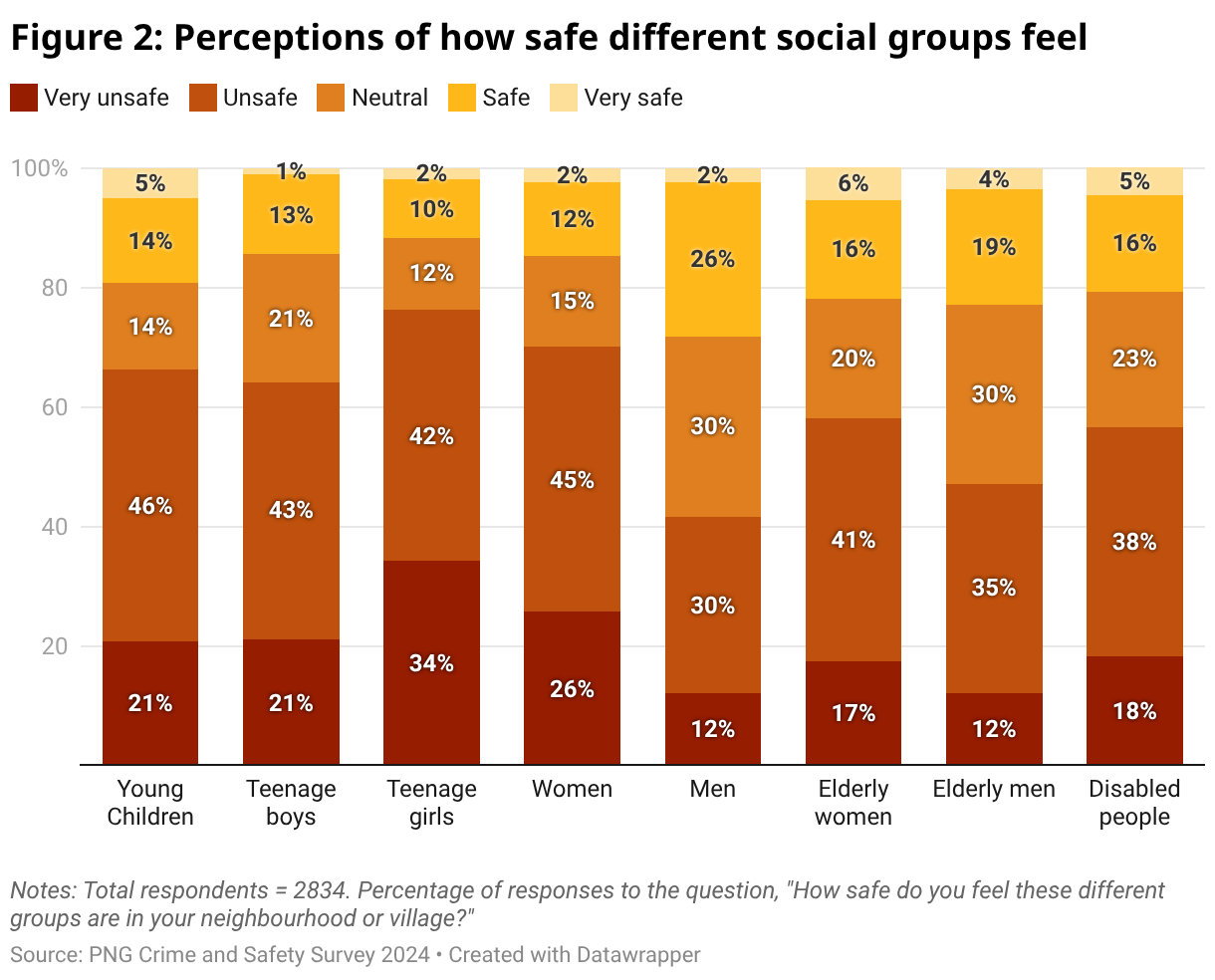
The pilot study adds another layer to this picture. It shows that what people often fear most is not only severe violence, but everyday incidents in public spaces. They all contribute to a general feeling that public areas and transport are often unsafe. Over time, this creates what can be described as a background fear of moving around freely. Respondents in the study were also worried about others, such as partners, family members and friends, with women, teenage girls and children viewed as most at risk (Figure 2).
Trust is another issue that came out clearly. In places where people feel that police response is slow, unpredictable or costly, confidence in formal law enforcement weakens. When that happens, people rely more on themselves, their families or private security arrangements. Over time, this creates unequal access to safety, depending on where you live and what resources you have.
All of this shows that insecurity in PNG is not just about major conflicts or tribal and ethnic clashes. It is also about the everyday experience of crime in ordinary spaces. And it is everyday experiences that shape how safe people feel.
This matters because when people do not feel safe, their behaviour changes. They reduce movement, avoid public spaces and become more isolated. Business organisations increase security costs. Communities become more divided in how they use shared spaces. Even when crime is not directly experienced, its effects are still felt in daily life.
If the goal is to improve safety in a meaningful way, then everyday crime needs to be part of the main policy discussion, not treated as a secondary issue behind larger conflicts. Strengthening urban policing, improving public space safety and rebuilding confidence in law enforcement are all part of that picture. So is recognising that for many people, insecurity is not an occasional disruption. It is something they manage every day.
The report can be accessed here: Crime and Safety in Selected PNG Provinces: Pilot Study.





A very interesting and informative study. Insecurity is a common issue daily in our contemporary societies throughout the country.
Safety and security is a priority concern living in the urban centers. When people are free and safety guaranteed, they participate effectively and fully to the wellbeing of their family and society. Women and girls are ofcourse the highly vulnerable.
It would be worthwhile to do further comparative studies with rural areas. What mitigation measures do people apply to address the daily insecurity?