


New Guinea is staggeringly rich in life. Occupying just 0.5% of Earth’s land surface, it hosts an estimated 5-8% of all species. This abundance is reflected in more than 2,800 orchid species, over 1,000 butterflies and around 800 birds. Over half of its known species are found nowhere else on Earth.
Its extraordinary biodiversity stems from a complex geological history and from being the world’s largest and highest tropical island. The collision of the Australian and Pacific plates created a rugged landscape of island arcs and mountain ranges. Abundant sunlight and rainfall, combined with its size and elevation — rising to almost 5,000 metres — have produced stacked habitats from coral reefs and mangroves to cloud forests and alpine grasslands. Isolation east of Wallace’s Line, intermittent land bridges with Australia during glacial cycles, and a light human footprint over 50,000 years have made New Guinea an evolutionary laboratory.
The birds-of-paradise are the jewel in this biological crown. Thirty-nine species from fifteen genera occur here alone. Isolated for millions of years, they underwent spectacular evolutionary radiation, diversifying across regions and altitudes. Intense sexual selection produced their exquisite colours, elaborate plumage and extraordinary courtship displays.
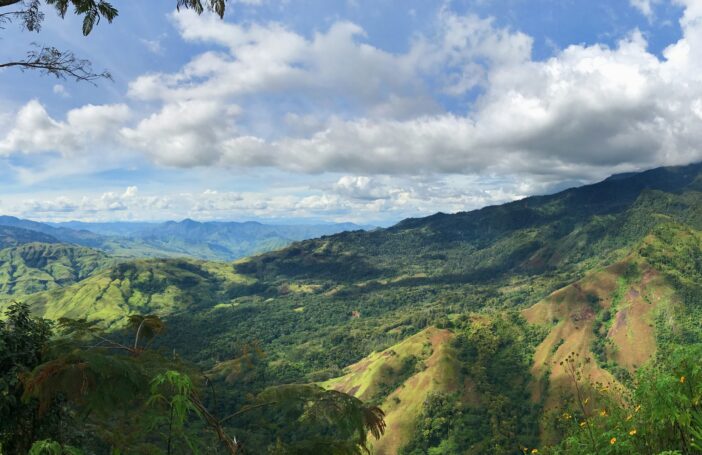
All birds-of-paradise depend on native forests, which still cover about 70% of New Guinea’s landmass — the world’s third-largest tract of primary rainforest after the Amazon and Congo. Around 60 million hectares of primary rainforest — 34 million hectares in Indonesian Papua and 26 million hectares in Papua New Guinea — form an immense carbon sink. These forests are essential for biodiversity and for mitigating climate change, widely seen as the Pacific’s greatest development threat.
At the 2021 UN Climate Change Conference (COP26) in Glasgow, 145 countries representing about 90% of the world’s forests signed the Glasgow Leaders’ Declaration on Forests and Land Use, pledging to halt and reverse forest loss by 2030. Many nations emphasised that safeguarding Indigenous peoples’ rights is inseparable from effective forest conservation. Progress against the declaration was reviewed this month at COP30 in Belem, Brazil.
New Guinea, divided by the 141st meridian east, sits across two jurisdictions. To the west lies Indonesian Papua — now six provinces — and to the east, PNG. Both are signatories to the Glasgow Declaration, yet their approaches to forest governance differ sharply.
In Indonesia, all land is legally vested in the state unless privately titled, meaning the forests of Papua are state-owned, though local communities may claim customary use rights. This framework has enabled large reserves such as the 25,000-square-kilometre Lorentz National Park to be gazetted with limited consultation. The same laws also permit logging and oil palm concessions with minimal community input.
In PNG, about 97% of land remains under customary ownership and cannot be alienated except by voluntary agreement. This prevents government from unilaterally issuing concessions but makes establishing reserves more complex, as all affected communities must consent. Even so, significant conservation areas have been created with NGO support, including the YUS Conservation Area on the Huon Peninsula — a 1,500-square-kilometre ridge-to-reef landscape protecting the Matschie’s tree-kangaroo and the Huon astrapia.
Despite the ambition of the Glasgow Declaration, follow-through has been weak. A 2024 UN-REDD/UNEP assessment found that only eight of the 20 countries with the highest tropical deforestation rates had set quantified forest targets in their climate pledges.
In Indonesia, deforestation fell earlier in the decade but is again rising in the Papuan provinces, where primary forest loss reached roughly 25,000 hectares in 2024 — a 10% increase on the previous year. Large-scale “food estate” and plantation schemes — accelerated by new road corridors including the Trans-Papua Highway — are significant drivers. A proposed sugar and bio-ethanol project in Merauke alone could clear two million hectares, threatening savanna forest ecosystems and at least two dozen Indigenous communities. A report by the think tank CELIOS warns such developments could release hundreds of millions of tonnes of CO2 and set back Indonesia’s net-zero goal by a decade. Many local communities report clearing without free, prior and informed consent, echoing long-standing concerns over rights and governance in the region.
PNG has pledged to reduce annual deforestation and forest degradation by 25% from 2015 levels by 2030 and to transform its land-use and forestry sector — currently a net source of emissions — into a carbon sink. The country retains around 58% primary rainforest cover, but logging, agricultural expansion and weak enforcement continue to erode it. Policies and partnerships have been launched to protect 30% of land and sea areas, yet progress remains uncertain due to limited monitoring capacity, governance challenges, and commercial pressures.
The mixed results in New Guinea reflect the fragility of global forest protection efforts. The challenge for the COP process now is to convert pledges into measurable outcomes before 2030. Key priorities include embedding forest goals in national climate plans (Nationally Determined Contributions or NDCs), linking them to the Paris Agreement’s Global Stocktake, and improving coordination across climate, biodiversity and land-use frameworks. Implementation must also address the drivers of forest loss — agricultural expansion, logging, mining and infrastructure — while strengthening accountability and securing Indigenous and community land rights.
The Tropical Forests Forever Facility (TFFF), launched by Brazil at COP30, represents a promising new financial model. Designed as an endowment-style mechanism, it rewards countries for keeping forests intact rather than only for reducing deforestation, with 20% of payments directed to Indigenous communities. Early political backing and initial funding commitments have generated momentum, though its success will depend on robust safeguards, transparent monitoring and fair benefit-sharing. For New Guinea, TFFF could offer predictable, long-term finance to protect its vast rainforests at a time of rising threats.
Australia — as a major development partner to both PNG and Indonesia — is well positioned to consider joining the facility as an early donor and to help strengthen the technical capacity and governance safeguards needed to ensure genuine benefits for forests and communities. While Australia did not make a commitment towards the facility’s US$125 billion funding target at COP30, the Minderoo Foundation headed by Australian billionaire miner Andrew Forrest did pledge US$10 million during the event.
Ultimately, success will be measured not in policies adopted or funds pledged but in what is preserved. Few symbols capture the value of New Guinea’s forests better than the birds-of-paradise — living expressions of nature’s creative power and a reminder of what is at stake. Their survival depends on the same forests that sustain people, regulate climate, and shelter much of Earth’s remaining biodiversity. Protecting them is not sentiment but responsibility: the health of New Guinea’s ecosystems and the stability of the planet are inseparable.



“The country retains around 58% primary rainforest cover, but..”
which definition in the linked report are you using for this?
Figure 2-1 on page 2 says 77.89%, which is close to the 77.5 on Our World in Data and but I’m presuming this is not “primary rainforest” and could not find a ~58 figure from searching.
And Global Forest Watch, which I would tend to use, says:
“As of 2020, 88% of land cover in Papua New Guinea was natural forests and 0.75% was non-natural tree cover”
https://www.globalforestwatch.org/dashboards/country/PNG/?map=eyJjYW5Cb3VuZCI6dHJ1ZX0%3D
Dear Ryan, Thanks for your question. As you know, there are several ways to estimate forest cover. Satellite imagery is efficient, especially for tracking change, but it can’t always indicate ecological quality. Different organisations also use different definitions of forest cover, which adds another layer of variability to the estimates.
Because I’m emphasising the value of New Guinea’s forests as both a reservoir of biodiversity and a major carbon sink, I use figures that estimate primary forest cover. My focus is on intact tropical rainforest ecosystems rather than disturbed, logged, planted, or recently regenerated areas, as the former typically hold the highest biodiversity. The UN’s Food and Agriculture Organization defines primary forest as naturally regenerated forest of native species with no clearly visible signs of human activity and where ecological processes remain largely undisturbed. Primary forest includes some areas often described as old-growth forest, meaning long-established ecosystems of particular ecological value.
The source you shared identifies 88% (around 41 Mha) of PNG’s land cover as forested. It’s an excellent tool for monitoring deforestation in PNG and beyond, but it doesn’t distinguish forest types. This figure likely includes substantial areas that have been disturbed in recent decades. PNG has relatively little planted forest, so most non-primary forest is likely to be selectively logged or otherwise altered.
In writing the paper, I triangulated across a few sources. The most detailed breakdown I found is in a recent publication from the PNG Forestry Authority (https://pngreddplus.org/wp-content/uploads/2024/03/PNG-Forest-and-Land-Use-Change-Assessment-2000-2019-PNGFA-2023.pdf?utm). It reports that in 2019, 77.9% of PNG was forested. Using PNG’s total area of roughly 46 Mha, this equates to about 36 Mha of forest. Of that, the report classifies 75.2% as primary forest—which it defines as intact and not disturbed by human activity—which translates to about 26 Mha, or 58.5% of PNG’s land area.
For Papua (Indonesian New Guinea), there is the advantage of a peer-reviewed 2021 study Forest loss in Indonesian New Guinea (2001–2019): Trends, drivers and outlook (https://www.global-roadmap.org/wp-content/uploads/2021/08/Forest-loss-in-Indonesian-New-Guinea_Gaveau-et-al-2021.pdf?utm), which states that in 2019, 34.29 Mha—or 83% of the region—supported old-growth forest.
Thanks for the detailed response, Peter!
That makes sense, and does highlight the key point: that PNG is one of the most forested countries in the world, and also still one of the poorest.
There is probably a lot of opportunity in the gap between the 88 and 58 for some more productive agricultural development, given the relatively poor performance of REDD+ and PES schemes, never mind the inherent paternalism and issues around outsourcing emissions, in delivering poverty reduction at scale where its most needed.
Thanks Ryan,
Poverty reduction is essential for the people of New Guinea (both PNG and Indonesian Papua). It can be achieved without heightening climate risks- which are themselves a major driver of poverty- and while maintaining biodiversity. Supporting locally led choices, including stronger smallholder agriculture and sustainable forest-based livelihoods offer important development gains while protecting the resilience of local communities.
Thank you Peter for an excellent article. I cannot comment on Papua but by contrast the high percentage of customary land ownership in Papua New Guinea offers hope for which the addition of the TFFF is encouraging. When it comes to land in PNG the key words are customary and landowner. Not government or other entity and twenty percent sounds like a recipe for failure. Land owners are vanishingly unlikely to relinquish agency over decisions concerning their land to others for twenty percent of the pie, especially to entities that history tells them they have no reason to trust.
In my opinion customary land owners hold the key to success. There are examples that potentially point the way. I refer to two unrelated community groups in Milne Bay province who of their own volition registered portions of their customary land as bird of paradise sanctuaries. They did so because their leaders understood the value of the pristine nature of their environment that provides ecosystem services such as clean water rather than acquiesce to the dubious benefits from palm oil or logging interests.
In both cases this is paying dividends as both groups are also investing in village tourism. Cruise ships and other visitors arrive in Alotau where an opportunity to glimpse Raggiana bird of paradise in full display during the mating season is quite a draw card. In the case of one group I am familiar with, their BOP sanctuary would have been covered in oil palms now had they not made the choices they did. By comparison they retain full control over their land and bird watchers provide their youth the opportunity to earn income while showcasing the wonders their ancestral land to others.
My takeaways are it is the landowners who should be driving the activities to protect PNGs unique forests. As past, present and future custodians of the land it is they who should also receive the lion’s share of the financial reward for doing so.
Because so much of PNG is still covered in pristine forest and because it remains under traditional ownership the TFFF may offer a uniquely nationwide opportunity to apply benefits widely at the grass roots level. Benefits that could be maximised by exploring with communities solutions to mitigate the impact of climate change on food and water security, women’s and youth economic empowerment and potentially positives arising from the intersection of these activities with basic services delivery. If a wide lens approach was applied in conjunction with the TFFF it would resonate strongly with community needs. If also applied democratically the TFFF might be the right initiative to catalyse widespread empowerment across rural PNG.
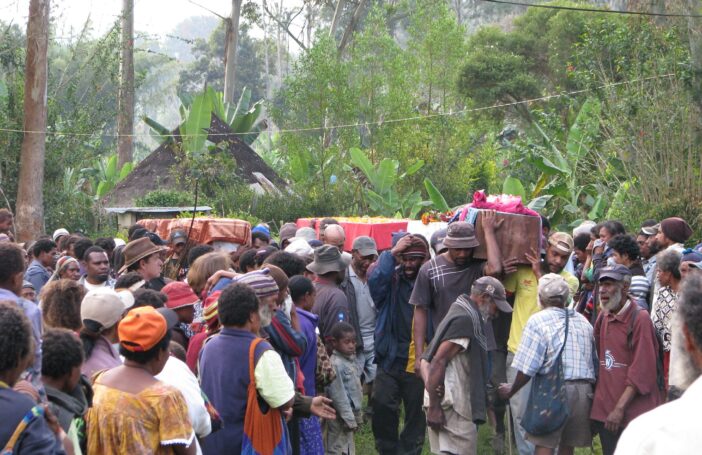
Dear Stephen – Thanks for your thoughtful comment. There’s strong evidence that supporting Indigenous and local communities is one of the most effective ways to conserve forests. PNG is particularly well placed for this approach, given the strength of customary land tenure. As you note, there are many examples of local groups conserving ecosystems and, in some cases, generating income through ecotourism and other sustainable livelihood activities. The YUS Conservation Area in the Huon Peninsular of Morobe Province (mentioned in the article) is a great example, combining conservation with community development and livelihood support.
On the TFFF contribution, the 20% allocation for Indigenous communities is a minimum requirement. Ideally, countries like PNG would choose to direct a much larger share to landowning communities. The TFFF framework also allows a portion of funding to strengthen state capacity to support, monitor and enable forest protection. In PNG, as elsewhere, there is considerable scope to build this enabling environment around local communities.