For children with disabilities in the Pacific, accessing the support they need is too often determined by where they live, who they know and what they can afford. Access to rehabilitation services, assistive technology (AT) and caregiver support remains uneven and fractured, shaped by goodwill and good luck rather than good systems.
While initiatives such as ATscale (Global Partnership for Assistive Technology), with funding from the Australian Government, are helping to scale up access to assistive products for school-aged children in Pacific Island countries, a whole-of-systems approach based on locally led partnerships is needed to improve outcomes for Pacific children with disabilities and their families.
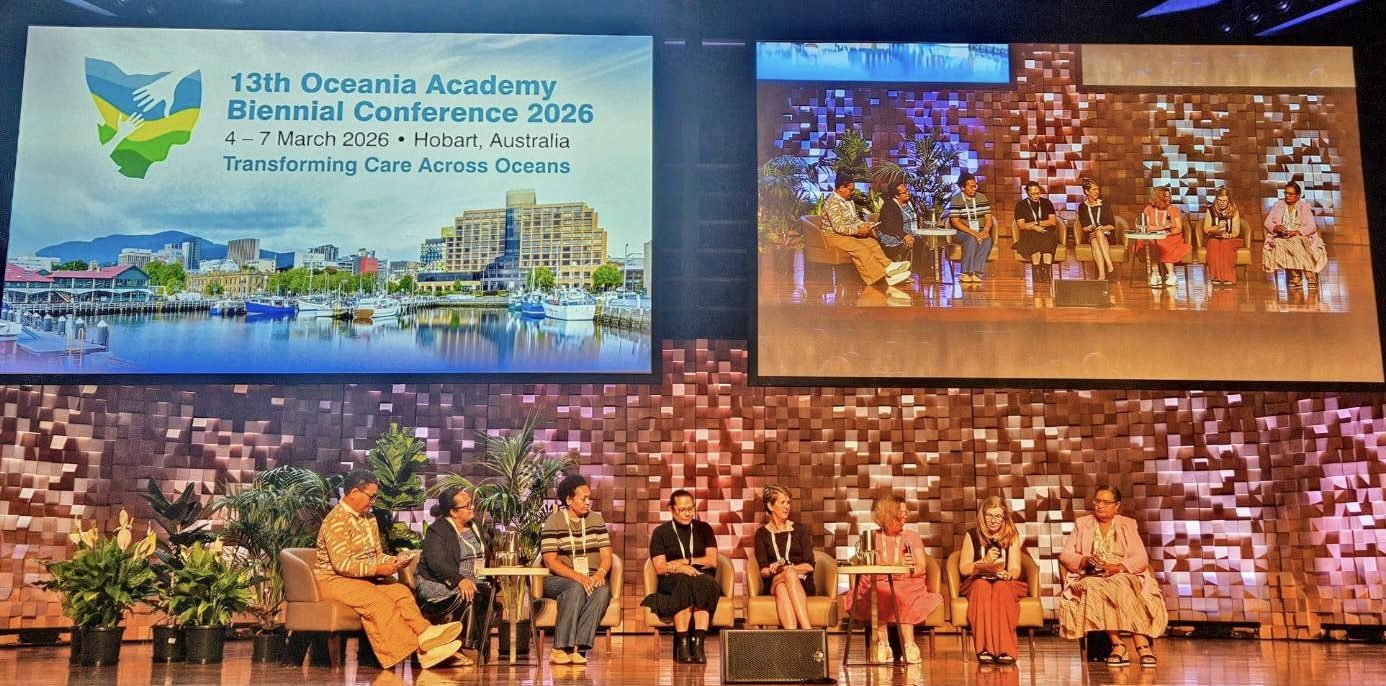
At the Oceania Academy of Cerebral Palsy and other Childhood-onset Disabilities conference in March 2026 we heard from Pacific leaders in paediatric service provision and parents of children with disabilities. Their reflections reinforced a simple but important message: support for children with disabilities is about far more than AT, and AT is about far more than supplying equipment.
“We can provide devices but going back to service users to support correct and safe use of those devices is really needed. We have to look at it from a systems perspective and strengthen all areas of service delivery if we are to talk about being ethical and doing the best by the children and people we support.” Service provider, Fiji
Parents described the relentless challenge of accessing assessments, therapies, AT and support as their children grow and their needs change. One mother told us:
“We have to navigate systems that are not built to meet my child’s needs … as she grows her needs change, so we have to constantly find ways to adapt to her growth. We don’t have specialists here to help us or guide us. This equipment (AT) might sound like a luxury, but it’s actually the things we need to help her live.” Parent of child with disability, Cook Islands
With limited local services, families who can afford it travel overseas, while others wait for visiting specialists.
“We have to keep an ear out for people [therapists] that visit the island.” Parent of child with disability, Cook Islands
Service providers echoed these experiences, describing fragmented systems, shortages of staff and the difficulty of reaching geographically dispersed populations.
“We have a much higher number of people living in rural areas and it’s really hard for transportation and lack of human resources. It’s only me providing those services for children with disabilities.” Service provider, Vanuatu
These challenges highlight a critical but often overlooked issue: the disability and rehabilitation allied health workforce. Parents and service providers repeatedly emphasised that addressing workforce challenges is key to ensuring children with disabilities get the support they need. With few professionally trained allied health workers in the Pacific, services for children with disabilities are often provided by people with informal training, some of them supported by visiting overseas therapists. This group, although providing essential services, remains largely invisible within formal service systems.
“There are people doing amazing jobs … Many disability and community-based rehabilitation workers in Pacific Island communities aren’t formally recognised by Ministries of Health as professional personnel. So, they’re not counted in workforce surveys.” Visiting service provider
Without formal recognition, access to quality training, career progression and adequate pay, these workers leave, taking their knowledge and skills with them.
“We need to recognise these skills and ensure they are remunerated and supported appropriately, rather than losing them and their skills to another area.” Visiting service provider
Addressing these systemic gaps requires a different approach to partnership.
A recurring theme throughout the conference was the importance of locally driven solutions, with local leadership and genuine partnerships built on trust.
In her keynote address, Dr Ilisapeci Tuibeqa of the Pacific Paediatric Association emphasised the importance of community knowledge, local leadership and lived experience in building systems that are meaningful and sustainable. Context, she told us, is not a constraint to be worked around, but a source of knowledge that should actively shape design.
“The Pacific is not starting from zero. There’s leadership and expertise already. The future is Pacific-led partnerships.” Dr Ilisapeci Tuibeqa
An equity-focused approach requires purposeful design and adaptation, grounded in local expertise and lived experience. It means recognising the realities of dispersed populations, small workforces and limited specialist services, while building on existing strengths and networks.
While building local capacity and capability must remain the central aim, participants said that partnerships between Pacific and overseas providers are part of the solution in the interim. The most successful examples of such partnerships were consistently those that were locally led, responsive to community priorities and built on trust.
“We rely a lot on our relationships with the leaders. Trust and openness have been built up over time.” Visiting service provider
One example from Niue is a long-term collaboration between a local organisation of persons with disabilities, government agencies and visiting therapy teams. A local coordinator provides continuity between specialist visits, while remote support helps families between face-to-face appointments. As one parent said:
“It made such a difference for us. They took the time to get to know us and really worked with us.” Parent of child with disability, Niue
Although investment in AT was welcomed, there was a clear call for sustainability. Programs must build local capacity, be accountable to local institutions and continue beyond donor funding cycles.
“We don’t want to create the expectation of services or products being available, and then after three years, when the project finishes, we don’t have the capacity.” Service provider, Fiji
The vision of our Pacific colleagues is clear: children should not have to rely on chance, charity or extraordinary persistence to access the support they need. Lasting change requires investment in systems that are locally led, adequately resourced and responsive to context, so that every child can participate, belong and thrive, regardless of where they live.
The quotes in this article, apart from the one from the keynote, are all from short presentations given by both parents and service providers as part of a session focused on services for children with disabilities in the Pacific during the conference. The authors acknowledge the collective voices and knowledge of the Pacific Group of the Oceania Academy of Cerebral Palsy and other Childhood-onset Disabilities that have contributed to this work.