Pacific people have long known how to look after their own. Across the region, extended families, churches and communities have sustained systems of mutual care and support for centuries. In 1985, Tongan theologian Sione ‘Amanaki Havea argued that Pacific people deserved a Christianity grown in local soil, one where the coconut, not imported bread and wine, was the symbol of life. His coconut theology sparked a wider movement of Pacific thinkers, theologians, scholars and community leaders asserting their right to interpret the world through their own frameworks.
That same spirit is working to develop the government-led social protection systems taking shape across the region today. Increasing pressures are bearing down on communities: climate change, severe weather events, rising energy costs and health crises, mostly generated far beyond Pacific shores. Vulnerable communities are often the hardest hit and the least responsible. The coconut again offers a powerful metaphor for the approaches being taken — deeply rooted in community, flexible in the face of shocks and able to sustain people through hardship. As governments look to further strengthen the resilience of communities in the face of these challenges, it’s a good time to recognise the value of further strengthening national social protection systems.
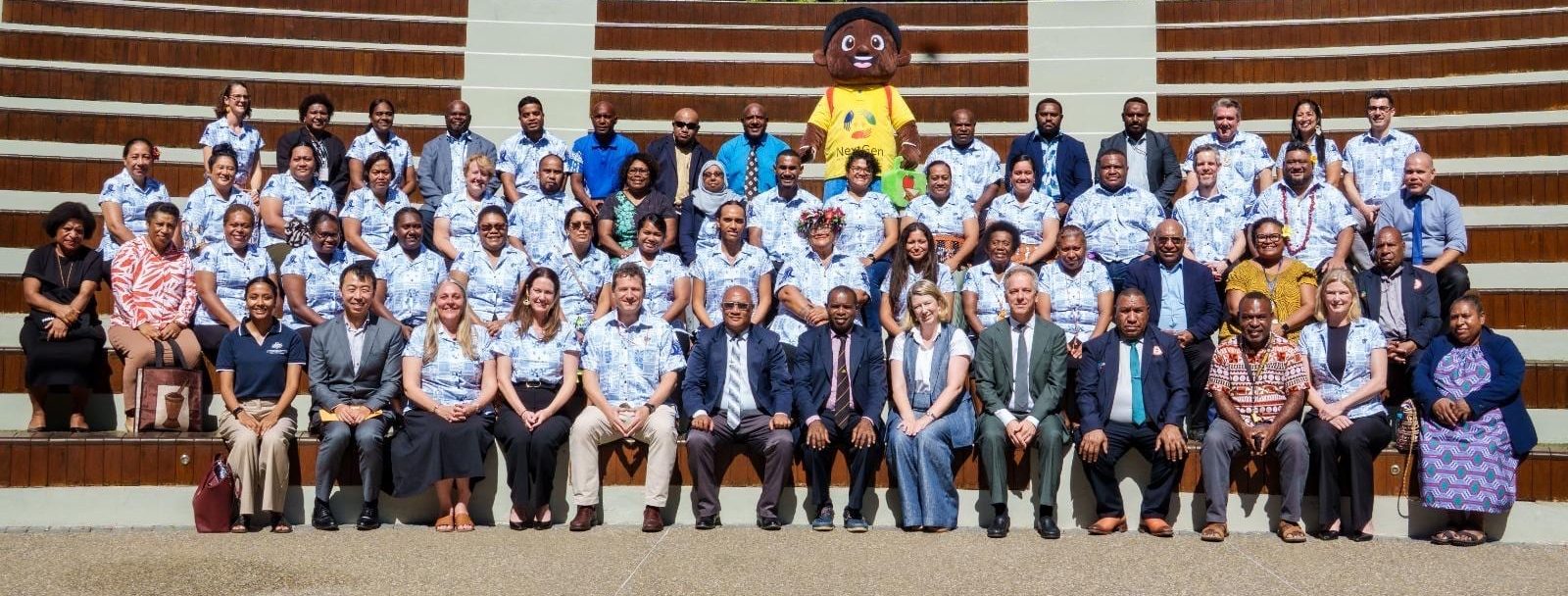
Papua New Guinea recently hosted the second in-person gathering of the Community of Practice for Social Protection in the Pacific. Government delegates from 12 countries met in Port Moresby to share insights on how their programs and systems are responding to changing needs and reaching the people who need them most. The event provided a rare opportunity for Pacific policymakers and implementers to collectively examine not only what is working across the region, but importantly, how it is working. Three themes ran through the discussions: how social protection systems can help respond to the current energy crisis, how families with children can be best supported and how new technology is changing the game.
The current energy crisis has helped highlight that where social protection delivery systems already exist, governments are able to respond faster and protect vulnerable households more effectively. This message was reinforced during the Community of Practice meeting, which took place just days after the Pacific Islands Forum invoked the Biketawa Declaration to support a regional response to the crisis. Discussions highlighted how rising energy costs are placing widespread pressure on Pacific households — particularly low-income families, older persons and persons with disabilities — by increasing the cost of basic goods and reducing purchasing power. Fiji has used existing systems to deliver cash support, with a time-bound 50% increase in benefits across six social assistance schemes. In total, 130,000 beneficiaries — including rural pregnant women, vulnerable children, families living in hardship, persons with a disability and senior citizens — have received help as part of the government response.
Overall, the discussions reinforced key regional lessons: shocks disproportionately affect vulnerable populations, informal workers are often left out of support mechanisms, established outreach and delivery channels to provide timely support are critical during crisis responses, and adaptive social protection approaches are essential to improving resilience in the face of future shocks.
Child benefit programs are increasingly being used in the region, not just as financial support, but as a foundation for improving child wellbeing, strengthening families and building long-term human capital.
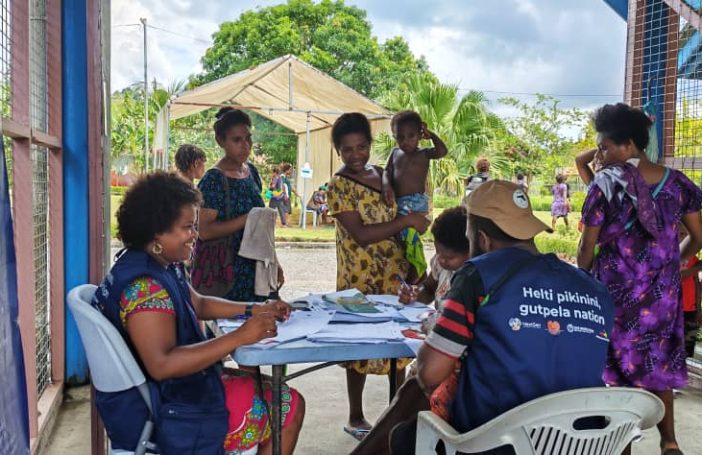
Papua New Guinea’s Child Nutrition and Social Protection (CNSP) project is a strong example. The project targets pregnant women and children under five through a multi-sectoral model that combines cash transfers, nutrition services and community outreach to improve caregiving practices and household wellbeing. It is currently being rolled out across four pilot provinces, enhancing government systems and partnerships with non-government organisations (NGOs) and development partners. The program supports children by improving nutrition, food security and access to basic services, while also promoting financial inclusion, as beneficiaries open bank or mobile money accounts to receive regular payments. More broadly, the CNSP is contributing to stronger household resilience and early childhood development outcomes, demonstrating how social protection can be used as an entry point to improve child wellbeing in resource-constrained settings.
Another example can be found in the Cook Islands, which has a well-established universal child benefit scheme that includes a twice-monthly payment for all children from birth to age 17. This is enhanced by additional child and family supports such as a one-off newborn allowance payment, parental leave (maternity and paternity), free healthcare for children up to 16, welfare clinics for mothers and children, NGO-led parenting support programs and disability support assistance for children.
Effective community consultation and strong collaboration across ministries and partners are essential to the success of child benefit programs. Well-designed programs are linked to health, education and early childhood development services, making long-term investments in human development and more resilient communities.
For some Pacific countries, digital technology is enabling stronger social protection systems, helping governments deliver support faster, more efficiently and with greater accountability. Reliable digital registries, supported by birth registration, identity verification and cross-checking across databases, improve the accuracy of beneficiary data, reduce duplication and errors, and help programs better identify and reach vulnerable populations. In times of crisis and disaster, these systems also support rapid emergency response through faster payments and safer delivery mechanisms, while reducing delays, exclusion and risks, particularly for women and children.
To give an example, we heard how Kiribati is currently expanding the use of digital payment options for its beneficiaries. Through the introduction of mobile money wallets and digital payment systems, Kiribati is improving the accessibility, safety and security of payments for its beneficiaries. Despite challenges with internet access and limited financial infrastructure on remote outer islands, Kiribati is looking to further expand payment options so more of its populations can receive payments efficiently in future.
It is important to emphasise that digital systems need to be sustainable and locally owned, with government control over system design and source code, and investment in local capacity to maintain them. Combined with strong monitoring and evaluation, integrated data, interoperability and flexibility during shocks, digital technology helps social protection systems become more adaptable and ready to respond when needed.
When Reverend Havea argued that the coconut should replace bread and wine, he recognised that Pacific people have the wisdom, the frameworks and the authority to define what nourishment looks like in their own context. Government-led social protection systems rooted in the Pacific values of care, reciprocity and collective responsibility can help communities weather uncertainty and emerge stronger through the challenges ahead. The Community of Practice is a valuable mechanism for supporting Pacific countries as we design a response to our lived realities. The 2050 Strategy for the Blue Pacific Continent rightly recognises the importance of sustainable and inclusive national social protection systems that protect marginalised groups. Social protection is frequently portrayed as a safety net, but it is more than that. It is a practical investment in human development, inclusion and resilience. A coconut palm bending to share its fruit with us all.
This article was authored by members of the Community of Practice for Social Protection in the Pacific Steering Committee, as follows.
Rozia Bi is National Coordinator for Social Protection Reforms at Fiji’s Ministry of Women, Children and Social Protection, leading initiatives to strengthen social protection, climate resilience, and financial
inclusion for vulnerable Fijian households.
Jenny Kila is Acting Deputy Secretary for Implementation with the Department of Community Development and Religion in Papua New Guinea.
Rubida Hermios was recently appointed Chief for Asset and Property at the Marshall Islands Ministry of Culture and Internal Affairs. Formerly she was Chief of the Community Development Division, Vice Principal at Marshall Islands High School and a school counsellor.
Luisa Manuofetoa is Deputy Chief Executive Officer of the Social Protection and Disability Division at Tonga’s Ministry of Internal Affairs. She holds an MBA from the University of the South Pacific, with a background in human resources and social protection policy.