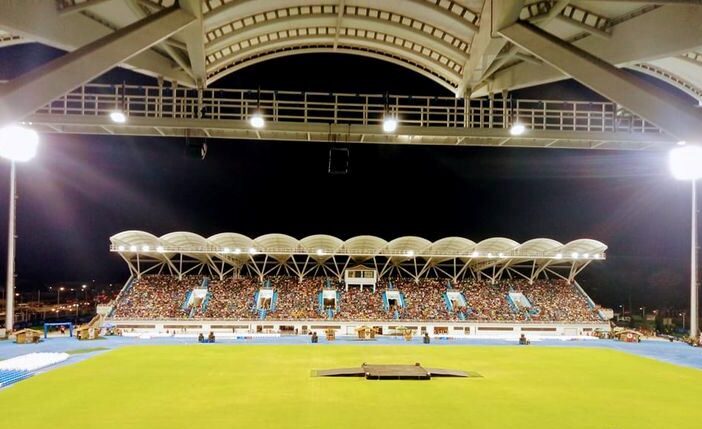
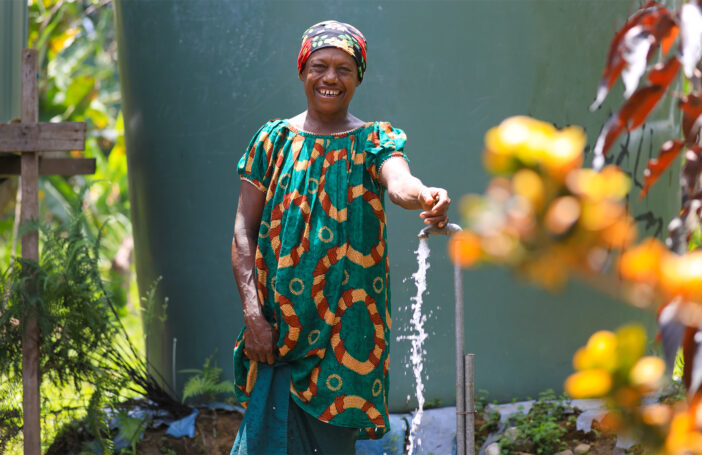
Infrastructure sits at the heart of development: it connects families to markets, gets children to school and helps communities withstand climate shocks.
By 2030, global construction output is estimated to reach US$17.5 trillion a year. Australia alone has made A$4 billion available through the Australian Infrastructure Financing Facility for the Pacific towards Pacific infrastructure development, with further expansion proposed. This includes both large-scale regional investments and smaller community-level initiatives such as the Solomon Islands–Australia Community Partnerships. Beyond the Pacific, the government also supports the Indonesia Climate Infrastructure Partnership (KINETIK), aimed at accelerating sustainable infrastructure development. Yet the scale of investment brings commensurate governance risk.
Australia’s own track record offers warnings. Victoria’s Big Build and Brisbane 2032 Olympic projects face cost blowouts and rushed approvals that threaten billions in public funds. Melbourne’s East West Link was cancelled after over A$1 billion was spent.
Globally, Indonesia’s Jakarta–Bandung High-Speed Rail, Sri Lanka’s Mattala Rajapaksa Airport and Kenya’s Mombasa–Nairobi Standard Gauge Railway show how weak oversight can turn infrastructure investments into costly failures.
According to Transparency International Australia (TI Australia), up to US$6 trillion could be lost annually by 2030 through corruption, mis‑management and inefficiency in the infrastructure sector.
Experience in the Pacific shows how large-scale infrastructure — whether transport, water or energy — can run into trouble at the early, project-selection stage. Although countries invest in national planning, these plans are not always implemented in practice. When there is weak governance at this stage, it cascades through the infrastructure cycle — from initiation and preparation through procurement, implementation, maintenance and asset disposal. If political interference or weak oversight takes hold early, the money might flow into white elephant projects, core services deliver poorly and economies suffer both economically and in their development.
The stakes are particularly high in the energy transition domain. We urgently need renewables, microgrids, critical minerals extraction and climate resilient power systems. But fast-tracking projects without meaningful consultation, underestimating social or environmental risk, or locking in inefficient assets can repeat past failures.
Despite these risks, civil society is rarely involved at the project selection stage, where early scrutiny and collaboration with governments could ensure proper processes and protect public resources. Civil society is often more visible during construction and delivery but by then the big decisions have already been made and the corruption risks have already taken root.
That is why TI Australia developed the Infrastructure Corruption Risk Assessment Tool (ICRAT) in 2021. It builds on our earlier work assessing corruption in mining licenses (MACRA) and adapts those methods for infrastructure planning and project selection. Building on MACRA’s structured, evidence-based methodology, TI Australia collaborated with infrastructure governance experts and civil society practitioners, including those linked with initiatives such as the UK-based Infrastructure Transparency Initiative (CoST), to redesign the framework for the distinct challenges of public infrastructure planning and project selection.
ICRAT gives civil society a practical framework to engage early in the process. It helps them map the policy, planning and budgetary frameworks that determine how projects move onto priority lists; assess transparency and accountability mechanisms; identify corruption red flags — such as political interference, conflict of interest, weak feasibility analysis and inadequate disclosure; and translate findings into targeted advocacy asks.
In 2023, we tested the tool in Indonesia on four large public infrastructure projects and in Solomon Islands on thirteen smaller projects. These pilots used different models: in Indonesia, a coalition of technical civil society groups conducted detailed document analysis and interviews across multiple ministries; in Solomon Islands, community-based organisations undertook simplified assessments of rural water and transport projects.
Both demonstrated that civil society can meaningfully scrutinise how projects are chosen when given the right tools and support. Findings from both assessments are now informing discussions with line ministries, infrastructure agencies and oversight bodies. Examples include calls for clearer criteria for project prioritisation, publication of appraisal documents and earlier public disclosure of budgeting decisions.
Based on these lessons, ICRAT is now being scaled up to four new countries across Africa and Asia, where civil-society coalitions will assess national policy frameworks for public infrastructure selection and analyse specific rail, road and e-infrastructure projects. They aim to support governments to identify and mitigate corruption risks early — and ensure transparent, accountable project selection processes.
But tools alone are not enough.
Civil society faces a fundamental challenge: how do you gain influence when decisions are politically sensitive and often made behind closed doors? Part of the answer lies in building credibility through evidence-based assessments; creating awareness amongst the general public; and building coalitions that include media, academia and professional associations.
Another part of the answer lies in linking national advocacy to existing government commitments — for example, in Sri Lanka where the Transparency International local chapter is currently applying ICRAT to targeted public infrastructure projects, ongoing procurement reforms and initiatives like Clean Sri Lanka offer openings for collaboration. In Indonesia, the local Transparency International chapter is tying it to the government’s Open Government Partnership initiative.
And across several countries, investing in donor engagement has proven to serve as a catalyst for policy reform — particularly where public infrastructure projects are externally financed.
For Australia and its partners — and governments everywhere — the message is clear: integrity starts upstream. Proper processes need to be followed at the start during the project selection stage of the public infrastructure cycle. Civil society must have a seat at the table when priorities are set and projects are chosen, not only when problems emerge. Whether in Pacific ports, Indonesian rail or Australia’s own clean energy build, early scrutiny can mean the difference between transformation and waste.
Ensuring infrastructure is transparent, accountable and open to public oversight is not just good governance — it’s a smart approach to investment. Most importantly, it ensures that infrastructure serves the communities it is meant to benefit.