Australian aid
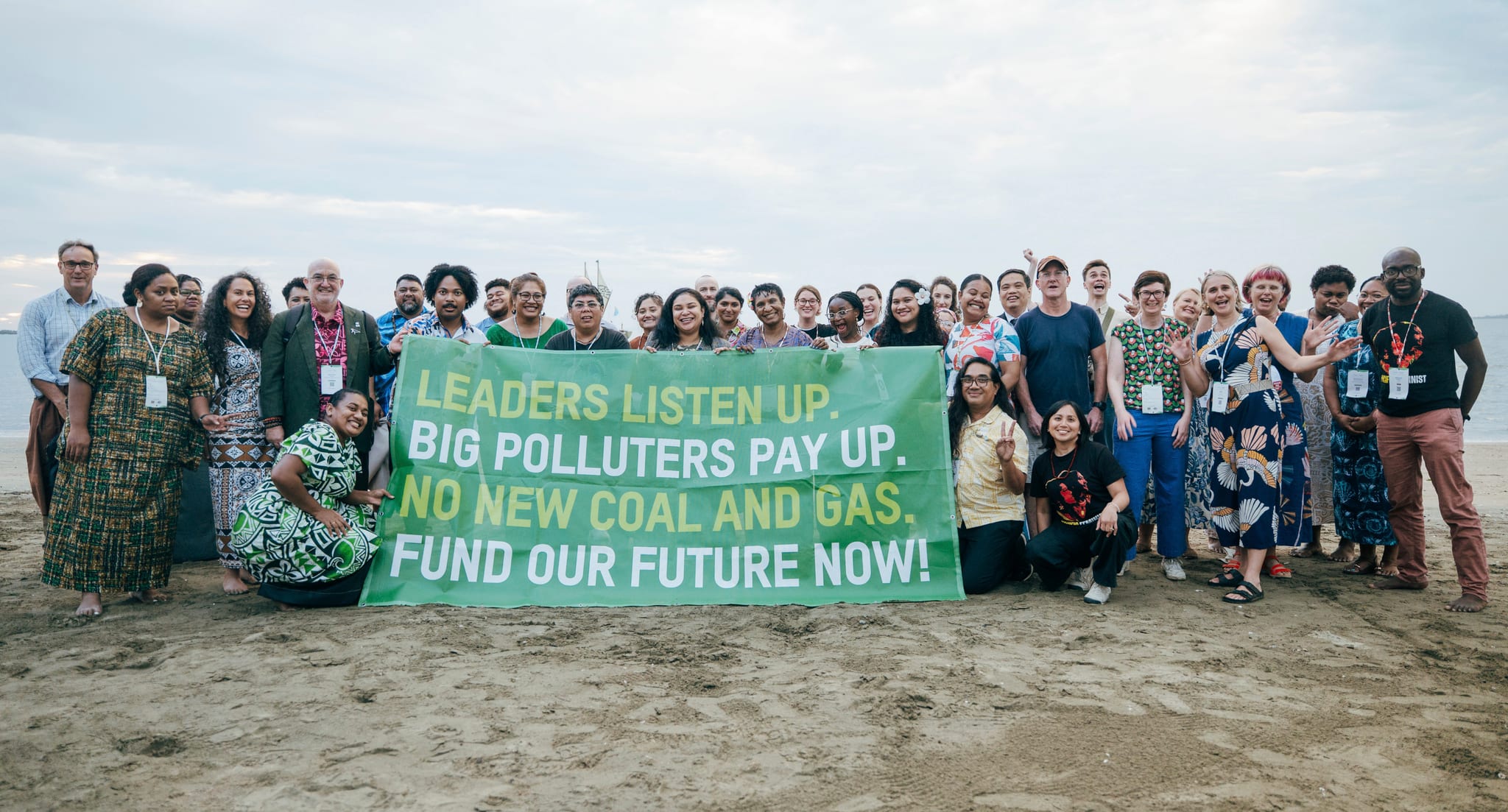
Co-hosting the pre-COP climate talks with Fiji and Tuvalu, the Australian government announced funding allocations under existing regional climate change initiatives, including AUD7 million to improve planning for renewable energy projects and AUD3 million for nature-based climate adaptation projects.
While several countries pledged additional contributions to the Pacific Resilience Facility, the facility remains over USD300 million short of its USD500 million capitalisation target ahead of the COP31 summit in Türkiye which starts on 9 November. The Asian Development Bank confirmed that it is finalising a USD250 million Pacific investment from the Green Climate Fund that promises to leverage USD1 billion for regional climate adaptation projects.
The OECD says that Australia’s health aid to the Pacific will fall by almost 11% between 2025–26 and 2026–27. It estimates that regional health aid from all donors will fall by 16% between 2024 and 2026, with PNG (-19%), Tokelau (-18%) and Kiribati (-17%) facing the biggest reductions.
Australian and PNG ministers attending annual bilateral talks agreed that Australia would continue to provide technical advice to support PNG’s “vital structural governance and financial management reforms” following the conclusion of an IMF support program in December 2026. Ministers also agreed to address ongoing tax issues affecting the delivery of Australia’s aid programs in PNG.
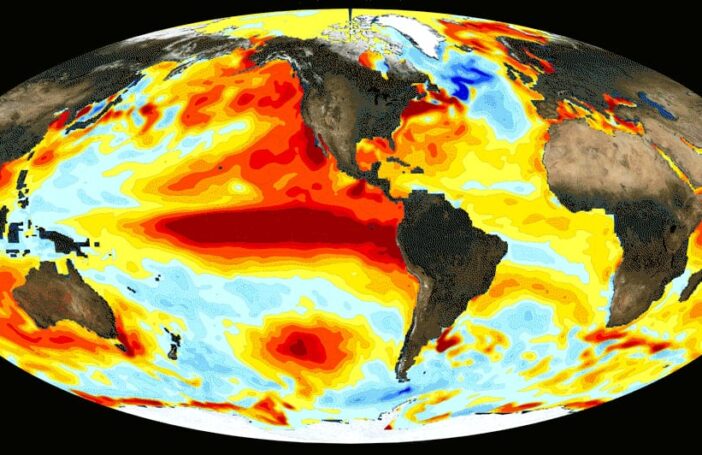
Australia is providing food and other supplies and logistical support to PNG as it faces drought across several provinces as the result of a severe El Niño weather pattern. More broadly, DFAT said at Senate Estimates hearings that the government has so far directed $26 million from within existing humanitarian and geographic programs to support the response to the wide-ranging impacts of El Niño.
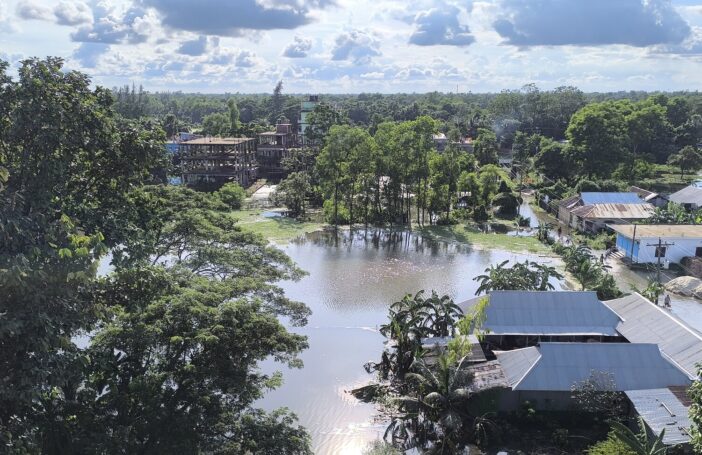
The government has also committed $15 million to assist Nepal’s ongoing recovery and reconstruction in the wake of the August flood disaster.
The Albanese government has pledged AUD125 million for the next five-year (2026–30) replenishment of the Global Partnership for Education. This is a substantial reduction from the Coalition’s commitment of AUD180 million for the previous replenishment period (2021–25).
Speaking at the annual meetings of the World Bank and IMF in Bangkok, Treasurer Jim Chalmers highlighted the ongoing negative impacts of the energy crisis arising from the Iran War on small and low-income countries, urged the Bank to ensure that its work on private sector finance mobilisation remains focused on development impact, and described the role of the International Development Association — which provides concessional finance to the world poorest countries — as “critical” as global aid shrinks and poverty reduction gains are reversed.
Australia has joined the European Union and 30 other countries to warn of the renewed risk of famine in Sudan, calling on the warring parties to “remove impediments on humanitarian assistance, allow and facilitate full, safe, rapid, and unimpeded humanitarian access, and protect humanitarian personnel” and on “all members of the international community to urgently scale up funding”.
Speaking at a dinner hosted by the Australian Council for International Development, the Coalition’s spokesperson, Liberal Senator Dave Sharma, argued that Australia’s aid must be overwhelmingly focused on its region, should be directly tied to improving economic development and security, and that aid’s “social licence” is a function of Australia’s domestic economic and fiscal conditions. Sharma also said that aid program delivery “has become too heavily concentrated, skewed towards a small number of very large, ultimately foreign-owned, aid contractors”.
As part of its proposal to reduce overall migration numbers, the Coalition has said it will cut Australia’s annual humanitarian intake by half (to 10,000) if it wins the next federal election but retain a discretion to augment the program in special circumstances. Refugee advocates have said that the policy “demonstrates a lack of awareness that global displacement is greater than it has ever been and cuts to international aid have made a serious situation even more dire”.
Publish What You Fund will release the ratings and rankings for its 2026 Aid Transparency Index, including for DFAT, on 5 November (AEDT).
The detailed program for the 2026 Australasian AID Conference has been published with 48 panels and launches, five keynote sessions and the return of the 3-Minute Aid Pitch (3MAP). The conference will be held at the ANU’s Crawford School of Public Policy on 2–4 December, and registrations will close on 25 November.
Regional and global aid
New Zealand’s two right-leaning parties, National and the ACT Party, have both said that they would implement substantial aid cuts if they win government at the 7 November elections.
There has been domestic and international criticism of Malaysia’s decision to commence the deportation of as many as 5,000 Rohingya asylum seekers back to Myanmar and to exclude the UN refugee agency from any role in the process.
A group of independent UN experts has criticised the leadership of the UN Food and Agriculture Organization for its decision not to renew the contract of a senior food security specialist following his public comments about human rights abuses perpetrated by the Israeli military in Gaza.
The World Health Organization (WHO) is recruiting a new Director-General. A list of seven confirmed candidates vying for the position was published earlier this month.
The Global Fund to Fight AIDS, Tuberculosis and Malaria has appointed Dr Mark Dybul from the US as its next Executive Director. Dybul has previously served as head of the Global Fund, from 2013 to 2017.
The Trump administration has said it will wind down its health aid to Zimbabwe after the two countries failed to conclude a bilateral deal under the administration’s “America First” approach to global health.
The US Government Accountability Office, an independent congressional agency, has found that the State Department — which has absorbed the functions of USAID following its abolition — still lacks “documented guidance to ensure that its decisions about foreign assistance are consistent and effective”. In addition, there is not “complete and accurate data about foreign assistance awards, grants, and staffing. Such data is key to making informed funding and program decisions.”
New analysis shows that the UK Labour government will fall short of its commitment to provide 0.3% of UK gross national income in Official Development Assistance (ODA) in 2027 following massive aid cuts.
Amidst the global aid cuts, three prominent international NGOs – Save the Children, CARE and Prosper Global – have formed a new “impact alliance” designed to facilitate more collaborative, efficient and locally led humanitarian assistance.
Books, reports, articles, podcasts
In a new working paper for the National Bureau of Economic Research, former USAID chief economist Dean Karlan breaks down the “why” and “how” of foreign aid, arguing for more focus on the development benefits — for recipients, donors and more widely — of evidence production and sharing.
Writing for Devex, the author of Project 2025’s infamous chapter on US foreign aid, Max Primorac, contends that the demolition of USAID has not resulted in the predicted large numbers of preventable deaths from diseases like HIV but, instead, “a growing self-reliance from once aid-dependent countries where social services were regularly outsourced to foreign groups”.
In an article in International Organization, Maria Nagawa looks at the unintended effects of aid on partner government bureaucracies, finding that “the same incentives that boost performance on discrete donor-funded projects divert effort from government programming and erode organizational cohesion”.
And experts from the US-based Center for Global Development and UK-based ODI Global have weighed in on the debate over potential changes to the OECD’s ODA eligibility criteria, taking very different positions on the question whether these criteria should extend beyond income per capita to include other factors such as climate change vulnerability. The OECD’s Development Assistance Committee is scheduled to discuss the proposed changes in December.