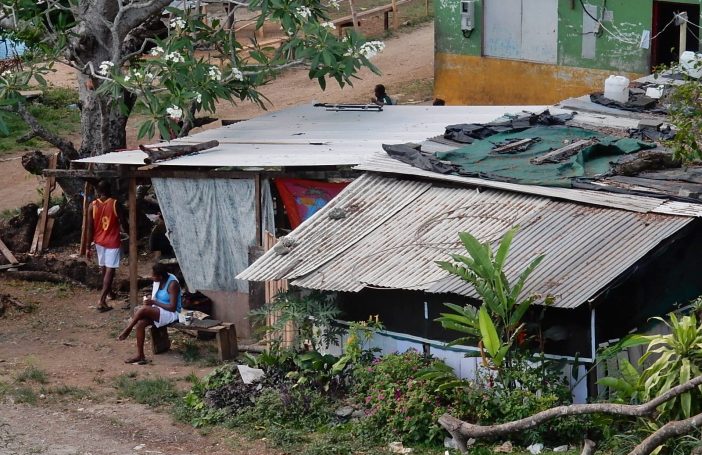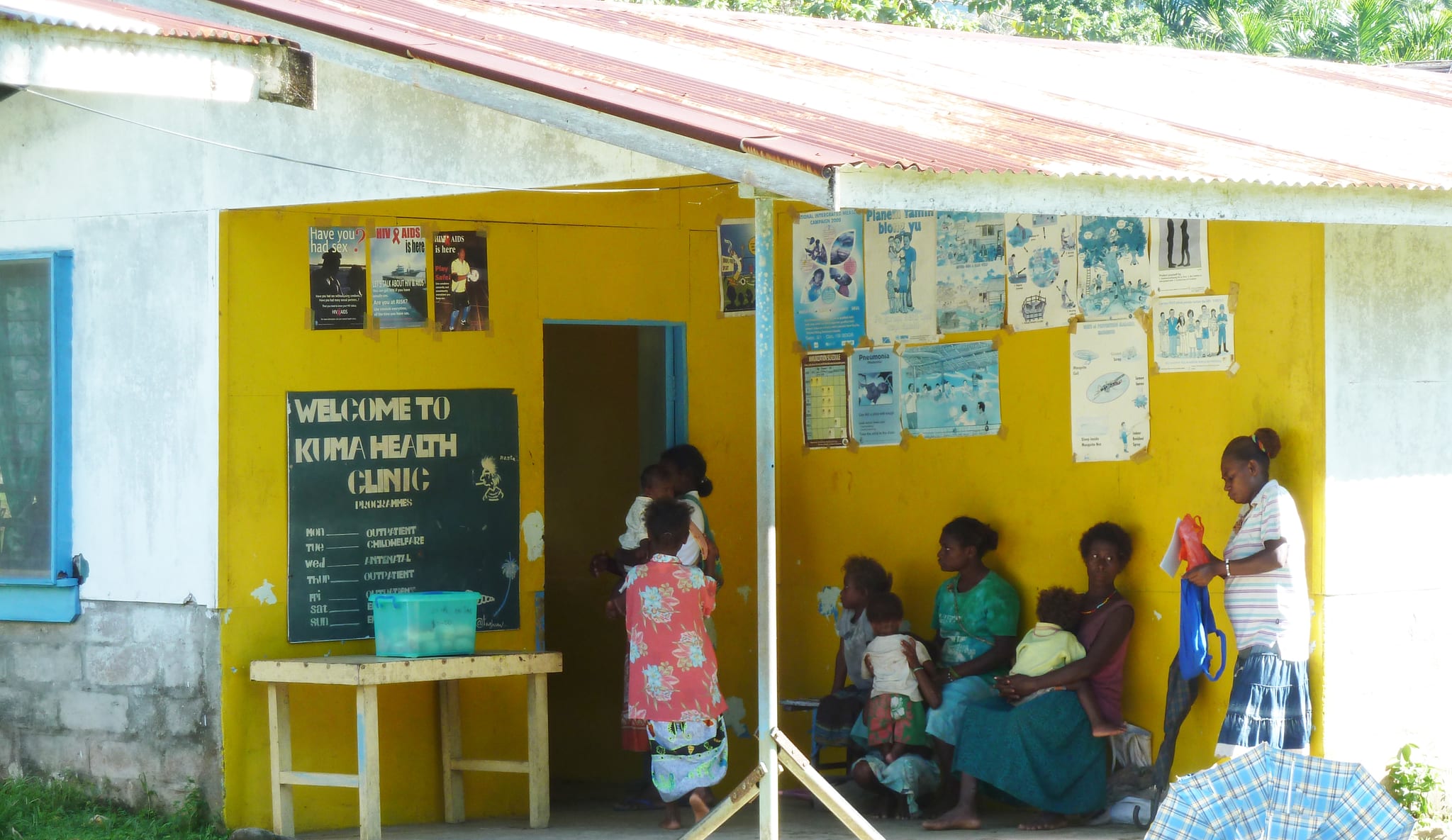
A glum, grey sea sends waves smashing up onto steep gravel beaches. When it rains it pours. And it rains all the time. It’s one of the poorest parts of Solomon Islands.
A suitably determined crow could fly from the heart of the Weather Coast to Honiara in a couple of hours. Any person trying to do the same would be forced to take several days and scale a mountain range higher than Australia’s Mount Kosciuszko, or otherwise launch out through the surf in a small canoe before finding a larger ship for a slow, seasick journey.
When my wife and I stayed at a village towards the western end of a constituency on the Weather Coast in 2011, things had become easier though. The forest behind the settlement was abuzz with chainsaws as people cleared land for gardens. The ocean was humming with outboard motors propelling fibreglass boats in pursuit of fish. People were talking about replacing the thatch roofs of their houses with iron.
The source of all this positive change? Their recently elected member of parliament (MP) and the government Constituency Development Fund (CDF) he had at his disposal.
In a leaky, lethargic state, the fund looked remarkably good. Bypass the government and deliver services via electorally accountable members of parliament. It was working in that village. No panacea. But better than nothing, which is what people had been receiving.
There was a problem though. An obvious one: in the east we’d stayed in another village. A place where people still had nothing. Not a cent of the MP’s money. Why?
Because they hadn’t voted for him. In the clientelist politics of Solomon Islands everything is reciprocal: vote for the MP and you can expect benefits in return. But if you don’t vote for him (it’s almost always a him), you’ll get nothing.
The member of parliament from that constituency wasn’t corrupt or larcenous. He was, as I discovered, an amiable, reasonably honest man. In behaving as he did, he was simply following the country’s electoral calculus: reward your supporters and you might be re-elected. Spread your money around too thinly and you probably won’t.
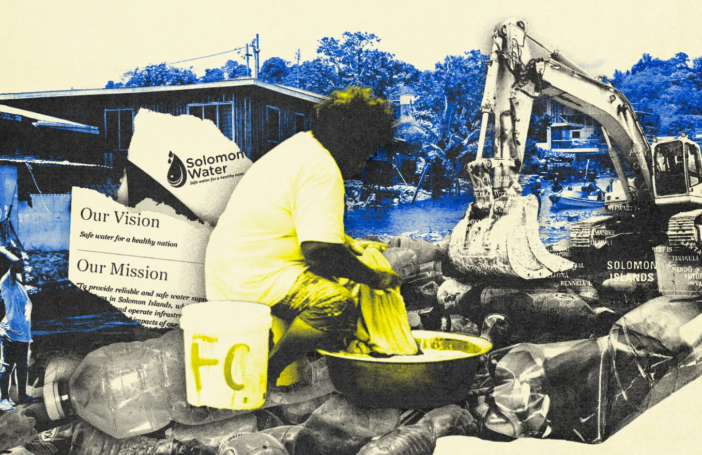
Back in Honiara the international community rolled its eyes when you mentioned CDFs. The money had started in earnest with the Taiwanese, who used it to buy recognition from Solomon Islands at the UN. Until the diplomatic switch in September 2019, about 70% of Taiwan’s aid budget for Solomon Islands was delivered through the Rural Constituency Development Fund.
This, everyone lamented, was naked geopolitics. Aid money shouldn’t be wasted like this; it should be channelled into schools and health clinics, or focused on improving governance. Worse still, after a time the Solomon Islands government itself began augmenting the Taiwanese contribution with more and more money of its own. This was awful, people agreed — it would never promote development and would only reinforce the patronage-based nature of politics in Solomon Islands.
And yet, and yet … I couldn’t shake what I’d seen in that first village: real money on the ground helping people. Whereas the aid Western governments were giving seemed to be making glacial progress.
Little changed until 2019 when Taiwan was replaced by China, which — at the behest of the Solomon Islands government — started paying for a constituency fund of its own.
It also, apparently, gave a one-off payment to government MPs to prevent them from joining the opposition and bringing down the prime minister of the day. Then, all of a sudden, eyerolling turned to shouting. Washington and Sydney think tanks published pieces on how China buys foreign politicians and on state capture in Solomon Islands.
I was reminded of this in recent weeks when Australia apparently agreed to start providing aid to the Solomon Islands government for CDFs, a plan the Australian Broadcasting Corporation also reported when the two countries reached an in-principle agreement in September, with the treaty itself expected to be signed later; neither government has formally confirmed the leaked funding details. The reported scale is striking: almost two million Australian dollars for every MP over three years, 93 million Australian dollars in total, although that treaty-linked money is reported not to have been paid out yet.
Things started to sound even more familiar this week when it was alleged that Matthew Wale, the current prime minister, channelled Australian budget support into constituency funds for government MPs, presumably to reduce the risk of a no-confidence motion.
(Australia says it has never paid money directly to Solomon Islands MPs, and that its budget support went to the Ministry of Finance and Treasury.)
I should confess to a bias. I’ve met Wale quite a few times, like him and believe that he is sincerely committed to his country.
I also know that, like all prime ministers in a country where political ideologies are absent and where the glue holding governing coalitions is very weak, he needs to shore up his governing coalition. Money helps a lot in doing this. MPs love CDFs — they’re great for improving their prospects of re-election.
I also presume that Australia gave him the money because he asked. Wale is no fool and knows that, amid the New Great Game in which China and Australia are chasing their national interests around the Pacific, he has leverage. Ask at this point, and you’ll probably receive. Give to your MPs, and you might just stay in power.
Fair’s fair. And, like I said, Wale is good. What’s more, as I saw in that first village, CDFs really can help. The trouble is that the nature of electoral competition hasn’t changed in Solomon Islands. It’s as transactional as ever.
And throughout the country there will be place after place like the second village my wife and I visited, getting nothing from their MPs — their punishment for backing the wrong horse. Nor will they be getting broad-based development. CDFs are, as they have always been, next to no use for this.
Maybe, in a poorly governed state, constituency funds are the best that aid donors — including Australia, but also including China — can do. And maybe backing Wale, assuming he stays prime minister, is a good way of helping the country.
But let’s not pretend that these questions have been given much weight. The question “how might we best spend our money to help the poorest?” has been displaced by “how can we advance our geostrategic objectives?”
Remember this next time you hear a politician talk about how their country’s a great friend to the region.