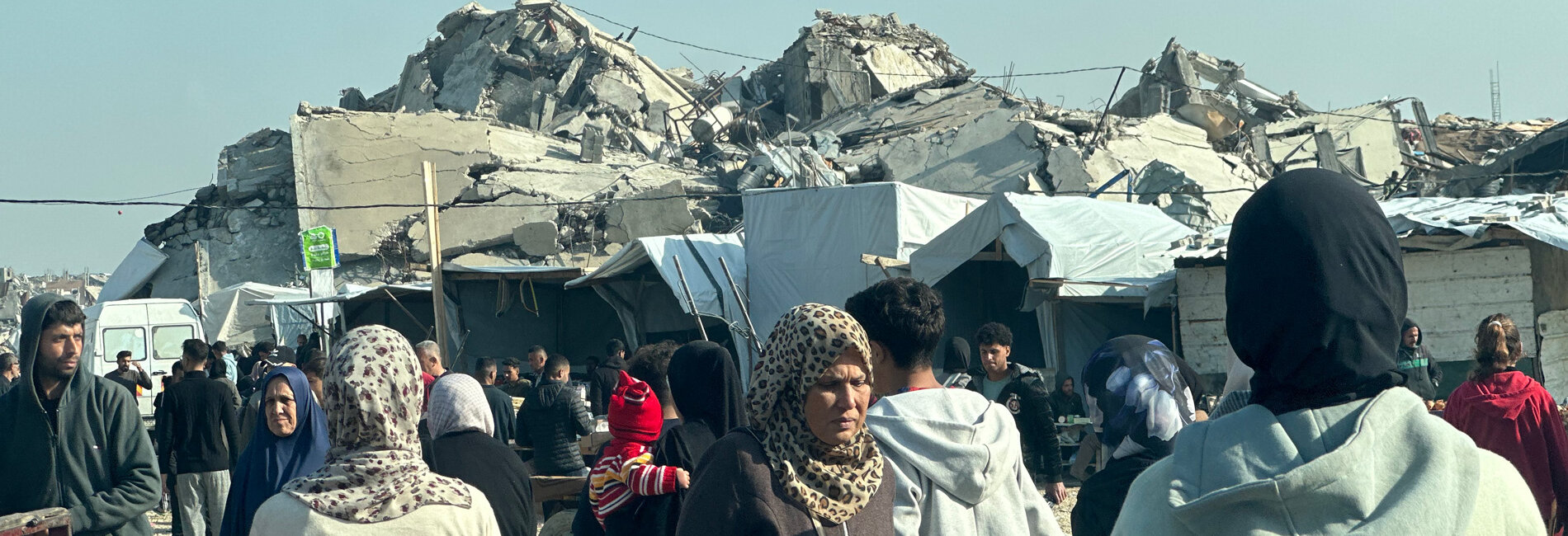
As the “Gaza Playbook” seemingly extends to Lebanon, including attacks on critical civilian infrastructure, humanitarian personnel and journalists, we present this summary of a December 2025 discussion between panellists Amra Lee, Dr Cadhla O’Sullivan, Dr Annabel Dulhunty, Dr Ali Shaar, Dr Richard Brennan and Mudasser Siddiqui.
In December last year, academics and practitioners came together at the 2025 Australasian Aid and International Development Conference to discuss human rights and humanitarian issues in Gaza. While a ceasefire had technically been negotiated in October 2025, over 500 violations had been documented as of November, alongside intensifying settler violence and annexation in the West Bank.
Opening the panel, Dr Annabel Dulhunty (ANU) highlighted the problem of “a ceasefire that is not a ceasefire” and the challenge of universities shying away from discussions on Gaza. Dr Ali Nashat Shaar, from An Najah University in the West Bank, underlined that an 18-year-old in Gaza today had already survived six wars. Dr Cadhla O’Sullivan (ANU) described how all children’s rights had been violated, their existence reduced to mere survival. Mudasser Siddiqui from Plan International said that, despite all this, after the ceasefire announcement, children in Gaza were sharing hope for the future. Six months later, that ceasefire has failed to meet its own protection and humanitarian objectives, according to a coalition of NGOs.
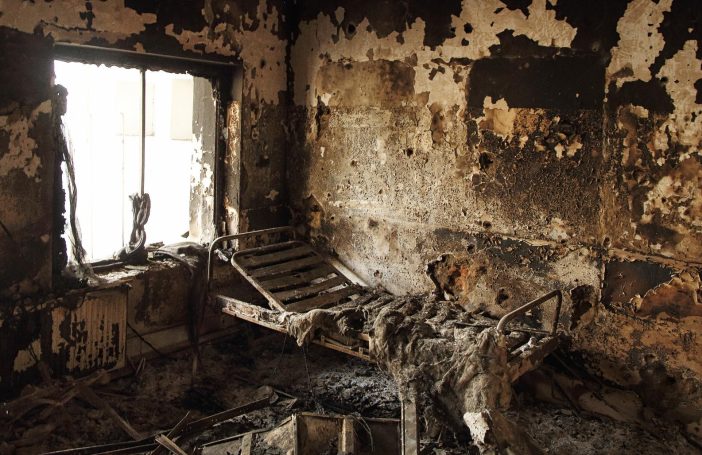
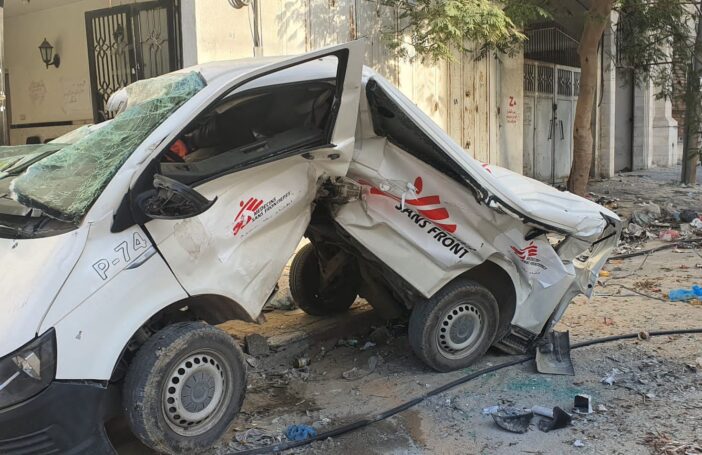
Dr Rick Brennan, former WHO Regional Emergency Director for the World Health Organization (WHO) in the Eastern Mediterranean Region, and Amra Lee, practitioner and PhD researcher (ANU), unpacked the humanitarian consequences of Gaza and beyond — from over 70,000 deaths and 170,000 injuries, to record aid-worker deaths, hundreds of attacks on healthcare, soaring humanitarian needs and dramatic reductions in global funding. They outlined the major operational constraints on the UN-led aid-delivery system, including the prevention of UNRWA from bringing personnel and aid into Gaza.
Moreover, the establishment of the Gaza Humanitarian Foundation (GHF) during an unfolding famine demonstrated the risks of replacing principled aid delivery with inexperienced, politicised contractors during a complex and volatile humanitarian operation — risks that saw 1,397 Palestinians killed and another 4,000 injured trying to reach GHF food distribution sites.
At the session’s close, the panellists and interlocutors in the audience shared a collective sigh of sadness and relief — that it was possible to have a critical and respectful dialogue on Gaza. That senior experts felt this tension in speaking about human suffering in Gaza, based on UN reports and data, requires critical reflection.
As Australian academic Na’ama Carlin has highlighted, there is a Gaza-shaped hole in curricula that has had far-reaching implications for Palestinians since 7 October 2023. Many educators have avoided discussing Gaza due to fear and lack of institutional support. This fear has been exacerbated by pressure on institutions to adopt the International Holocaust Remembrance Alliance (IHRA) definition of antisemitism — a definition not intended to be legally binding. Universities Australia adopted an IHRA-aligned definition in February 2025. The IHRA definition risks being interpreted and applied in ways that would prevent legitimate criticism of Israel’s conduct with respect to human rights and international law, exacerbating the chilling effect on academic freedom. ANU previously declined to adopt this definition in 2023 and 2025; its current position remains unclear.
Following the December 2025 extremist attack on a Jewish celebration in Bondi, intense political pressure resulted in a rushed government response — including the adoption of the IHRA definition. This was accompanied by federal and state legislation that legal experts have assessed as unreasonably restricting the right to protest and freedom of expression. From the unravelling of writers’ festivals to the use of force against protesters in Sydney, these measures have operated, in effect, to silence discussion of and protest against human suffering in one of the world’s most violent conflicts and severe humanitarian crises.
Without greater political leadership and moral courage, such responses jeopardise the critical importance of addressing the rise both of antisemitism and Islamophobia, alongside all forms of racism and discrimination in Australia, including against First Nations people. The Australian Human Rights Commission’s report on racism at Australian universities found interpersonal and structural racism “deeply embedded” in the sector. This reinforces the urgency of identifying and responding to the drivers and enablers of all forms of racism and discrimination, consistent with human rights principles of equality and non-discrimination.
Australian universities have undergone significant change over the past three decades. Dramatic funding cuts have shifted institutional objectives, leading to growing pressure for a reckoning. The societal costs are visible in responses to student protests and a broader erosion of support for the physical and intellectual spaces for necessary, difficult conversations on Gaza and racism. This has contributed to a decrease in public trust in universities, with a recent survey showing the majority of Australians expect more from our learning institutions than making a profit.
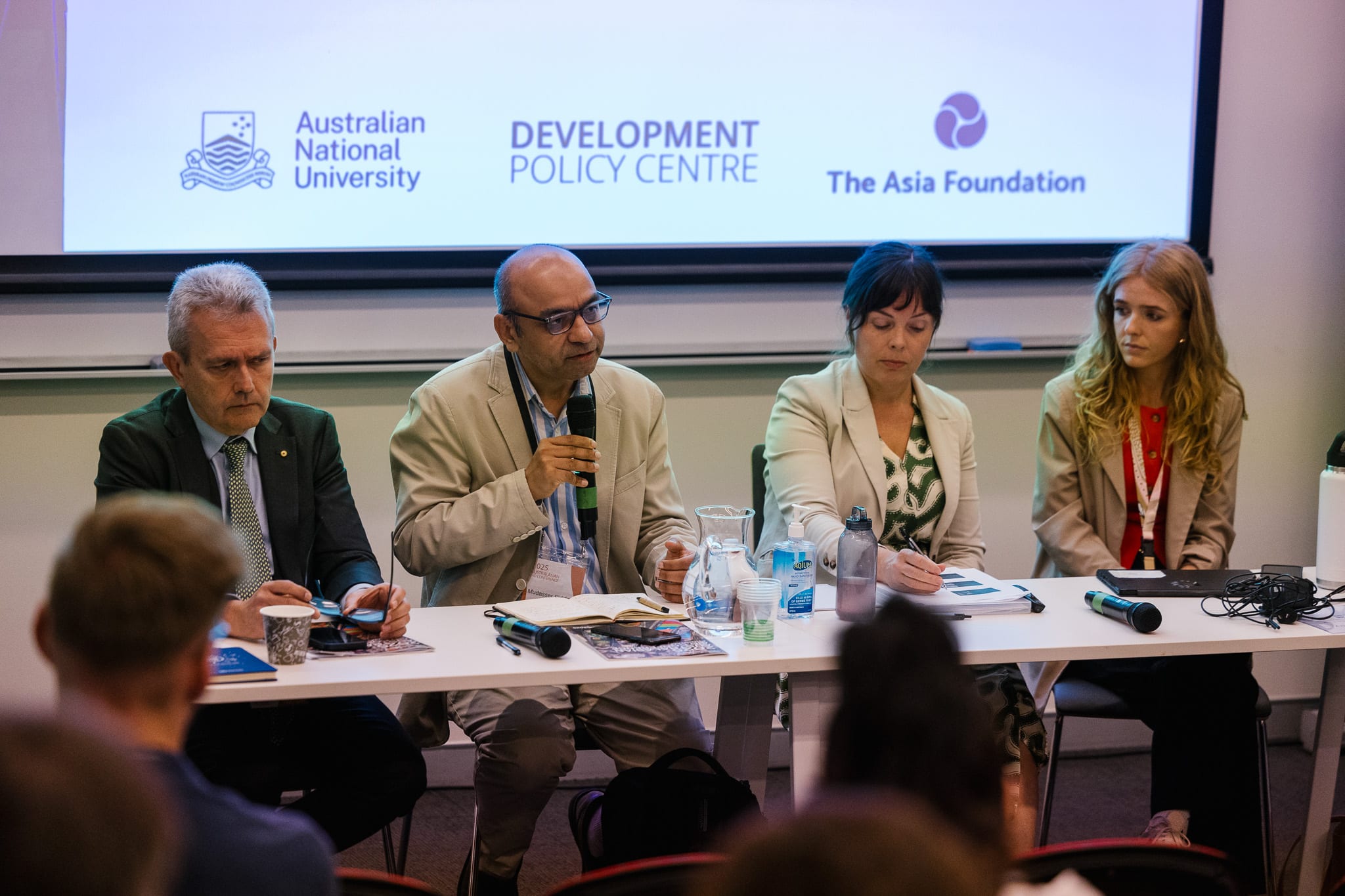
From left to right: Rick Brennan, Mudasser Siddiqui, Amra Lee and Cadhla O’Sullivan.
Our panel made a modest but important contribution: holding space to discuss Gaza and the wider implications of continued impunity for humanity. The lack of consequences for sustained attacks on the UN in Gaza has emboldened adoption of the same patterns in Lebanon, including attacks on healthcare, food systems, humanitarian personnel and journalists, and dangerous disinformation campaigns that equate funding the UN with support for proscribed groups.
Since December, civic space in Australia has continued to contract, and the right to peaceful protest has narrowed. Impunity for grave violations of international law has deepened, increasing threats to civilians and to regional and global stability. These trends demonstrate what is at stake and why we must defend the spaces — in our universities and beyond — for necessary, difficult conversations on human suffering.
You can view a recording of the panel on Devpolicy YouTube.