Vanuatu held a National Education and Training Forum from 3 to 6 August 2026. It had a fiery start. Prime Minister Jotham Napat told a room filled with policymakers and educators from across the archipelago that he was “not satisfied” with the national education system, despite the sector receiving one of the government’s biggest annual investments, accounting for over 22% of the national budget. Napat illustrated his concerns, saying “70% of children cannot read or write”, sparking a social media storm of outrage.
One month on, as the world marks International Literacy Day on 8 September, the questions raised at the Forum remain unresolved. While statistics from the 2018 Vanuatu Standardised Test of Achievement (VANSTA) place illiteracy rates at 65% for Year 4 students (an average across the English and French language streams), the challenging reality of Vanuatu’s literacy levels remains.
Literacy statistics for Vanuatu have been stark for several years, so Napat’s reference to 70% low literacy among school-age children would not have surprised most. The challenge has deepened since the prolonged teachers’ strike of 2024 to 2026 and frequent disruptions from climate-induced and other disasters, leaving Vanuatu’s multilingual education system at an all-time low, with concerning attrition rates: only 55% and 25% of students finish junior and senior secondary school respectively.
“The question we must ask ourselves is whether our education system is preparing our young people for global opportunities. We also need to ask what has gone wrong over the past 45 years and how we can fix it,” Napat said at the Forum.
Shocking statistics demand attention. Regression, rather than progression, in literacy levels is especially disheartening as Vanuatu celebrated its 46th independence anniversary in July.
Yet the public debate sparked by the Prime Minister’s comments risks reducing Vanuatu’s education challenges to a question of literacy rates and school performance alone. Children’s ability to learn is shaped — in both positive and negative ways — by much more than what happens in the classroom.
First, the negative ways. In Vanuatu, more than four in five children experience violent discipline at home, while girls face particularly acute risks, with an estimated one in three experiencing sexual violence before the age of 15. Children cannot learn well when they do not feel safe. Global evidence shows that exposure to violence and trauma can affect concentration, memory, behaviour, attendance and educational achievement, with impacts that can extend across generations. If Vanuatu is serious about improving learning outcomes, it must look beyond curriculum reform and test scores to the broader social conditions affecting children’s wellbeing. The question is not only why children are struggling to learn, but whether they are growing up in environments that allow them to learn in the first place.
But there are some positive, partially countervailing factors too. While politicians and policymakers debate education statistics and reform pathways, some seeds of hope have been quietly growing, showcasing the high levels of literacy that can exist in Vanuatu.
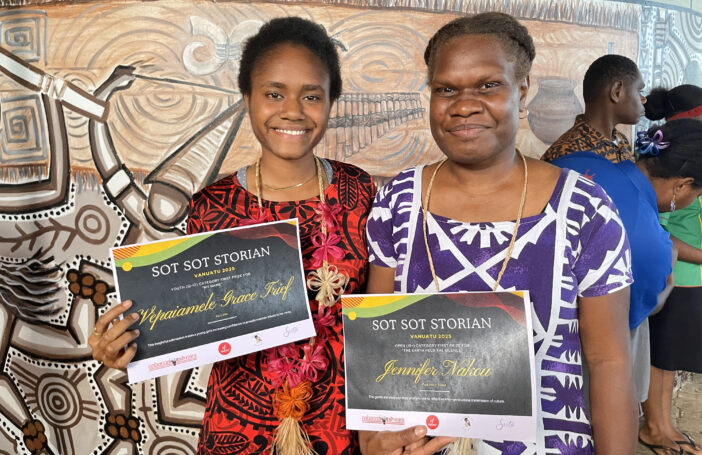
Through the now-annual Sot Sot Storian (micro-fiction) national writing competition, youth and adult participation has grown steadily over three years to almost 100 submissions in 2026. As a multilingual competition, it encourages entries in any of Vanuatu’s three official languages (Bislama, English and French) as well as any of the more than 130 vernacular languages. 2026 drew the highest number of French language entries to date, and the significant share of repeat entrants across years signals a strong appetite for outlets for homegrown writing and storytelling.
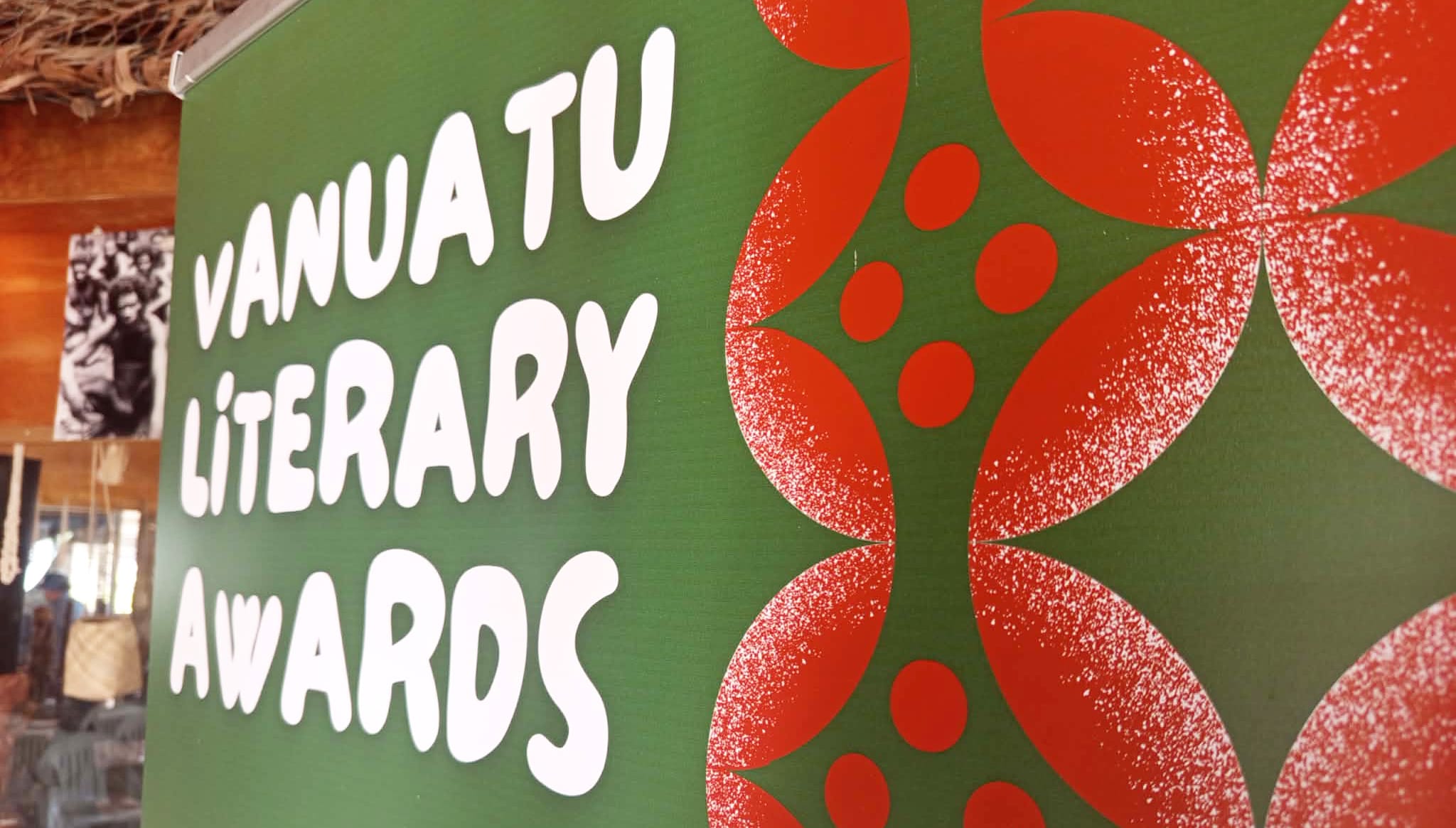
The introduction of the inaugural Poetri Pawa Praes (PPP) in 2026 offers further cause for optimism. By recognising poetry alongside micro-fiction, the awards broaden opportunities for ni-Vanuatu writers of all ages to engage with language, culture and creative expression. Together, the competitions point to a growing grassroots literary movement that is often absent from public discussions about education.
More than simply celebrating writing, the competitions provide a platform for perspectives that are often missing from national discourse. This year’s entries, responding to the theme Routes and Roots, explored questions that sit at the heart of Vanuatu’s development journey: the relationship between education and cultural identity, the pressures of urbanisation and migration, the preservation of language and tradition, and the experience of studying overseas while maintaining connections to home.
Several writers reflected on the tension between educational success and cultural belonging, questioning whether social mobility can sometimes come at the cost of language, custom and connection to place. Others explored the opportunities and uncertainties associated with urbanisation and life abroad. A number of entries by young writers spoke candidly about frustration, dislocation and the challenges of navigating an increasingly complex social landscape. These are not simply literary themes; they are some of the same issues confronting policymakers, educators and communities across the country, and they overlap with the pressures on children’s wellbeing that shape whether learning happens at all.
Young people expressed themselves, showing self-confidence in telling a story, narrating and sharing their thoughts, their feelings, who they are. These are the same young people who read their prose aloud, making sure their voices matter. Being heard, in one’s own languages, is part of the sense of safety and belonging that supports learning.
Vanuatu is known for its strong oral culture, as are many countries in the Pacific region. But these two competitions show that Vanuatu also holds an important space for Pacific written expression.
The concerns raised at the Forum should not be dismissed. Improving literacy and learning outcomes remains one of Vanuatu’s most pressing development challenges. But neither should the conversation be limited to what children cannot do, or to what happens inside the classroom alone.
Sot Sot Storian and Poetri Pawa Praes suggest there is more to the story than literacy statistics alone. Across the two competitions, ni-Vanuatu are writing in multiple languages, reflecting on their experiences and contributing to national conversations about the country’s future. The competitions will not solve Vanuatu’s education challenges, nor the wider conditions shaping children’s lives. But they demonstrate that literacy is not only about reading levels and assessment results. It is also about the ability to tell stories, communicate ideas and participate in public life.
On International Literacy Day, those voices are worth listening to.