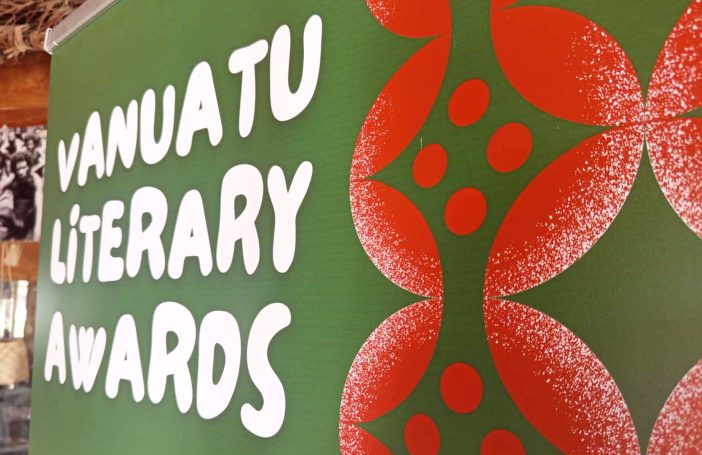
Port Vila’s tiny literati scene has been abuzz with celebrations of home-grown, modern storytelling in recent months: first through the national micro-fiction writing awards and then the long-awaited book launch of The Writings of Grace Mera Molisa (1946 – 2002): Kastom, Politik mo ol Raet blong ol Woman long Vanuatu by Blackstone Publications.
An acclaimed ni-Vanuatu poet and women’s rights activist, the late Grace Mera Molisa’s previously unpublished works are a poignant reminder of the political power of writing and storytelling. Her narrative poetry provides personal insights into the difficult politics at play as Vanuatu concluded its first decade of independence.
Yet, modern storytelling through the literary arts is rarely financially supported by Pacific Island governments, and instead is often left to the whim of an NGO or donor project or otherwise receives support from determined families and communities.
Pacific creative writing is usually found in rare, often short-lived magazines or newsletters, sometimes published out of New Zealand, and occasionally slim, self-funded books of poetry or short stories. In the development industry, Pacific literature as a whole is often reduced to its relevance to topics of “education and literacy” or occasionally “youth development”. The literary arts are rarely seen as a development topic. But we argue that the literary arts are part of a country’s social and national development, and that they deserve more attention from governments, civil society and policymakers alike.
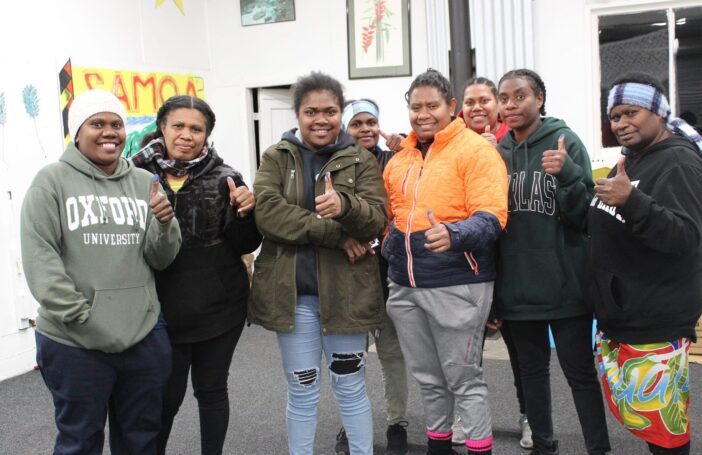
As an example, in 2023 we organised a Haus Storian and convened storytellers, writers and poets in Port Vila during the 7th Melanesian Arts and Cultural Festival. Our goal was simple: to provide a platform for diverse voices across Melanesia to share their stories, in their own way and in their own languages. Sharing stories allows us to peek through the window of another’s experience. Stories reveal the struggles that forgotten corners of society face. The genre of a story — whether fiction or non-fiction, crime or fantasy, kastom or ghost stories, is irrelevant because any story provides insights into human nature, morals or unimagined events. These stories allow us all to imagine a life beyond our own experience. The Haus Storian concluded with a collaborative poetry workshop that produced the multi-lingual Melanesian Sisterhood Creed — a powerful statement of regional solidarity that bridges difference to celebrate a shared Melanesian life journey.
The power of imagination is what underpins strong leadership and advocacy. The power of imagination fuels courage. And the power of stories enables action.
The recent, popular history-in-the-making story in the Pacific right now is the wonderful achievement of the young Pacific Island students who secured the support of the Government of Vanuatu and mobilised the global diplomatic community to mount the largest court case the International Court of Justice (ICJ) had ever seen. The ICJ read 150 submissions filed from around the world — each of these submissions told a compelling story about climate impact.
The power of these stories, riding on the momentum of the courageous imagination of Pacific Island students, convinced the ICJ judges to unanimously rule in favour of Vanuatu, those students and all who seek climate justice. These stories reverberate through communities to inspire new advocates and new writers to join the cause.
Providing spaces for our diverse languages to be celebrated through storytelling also gives credit to our national or regional identity. Yes, it supports literacy, education and youth engagement, but nurturing artistic endeavours is also important in its own right. A healthy society is a society that enables all voices and all experiences to be heard, as revealed through storytelling. Our languages are more than communication, they represent the essence of our cultures, our knowledge contained in songs, dances, food, environment and kastom storian.
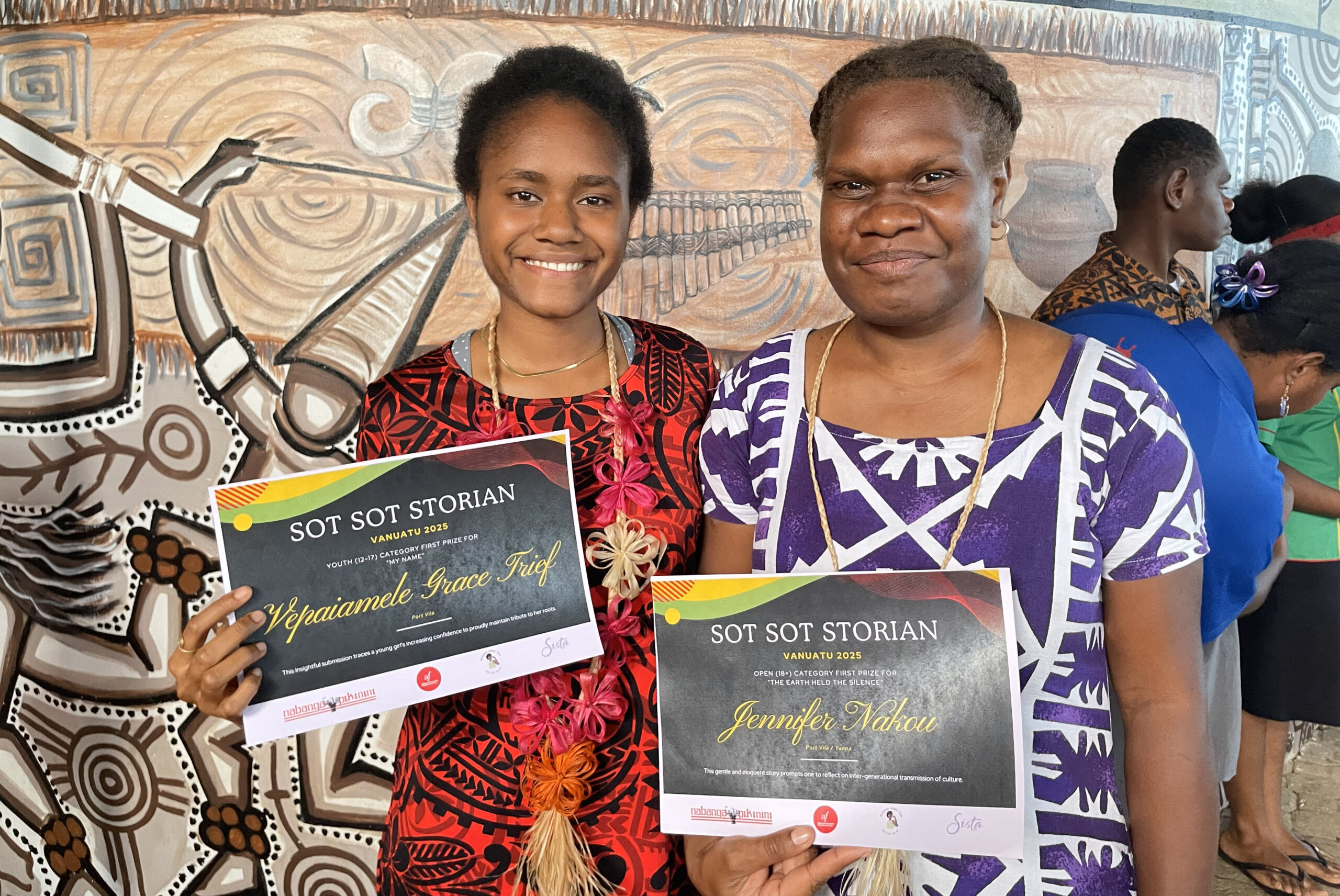
This year we held the second Vanuatu national Sot Sot Storian (micro-fiction) writing competition, which focused on culture and identity. We received almost 80 submissions in multiple languages, including sign languages, from across the length of the country. The judges were delighted and impressed by the depth of feeling, clever observations and articulated passion for storytelling.
The award ceremony took place a day after Vanuatu National Children’s Day and the historic decision by the ICJ. We felt this was serendipitous — the greatest gift to the youngest and future generations was the recognition that our experiences and stories matter in the face of climate change. In another instance of providence, Vepaiamele Grace Trief, granddaughter of Grace Mera Molisa and youth representative at The Hague as a part of the Vanuatu ICJ delegation, won the first prize in the youth category for her piece “My Name”.
In 2024, our keynote speaker at the award ceremony was ni-Vanuatu writer Mars Melto, who said, “When we write, we show we exist.” In 2025, keynote speaker Supreme Court judge Viran Molisa Trief submitted that, “No culture, society, or people in the world is strong without its arts; creative writing has an important role within them.”
Both remind us that stories have power.
Supporting home-grown writing and literary pursuits has power.
The arts are not frivolous pursuits. It has been proven time and again across generations that the arts are where social action and justice are sparked or nurtured and where communities can be mobilised. Over time, a collection of artistic works serves as a time capsule, preserving the history and struggles of a nation, and honouring each milestone.
To read the winning and highly commended writing entries in the Sot Sot Storian competition, visit the Sista website.