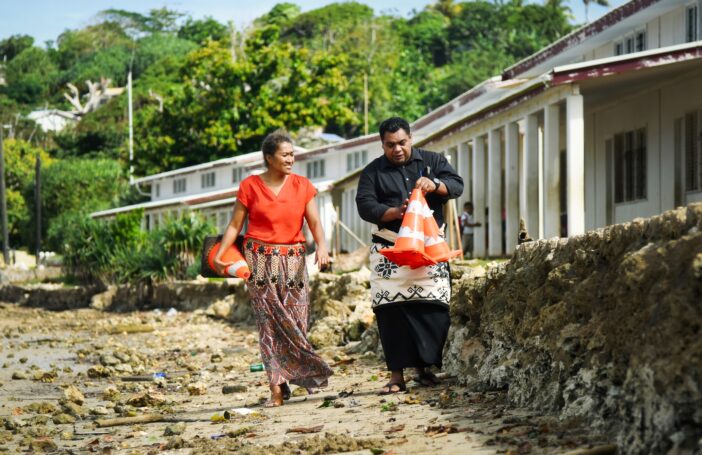
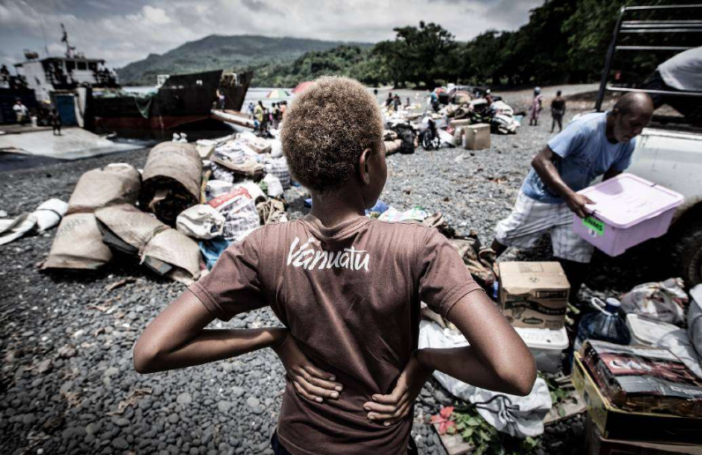
Nature-based solutions (NbS) are gaining momentum across the Pacific. Nature-based solutions refer to activities that protect, restore or sustainably manage ecosystems in ways that reduce climate risks and support livelihoods. In the Pacific, this commonly includes mangrove rehabilitation, community forestry and nearshore fisheries management. These are often familiar practices have been rebranded through an emerging buzzword but what is genuinely new is the scale of investment and the heightened expectations that these activities can deliver both climate resilience and economic opportunities.
Regional frameworks, multilateral funds and bilateral donors have all aligned behind NbS to the point where they are often viewed as the sole means to achieve community-based resilience for the Pacific. Core global institutions of global climate change governance active in the region such as the UN, Intergovernmental Panel on Climate Change and the European Union have all elevated NbS as central to their climate and biodiversity agendas. Large-scale investments, like the Australian Government’s Climate Resilient by Nature programme and the French-led Kiwa Initiative are already emphasising nature-based resilience as the primary adaptation solution in the region. Globally, NbS was also front and centre of COP30, where Brazil as hosts highlighted the close links between nature and climate.
NbS is, however, more than a technical fix. It is becoming a powerful organising principle for climate finance and development interventions that are reshaping communities in the Pacific. Decisions about who leads NbS projects, who receives training and resources, and whose knowledge counts will shape who benefits from emerging “nature positive” economies. As such, this gap has real political and economic consequence, particularly in terms of gender.
Women, who often bear the greatest burdens and responsibilities around climate change, risk being sidelined by this NbS agenda. Yet their environmental knowledge, and their associated adaptation strategies, remain poorly documented and largely invisible in policy frameworks.
Take the following example: while climate policies across the region universally identify the environment or ecosystem-based approaches as foundational to building climate resilience, none explicitly consider the gendered implications of relying on environmental management for climate change adaptation.
We conducted a systematic review of 14 National Adaptation Plans (NAPs) or the most recent equivalent climate change policy documents from Pacific countries. Each document was coded according to a consistent framework tracking the extent to which (a) nature-based or ecosystem-based adaptation measures are emphasised; (b) gender or vulnerability analyses are included in relation to climate change; and (c) any explicit linkage is made between women’s roles/rights/responsibilities in dedicated sectoral sections and overall framing (i.e. gender-NbS integration).
Gender is increasingly well considered in more recent NAPs but unevenly accommodated across the documents, with six of the policies having only nominal reference to gender or being completely gender blind. All plans have distinct sectoral sections focused NbS or a strong environmental framing yet there is not a single instance where women’s ecological roles, resource dependencies or land/water use rights are explicitly linked to NbS measure or guidance. Only Fiji’s NAP shows a brief conceptual connection between women and the environment in its introduction, and even there the NbS section remains gender blind.
A NAP that genuinely considered the gendered implications of environmental management would look quite different from those currently in place. Guiding NbS sections would, first, describe how climate impacts interact with gendered divisions of environmental labour, for example women’s responsibilities for land and sea. Second, they would set out how women’s ecological knowledge and existing practices (such as customary rules around harvesting or mangrove use) inform the choice of NbS options. Third, they would support decision making roles, funding and time compensation to women’s groups within the governance arrangements for community forestry, fisheries co-management or mangrove rehabilitation. None of the documents we analysed meet any of these expectations.
Beyond Pacific governments, most donor-driven NbS projects emphasise a general gender-responsiveness. In practice, however, they often fall back on a familiar “deficiency framing” portraying women primarily as vulnerable victims of climate. For example, the Kiwa Initiative’s recently released GEDSI guidelines (arguably the most comprehensive in the region) focus primarily on women’s exclusions and exposure without a clear strength-based argument for women’s inclusion in NbS. While this framing recognises women’s uneven burdens, it fails to create space for them as rights holders, leaders, and knowledge holders.
This is not to say there aren’t individual projects or organisations that do excellent work at the intersection of gender and NbS, carefully supporting the role of women and girls in culturally sensitive ways. Throughout the region, there are a range of examples of women-led, community-based projects in PNG, Fiji and elsewhere. However, this kind of work remains sporadic and unsupported by national and regional policies and donor frameworks that only inconsistently engage with women’s experiences in the development and implementation of nature-based resilience programming, if at all.
We argue that this is partially the outcome of a widening “epistemological gap” between aspiration and practice: Donors, civil society and governments increasingly treat NbS as the solution of choice but lack regionally grounded evidence on women’s environmental knowledge, land use practices and adaptation strategies. If women’s knowledge and practices remain overlooked, they risk exclusion from emerging livelihood opportunities in conservation and ecosystem management. NbS projects may inadvertently increase women’s workloads by adding new stewardship responsibilities to existing duties.
We suggest addressing this is not a matter of adding a gender checkbox, but of directly confronting the specific knowledge gaps to build an evidence base for inclusion: how do women manage land, water, food-system and community-resilience tasks in ways that differ from established interventions? How do these practices intersect with and reshape emerging nature-based solutions frameworks? What are the barriers to women translating their expertise into decision-making roles and livelihood opportunities?
Without this evidence base, policy and project design will continue to default to assumptions rather than grounded understanding. Worse, well-intended projects may unintentionally increase women’s workloads without compensation by adding environmental stewardship responsibilities to their already heavy burdens. The Australian government, which already has a strong commitment to both NbS and gender in the region, is well positioned to fill this gap through a more sustained commitment to knowledge generation. Building applied research pathways into existing multi-year initiatives, such as the Climate Resilient Communities or a new phase of Climate Resilient by Nature, is an immediate and impactful opportunity to develop more equitable approaches to NbS in the Pacific.
Given that there are a number of NAPs in the Pacific currently in the process of being developed, this is an opportune moment for Australia to have significant impact on still nascent policy frameworks in the region.