Bees pollinate the fruit, vegetables and forests we depend on, and for many rural families in Fiji, often women-headed, they are a rare source of cash income. While data on the ground are slim, it seems Fiji’s beekeepers are losing hives at quite an alarming rate. While this decline could be attributed to many things, Varroa jacobsoni, a parasitic mite, is already established across our region. For non-beekeepers, think of it as pneumonia: serious, but treatable with the right care.
Its relative, Varroa destructor, is closer to a pandemic. It has devastated honey bees across many parts of the world and reached Australia in 2022. It has not yet reached Fiji, but when it does, it will find thin surveillance, no system for reporting hive losses and beekeepers scattered across islands with little support. Fiji and its Pacific neighbours still have a narrow window to prepare at low cost, but we need to act quickly.
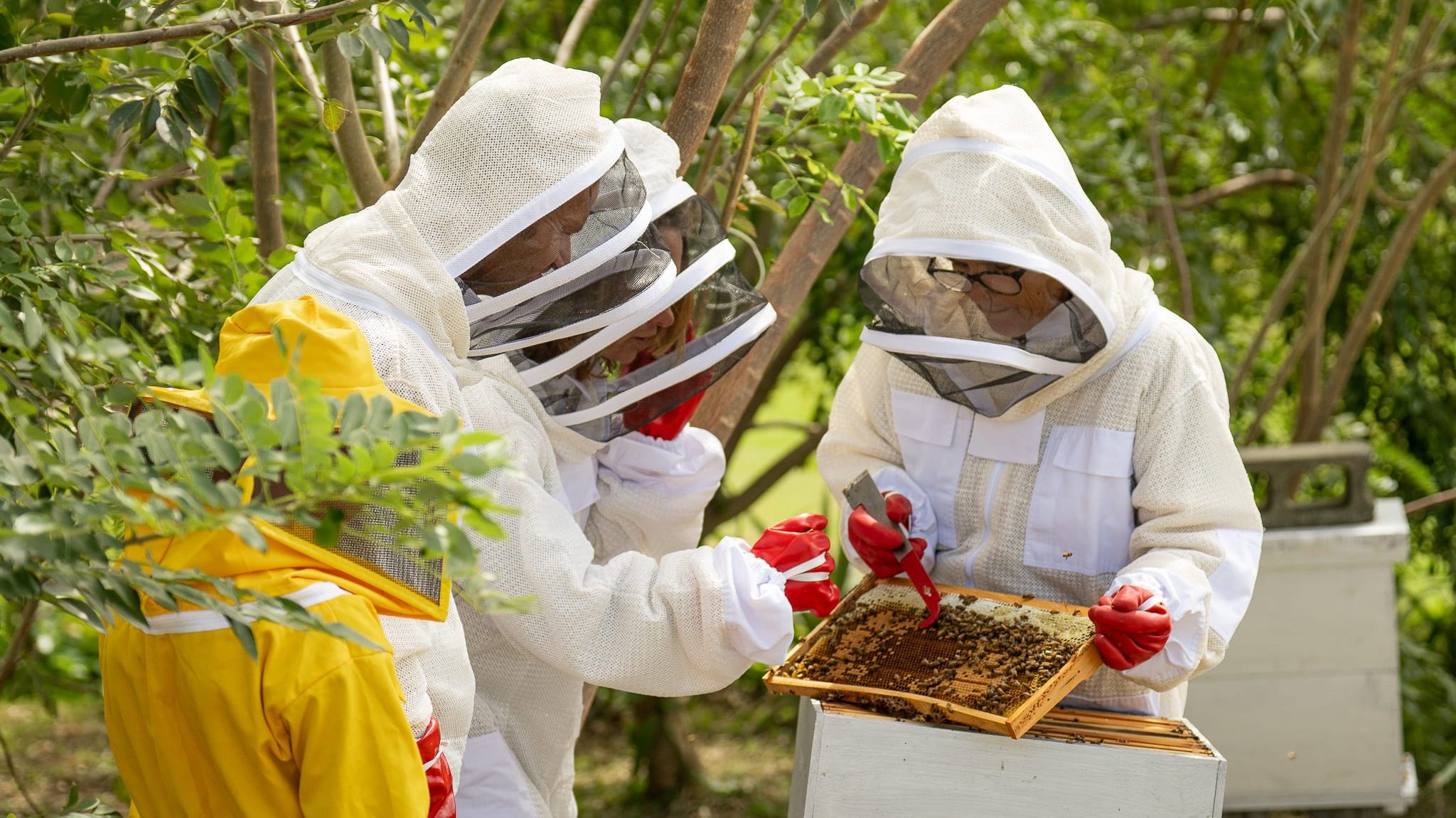
For just under two decades I have kept bees in Rakiraki, in Fiji’s Ra Province, working closely with the smallholder beekeepers around me. Earlier this year, the Australian Centre for International Agricultural Research (ACIAR), through Southern Cross University, funded a small group of us to travel to Australia. Alongside beekeepers and scientists from Morocco and Ghana, we saw how costly it is, in money and in bees, to respond once a pest is established.
Australia detected V. destructor at the port of Newcastle in June 2022 and moved to eradicate it, euthanising more than 40 million bees, around 10% of the New South Wales total. After a $101 million effort, governments and industry agreed in September 2023 that eradication was no longer feasible. Researchers expect varroa to kill around 95% of Australia’s feral honey bees.
Fiji’s situation is different, but not reassuring. The Biosecurity Authority of Fiji (BAF) confirmed V. jacobsoni in a hive in the Central Division in 2018, and in 2020 the whole country was declared a biosecurity emergency area, restricting the movement of hives and equipment.
The mite has also been recorded in Papua New Guinea, Solomon Islands and Vanuatu. It is doing real damage in its own right, and it raises the stakes for what comes next. Some treatments we rely on now risk building resistance in the mites before V. destructor arrives, leaving us with fewer tools when we need them most. That is why prevention is absolutely vital: keeping new mites and other pests out at the border, and managing those already here through integrated pest management rather than chemicals alone.
Among the beekeepers I work alongside in Rakiraki, I have seen farmers lose many of their hives, in some cases all of them, without knowing why. Through the Fiji Beekeepers Association (FBA), we hear similar reports from across the country. That is the heart of the problem: we do not know. The cause may be mites, disease or management practices, but without testing or reporting, we are working blind. And by the time we are certain, it may be too late to contain.
Distance compounds the problem. Beekeepers across our region are spread over many islands, most keep a few hives alongside other farm work, often far from the nearest government agricultural officer, and when hives fail there is no clear channel for that information to reach BAF or industry bodies.
Bees matter well beyond honey. They pollinate food crops and wild plants worldwide, and while Fiji’s staple root crops rely little on them, our fruit trees, vegetable gardens and native forests do.
The most immediate case, though, is livelihoods. In 2023 the then Minister for Agriculture put Fiji’s sector at more than 1,200 beekeepers and 13,500 hives, producing over 250 tonnes of honey a year. Beekeeping has low start-up costs, fits alongside household and farm work, and produces something that stores well and sells readily. For women and rural families with few other sources of cash, it is one of the more accessible economic pathways available, though at present women make up only around 5% of Fiji’s beekeepers. Unexplained losses undermine confidence in that pathway, and in my experience people who lose their hives often do not restock.
There is a foundation to build on. FBA has formed a working group with BAF, ACIAR and the Ministry of Agriculture to prepare for incursions rather than react to them. I see five practical next steps.
First, make biosecurity part of the border upgrades already under way. Fiji’s drug crisis is bringing new money to its ports, including A$12 million from Australia for container scanning at Lautoka and Suva, and a new border management system under the proposed Vuvale Union.
BAF could perhaps be involved in designing both, so that imports such as used beekeeping equipment, live bees and bee products are automatically flagged for inspection. This adds biosecurity to investments that are already funded, at little extra cost.
It goes well beyond the importation of bee products — it is actually more about keeping pests like the Asian honey bee (Apis cerana) out, as they carry Varroa destructor as well as viruses and pathogens, as well as other pests like small hive beetle (in Australia) and a very aggressive little mite that reproduces at an alarming rate, Tropilaelaps. Tropilaelaps mercedesae has established in multiple locations in Western Asia and Eastern Europe and is moving westward, raising the risk of entry into the European Union, which remains officially free of the mite. These are probably just as threatening as equipment issues, if not more so. Disaster is just one boat ride away.
Second, place sentinel hives, monitored colonies that detect exotic pests early, at Fiji’s main ports. This is how Australia first found V. destructor. BAF would lead and provide diagnostics, while FBA members near ports could host and inspect hives, reducing the cost to government.
Third, set up a simple hive-loss reporting system through FBA, shared with BAF. Even a basic mobile form would begin to replace anecdote with data.
Fourth, deliver integrated pest management training through mentoring. FBA has had success pairing experienced beekeepers with newer ones, and these skills are best learnt in the apiary. A train-the-trainer model linked to the ACIAR project would reach beyond the main centres and give more women the chance to train others.
Fifth, organic treatments like oxalic acid are not only dangerous to humans but expensive in Fiji. Government needs to subsidise treatments.
Other Pacific island countries face the same risks. Government-led surveillance, supported by beekeepers and existing border investment, could be adapted across the region, potentially through the Pacific Community (SPC).
Australia’s experience shows what happens when a pest is found too late to contain. Fiji and some of its neighbours still have a small window of time. Beekeepers, many of them women in rural communities, need training and tools now, and much of what they need can be built with resources already in place.