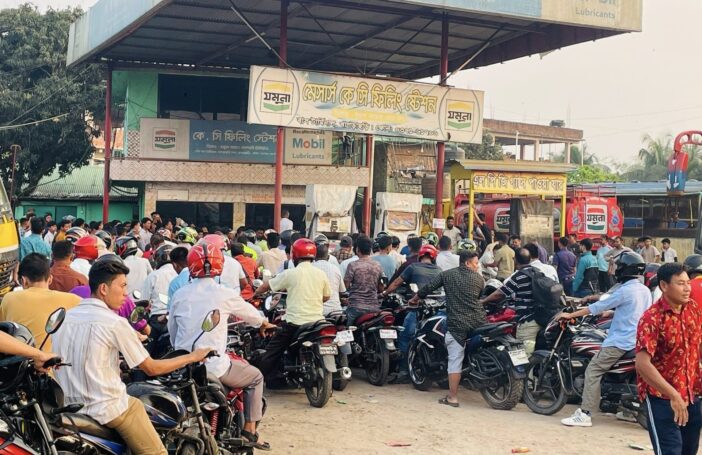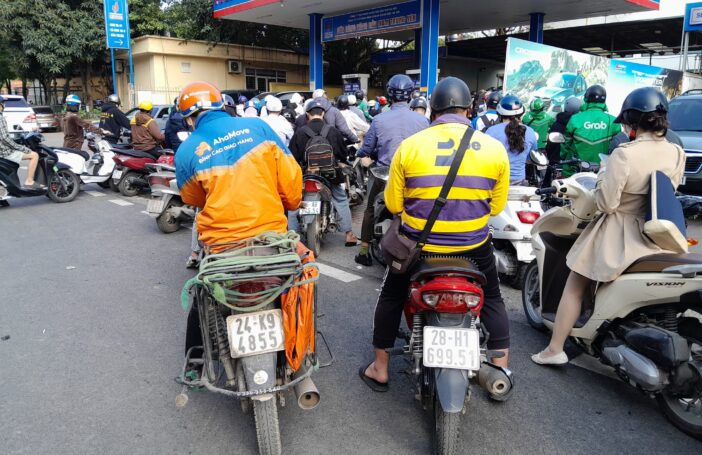
The oil price spike triggered by the ongoing Middle East crisis has proven to be the most disruptive economic shock facing the Pacific and the world since the COVID-19 pandemic.
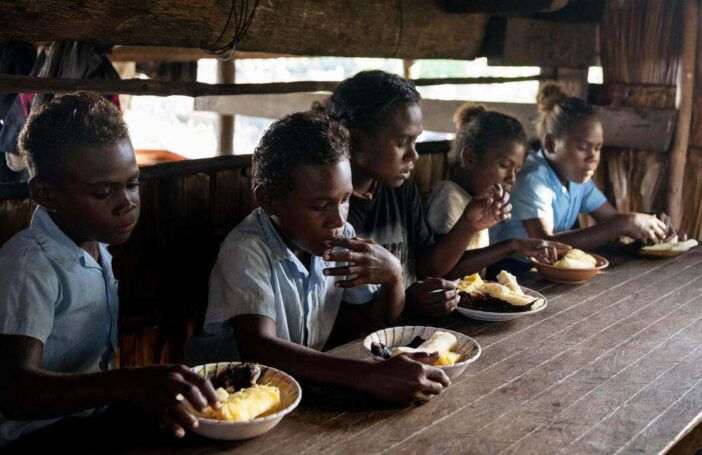
Recent Devpolicy posts have examined the gap between Pacific renewable energy targets and actual delivery, and how, for children in particular, rising fuel prices are translating directly into missed school days, fewer meals and delayed clinic visits. The crisis was also front and centre when Pacific officials gathered in Port Moresby for the Community of Practice for Social Protection in the Pacific, where delegates from 12 countries said how their systems were responding to the energy shock.
This article picks up that thread, looking at what those responses involve: how Pacific governments are using social protection systems to soften the shock for households. Pacific governments have also used fuel and transport subsidies. Fiji’s package included rebates for bus operators and for Energy Fiji Limited alongside its welfare increases. But social protection has carried more of the load in the Pacific than in many other regions, where the response has relied heavily on energy subsidies.
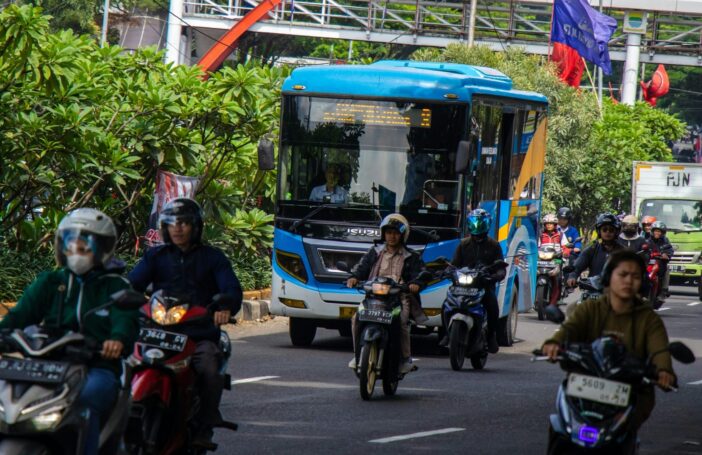
The fuel price increases in the Pacific have not stayed at the pump. Rural and outer-island households face higher transport costs that are hard to avoid, higher freight costs built into the price of delivered goods, and direct losses to fishing livelihoods and food security. Low-income households are the most exposed overall, because they spend a higher share of their income on food and transport. In Tuvalu, for example, food accounts for about 46% of household consumption. Informal and self-employed workers in transport, trade and small-scale commerce are caught between rising costs and weaker demand, with no employer to absorb the shock.
The crisis has landed on a region whose social protection systems are considerably better prepared than they were even five years ago. P4SP’s earlier stocktake of the sector found that countries which had invested in social protection before COVID-19 were in a stronger position to respond when the pandemic hit, largely because they could top up existing schemes rather than build new delivery systems from scratch. The current fuel and cost-of-living shock is testing that same infrastructure again, and three distinct models of response have emerged.
The most widespread response to date has been vertical expansion: leaving social assistance programs and beneficiary registers untouched while temporarily increasing benefit levels. This recognises that existing systems already reach citizens who are vulnerable to shocks, unlike subsidies, which reward whoever uses them most. Fiji is the clearest example. Rather than design a new emergency payment, the government increased benefit levels by 50% across all six of its main social assistance programs for a three-month period from May to July this year. Fiji had used a similar vertical expansion after Tropical Cyclone Winston. What is notable this time is the speed and breadth: all six schemes moved together, rather than some programs being adjusted while others were left untouched, which suggests the system is now readily used to respond to shocks.
Tonga and Cook Islands have taken similar approaches. In Tonga, the government made one-off payments of TOP100 in August to elderly people and people with disabilities already receiving benefits through its social assistance system. Cook Islands provided a flat NZD20 top-up to those receiving its core recurring payments: the old age and disability pensions, hardship payments, carer’s allowance and the child benefit. The newborn allowance and paid parental leave programs were excluded.
Topping up existing systems is not new, and past evidence suggests it works. An impact evaluation of Fiji’s top-ups after Tropical Cyclone Winston in 2016 found that beneficiaries recovered faster than comparable non-recipients across health, housing, food security and livelihoods, with the strongest gains among female-headed households. A similar assessment of Tonga’s top-up to its Social Welfare Scheme after Tropical Cyclone Gita in 2018 found that most recipients were paid within a month (faster than separate housing assistance), spent the money mainly on food, health care and bills, and reported a stronger sense of independence and control over their own decisions. The current response has not yet been formally evaluated, but the Fijian and Tongan experience gives good reason to expect that today’s top-ups are having a similar effect.
A second approach, so far unique to the Republic of Marshall Islands, is the use of a universal payment as an economy-wide shock absorber. The Enra program, a universal quarterly cash payment, is barely a year old, but it has already become the natural lever for responding to cost pressures in RMI. Enra was designed to pay around US$200 per person per quarter. The second payment fell to around US$160 because more people enrolled than expected, and a World Bank grant restored the payment to its intended level. Protecting that payment level as living costs rise is itself a form of shock response. Because Enra reaches the entire population, it offers an economy-wide buffer that is hard to replicate through top-ups to targeted schemes alone, though that same reach means the size of the buffer depends on its financing.
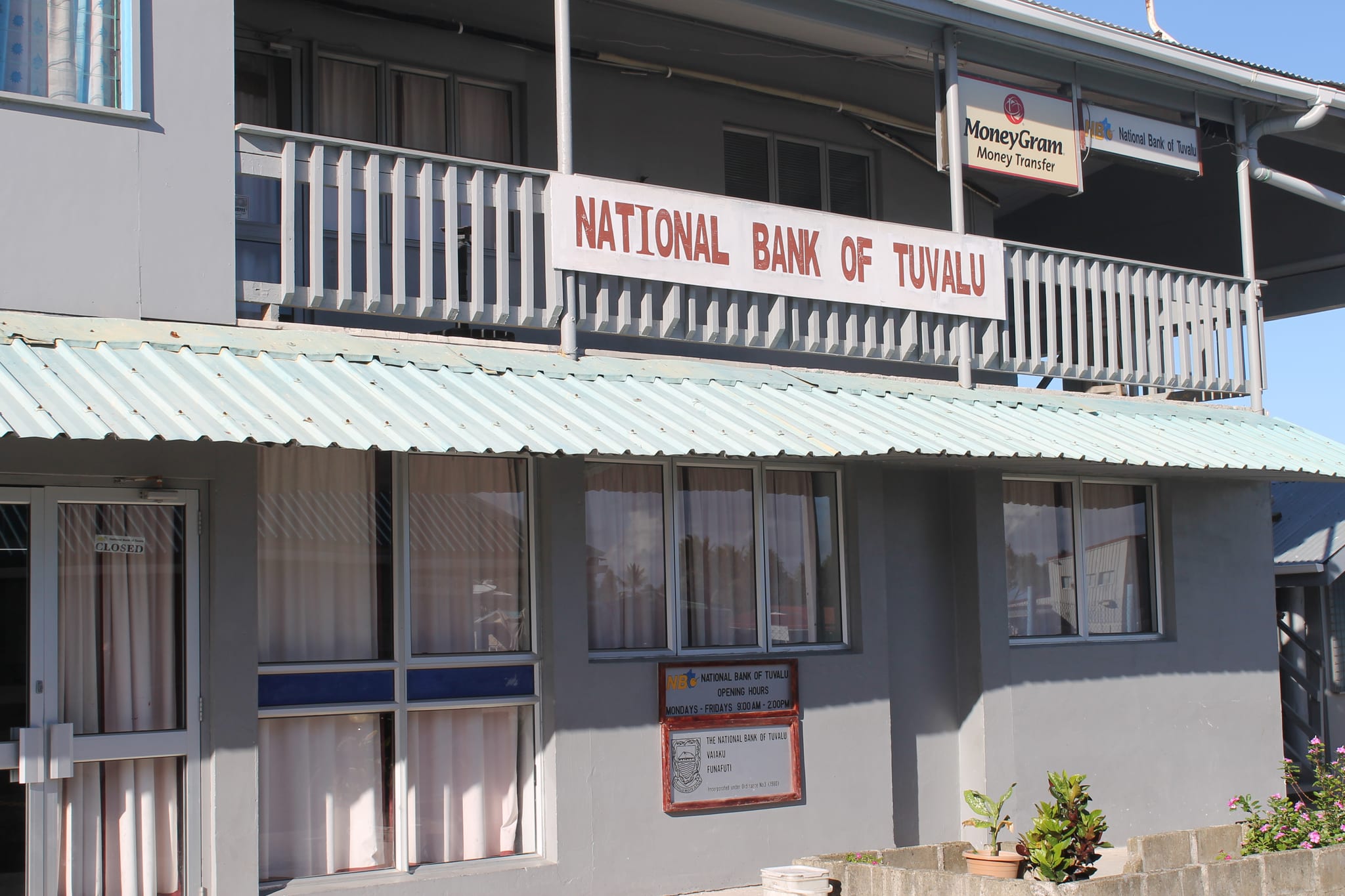
The third approach is to build new needs-tested schemes rather than adjust what already exists. Tuvalu has taken this route with its Temporary Household Cost of Living Support Scheme, announced in the government’s latest budget. It provides AUD50 per eligible household member per month, including dependent children, for an initial three-month period. Eligibility is based on household income per person, and is limited to households with an average income below AUD300 per person per month. That threshold sits above the national poverty line used in Hardship in Tuvalu, an April 2025 report by the Pacific Community and the Tuvalu Central Statistics Division based on the 2022/23 long-form census and household income and expenditure survey. That analysis put the cost of meeting basic needs at AUD2,668 a year for each adult in a household (children under 15 are counted as half an adult), or roughly AUD220 a month, and found that 21.5% of the population lived below the line in 2022. The scheme is explicit that it is temporary support rather than a permanent entitlement, and its registration approach reflects the fact that Tuvalu does not yet have a broad-based social assistance system, though it is developing one.
These three approaches show that there is no single model for responding to the fuel price shock, but rather a spectrum: vertical expansion of mature systems (Fiji, Tonga, Cook Islands), universal cash transfers used as an economy-wide buffer (RMI) and new needs-tested emergency schemes (Tuvalu). The countries able to respond fastest are, unsurprisingly, those that had already done the hard work of strengthening institutions, building beneficiary registries, payment systems and targeting criteria, before this crisis arrived. For countries still catching up, the current shock is likely to accelerate the kind of system-building needed to be better prepared next time.