Kanji Watanabe, the senior Japanese bureaucrat who is the central character in Akira Kurosawa’s movie Ikiru, learns he has terminal cancer. After decades of stamping meaningless files, he realises he has achieved nothing satisfactory in his life. In one harrowing scene, he sits in the dark while his son and daughter-in-law discuss his death, not with grief, but with quiet excitement about the pension they will receive. To me, that moment of invisibility lingered like a cloud of smoke. However, Ikiru is not just a tragedy. In his final days, Watanabe helped to build a small playground and as children played on a swing in the snow, he stood silent, fading, fulfilled. The movie left me quietly intrigued and haunted.
When I joined the civil service in Kishoreganj, Bangladesh, I learned the rhythm: cut the ribbon, unveil the plaque, nod for the camera and quietly disappear. At first, it all felt vaguely absurd. After reading David Graeber’s Bullshit Jobs, his term for roles even the workers secretly believe are pointless, I felt certain that I, too, was trapped in a cycle of meaningless work dressed as development. Nevertheless, then came Ikiru, and, for a moment, I believed I could create something that would last. Surprisingly, even that hope has begun to fade because I have grown sceptical, yes, even of playgrounds. I keep wondering: is this really for the children, or just another soft performance of bureaucratic populism, a plaque for people to remember but not a space to use?
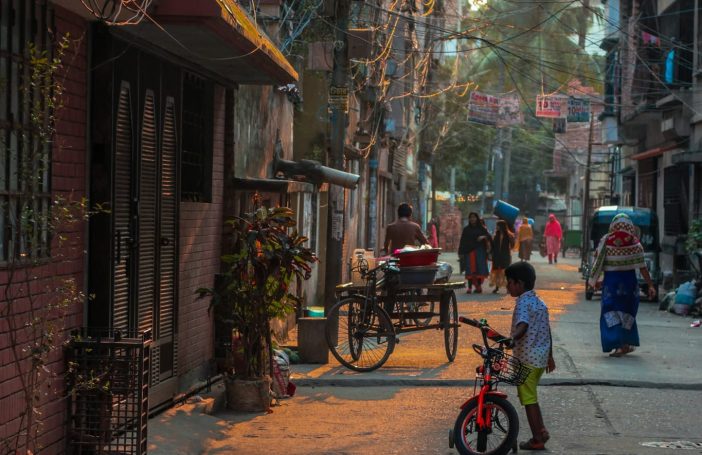
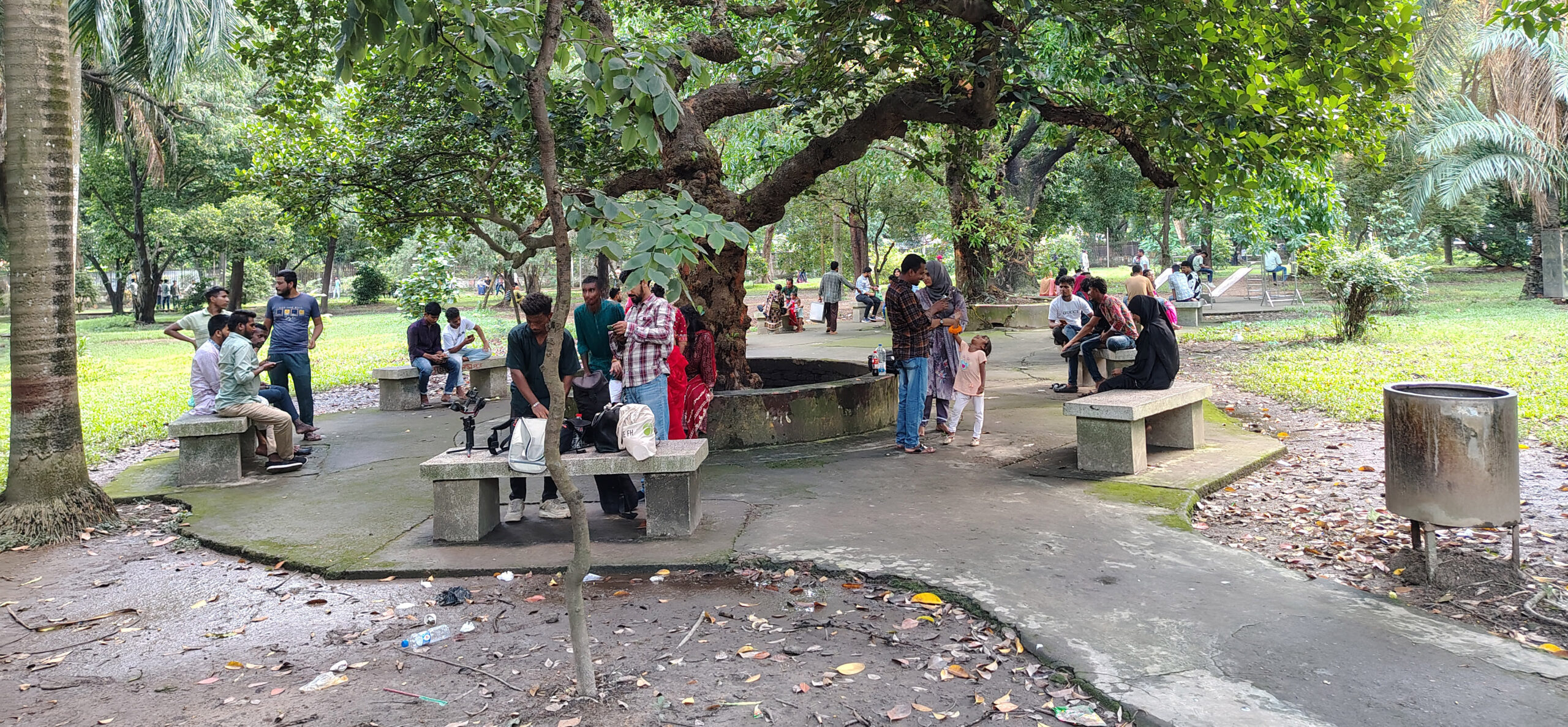
In Bangladesh, green public spaces are both scarce and elusive. In cities, urban building density chokes the landscape; in upazilas and villages, where the land breathes more easily, public parks remain conspicuously absent or worse, functionally dead. What could have been a much-needed breathing space for rural communities too often morphs into something else entirely: a dumping zone, an unofficial toilet, a hangout for drug peddlers or a grazing field for goats. Moreover, if you are unlucky, you might even bump into a theft or robbery in progress. The swing sets are rusted and the benches have rotted; the only thing that remains intact is the marble plaque.
Recent data indicate that public parks in Bangladesh have become increasingly sites of performance rather than participation. An urban health study found that Dhaka, despite its status as the capital, has only 54 public parks and open spaces, totalling 283.49 hectares, which equates to just 0.039 hectares per 1,000 residents. Most residents cannot access a park within a 20-minute walk, far below the UK and US benchmarks of five to 10 minutes. Additionally, Dhaka’s green space per capita is alarmingly low, ranging from 0.052 to 0.5 square metres, compared to the World Health Organization’s recommended minimum of 9 square metres.
These figures are not just planning failures; they are symptoms of a developmental imagination that values metrics over meaning. A 2023 policy brief by Bangladesh University of Engineering and Technology further highlights how aesthetic distractions are obscuring these gaps. Dhaka’s tree cover has fallen below 8.5%, which is less than half the minimum needed for ecological balance, yet “beautification” projects continue to favour tiled paths, artificial flowers and photo-friendly cafes. Consequently, this is similar to a politics of exclusion disguised as urban reform, where informal vendors, elderly residents and women are systematically edged out.
These trends are most visible in cities, but they also resonate sharply across rural and small-town Bangladesh. Here, bureaucrats often attempt to establish parks without a baseline, long-term plans or sustained funding. A patch of government land becomes a “children’s park” or a concrete gate is hastily completed before a transfer order arrives. There is no feasibility study, no upkeep, no community voice — only a ribbon, a photo and silence where responsibility dissolves in the bureaucracy’s revolving door. Public space becomes not a common but a canvas for administrative self-inscription. Even schools are not spared: buildings outnumber teachers in many upazilas, yet new ones are built in low-enrolment areas. Staffing, curriculum and maintenance are deferred to the next officer. What remains is not a park but a gesture: no shade, no water, no care — just a name carved in stone.
However, these ambitious projects become long-term burdens disguised as short-term desires. Sometimes the successor resents the burden as “his/her project, not mine.” Sometimes, they quietly match it: “If he/she built one, why not I?” And so, the next round begins. A new structure with a fresh plaque, less an act of service than a gesture of self-inscription. This is the quiet rise of bureaucratic populism: rotational, unelected actors chasing visibility over viability. It is not about what the space becomes five years from now but what it reflects today: “I was here.” As previously mentioned, community stewardship is absent and civic engagement is also lacking.
In Bangladesh’s bureaucracies, development projects often outlast their persistence, as officials are transferred before outcomes materialise. As Pierre Bourdieu noted, power thrives on symbolic capital: the appearance of competence. Legal frameworks also reinforce this spectacle. The Park and Open Spaces Conservation Act 2000 ostensibly protects parks and wetlands. Yet Section 5, which promises protection, quietly allows exceptions “if permitted by any other law”, turning a safeguard into a loophole. The punishment for infringements? A modest fine of BDT50,000, a whisper against the roar of Dhaka’s real estate stakes.
Similarly, Dhaka’s Detailed Area Plan (2022–2035) promises ecological zones and green buffers yet bends to elite interests. Land use maps remain obscure, while “protected zones” quietly host commercial towers. “Inclusive space” becomes a decorative phrase, not a democratic planning approach. The grass forgets the children, the path forgets its purpose, yet the inscription stays, polished by time alone. If this is what we leave behind, are we building places for people or just traces of ourselves?