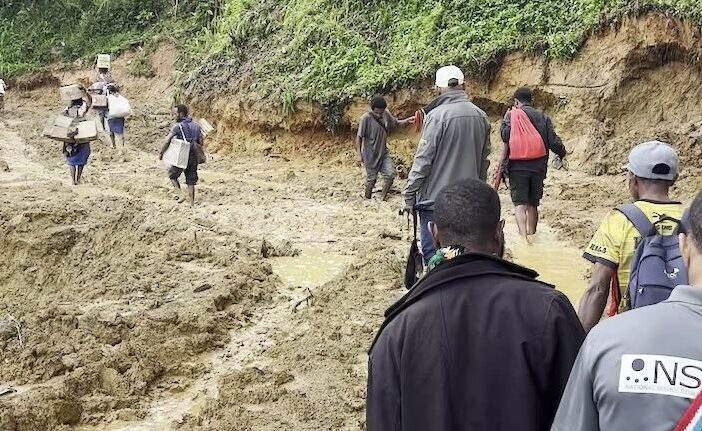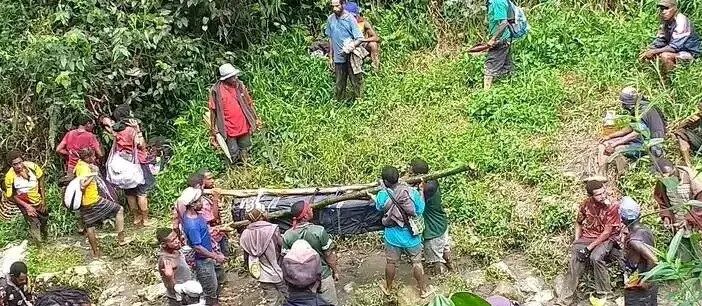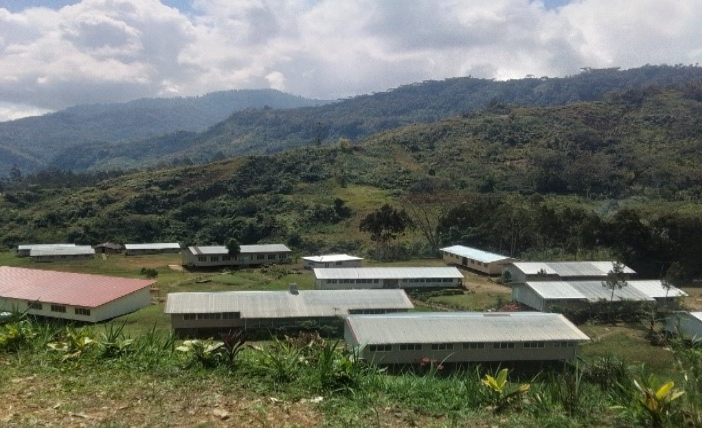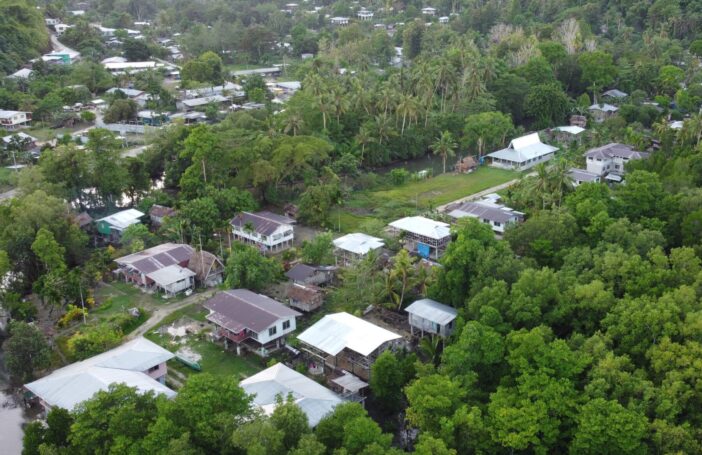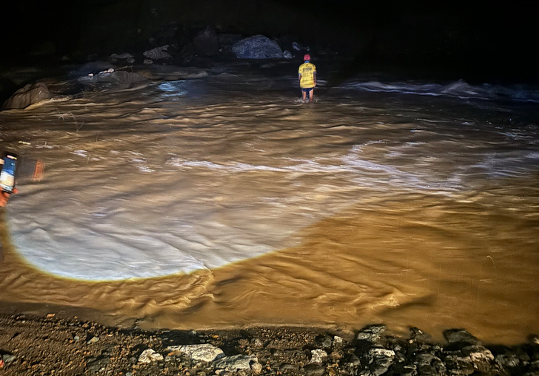
We arrived in Aseki in the dark and rain. The road had already turned to mud. The climb from Lae had taken the full day, but the new road into Kaintiba still lay ahead. Connect PNG can bring roads to communities that have never had vehicle access before. This stretch will become the highway linking Lae, and with it the Highlands, to Port Moresby. Here, at the inner edge of Anga country, what that would mean on the ground was uncertain. Could this road carry services — medicine, textbooks, law — into places outsiders rarely see and few travel through? For our team, this was not a journey we chose for its own sake. It was the only way to reach the frontline services we had come to assess.
Aseki sits on the ridge between Menyamya in Morobe Province and the descent into Gulf province. The area is known for the Anga tradition of smoked ancestral bodies kept in caves. For us, Aseki marked the end of the road we had come on and the start of the work ahead. From here the new Connect PNG road lifts toward a high mountain peak locals call Tawa or Tower. Morobe Works crews had already cut the first section so the road could drop into the Kaintiba villages below. The road is raw earth pushed through steep mountains. The weather decides what is passable. That night, the road made its terms clear.
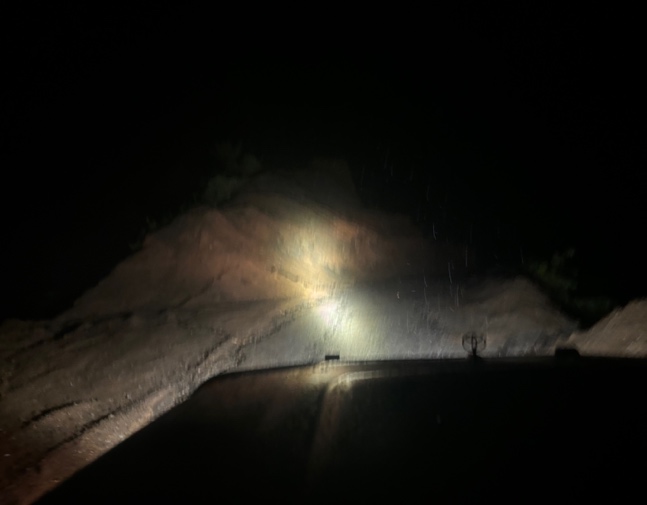
A week earlier, we tried to fly into Kaintiba from Kerema, the provincial capital of Gulf, as we had in 2012. The airstrip no longer receives regular flights. Walking from Kerema would take days, and we were warned the track is now used by drug runners from the interior. The only way in was by road, through Morobe Province.
We were returning to sites first reached in 2002 during the Public Expenditure and Service Delivery research, and again in 2012 during the Promoting Effective Public Expenditure study. This visit formed part of the National Service Delivery Trends Assessment, continuing that work over time. Together, these visits trace how public money reaches frontline services, and what it becomes in practice. In 2012, we wrote about Gulf’s “never say die” attitude. More than a decade later, that spirit remains, but the conditions have changed. The Connect PNG road draws the state closer. It shows where services hold, and where they do not. We began to see that on the road in.
Kaintiba was still hours away. Whether we reached Bema Catholic station that night was unclear. We had already discussed the possibility of stopping short if conditions worsened. At Aseki, our local police escort stepped out into the rain and called into the darkness in tokples. Someone answered. A few minutes later, a man walked out of the dark. He was composed, unhurried and known to the police.
He knew the new road. Our escort explained the situation. We needed to reach Bema. He looked at the vehicle, the rain, and the road, then said: “This is my road. We move.”
In PNG, a ten-seater Toyota Landcruiser is more than transport. It is the vehicle people trust when the road disappears. A ten-seater is the terrain tamer. With the right hands behind the wheel, it holds its ground where others stop.
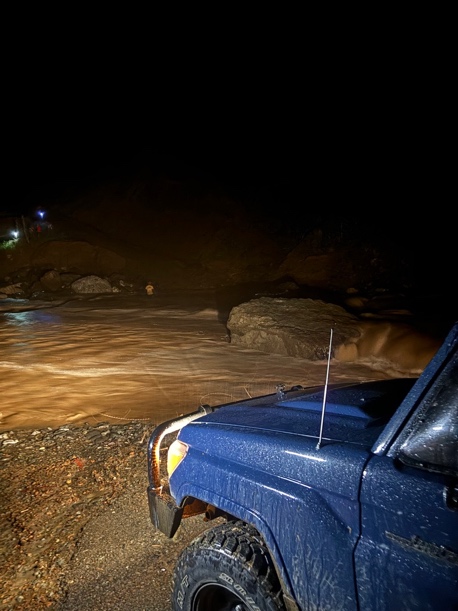
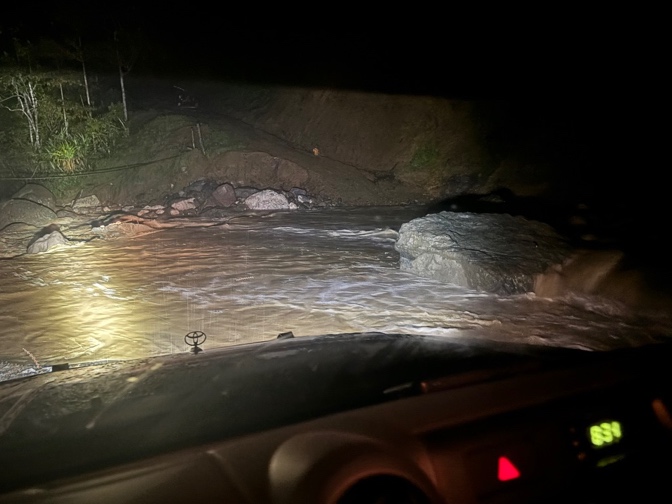
The hours ahead were careful work. Every river crossing was assessed before entry. Locals checked the current, testing the depth with branches. They watched the water and chose the safest line through. Only after that did we move.
Clip 1: We read the river with locals. The vehicle enters only after the depth is checked.
Some crossings swallowed the headlights, with water rising to the window line, the engine holding its ground against the current. Inside the cabin, no one spoke. The focus was quiet and shared.
Clip 2: Headlights disappear in the water. The engine keeps moving against the current.
Eventually, the rivers were cleared and the rain eased. The road climbed again. On the final climb into Bema, mud held the vehicle. Branches and boards went under the tyres. The mud gave way.
Clip 3: The last climb into Bema where the tyres kept slipping in the mud.
Clip 4: More from the last climb into Bema.
This stretch of Connect PNG is one of the most ambitious parts of the Marape government’s initiative. One day, this may be a busy road linking Port Moresby, Lae and the Highlands, cut through mountains that have long kept them apart. Roads can now reach these places. Whether services will follow is less certain.Local leaders described Kaintiba as “no man’s land”. Not empty, but long neglected. Kaintiba and neighbouring Kotidanga make up a large share of Kerema District, yet no one we spoke to could recall a census team, a provincial officer, or a research group visiting in years. Most said more than a decade.
At the health centre, the Officer in Charge said plainly:
“We lost two of our own. Both in their forties. They died from the same sickness we treat every day.”
“We surrender our lives to those we serve.”
This is how services survive in Anga’s interior.
Read part 2.
Jeremy Goro, Emmanuel Iga, Freddy Pupon, Buka Sari and Colin Wiltshire were the research team in Kaintiba for the PNG National Service Delivery Trends Assessment research.