Australian aid
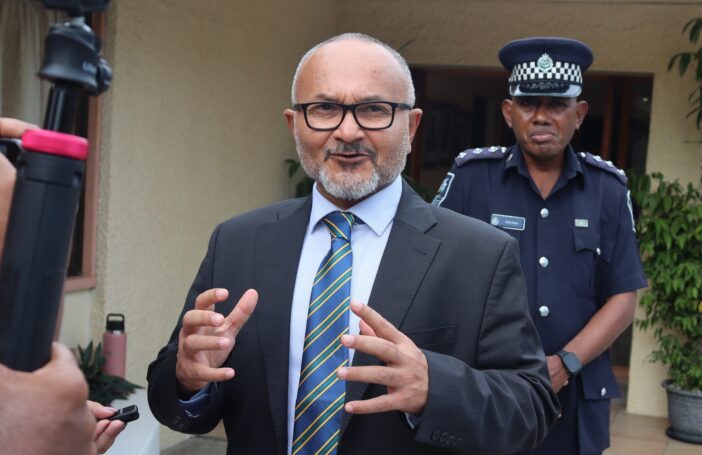
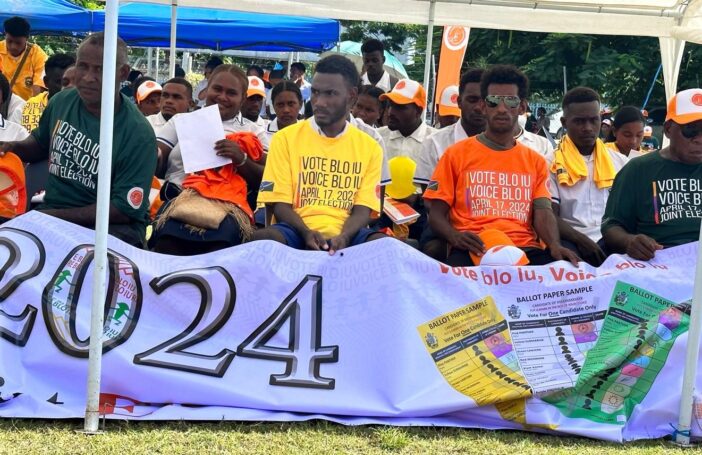
Australia will link funding of AUD980 million over ten years to the finalisation of a bilateral treaty with Solomon Islands. The proposed package reportedly includes AUD142 million over two years directed toward Prime Minister Matthew Wale’s signature free education program and AUD68 million over three years to support Solomon Islands MPs’ local development priorities. It is not clear whether the latter would come in the form of direct funding through MPs’ Constituency Development Funds (CDFs) and, if so, how this would be aligned with DFAT’s various risk and compliance requirements for aid spending. Nor is it clear whether this and the other proposed aid components would come from within the existing development assistance budget.
Former Solomon Islands prime minister Manasseh Sogavare, now opposition leader, has labelled the move “foreign involvement in sovereign political affairs”, alleging that the promised funding for MPs was used by the Wale government to avoid a threatened no-confidence vote in the parliament. Sogavare and other Solomon Islands politicians have previously linked contributions to CDFs to bilateral agreements with China and Taiwan.
Attending the Pacific Islands Forum (PIF) leaders’ meeting in Palau, Prime Minister Anthony Albanese pledged almost AUD30 million to help fund the work of the Secretariat of the Pacific Regional Environment Programme, create a new Pacific Renewable Energy Commissioner position, and support work on the region’s ocean economies.
Also attending the PIF, the UK pledged GBP10 million to the newly established Pacific Resilience Facility. The US promised USD150 million to fund port infrastructure in the Cook Islands, support regional fuel security and facilitate the return of the Peace Corps to the region.
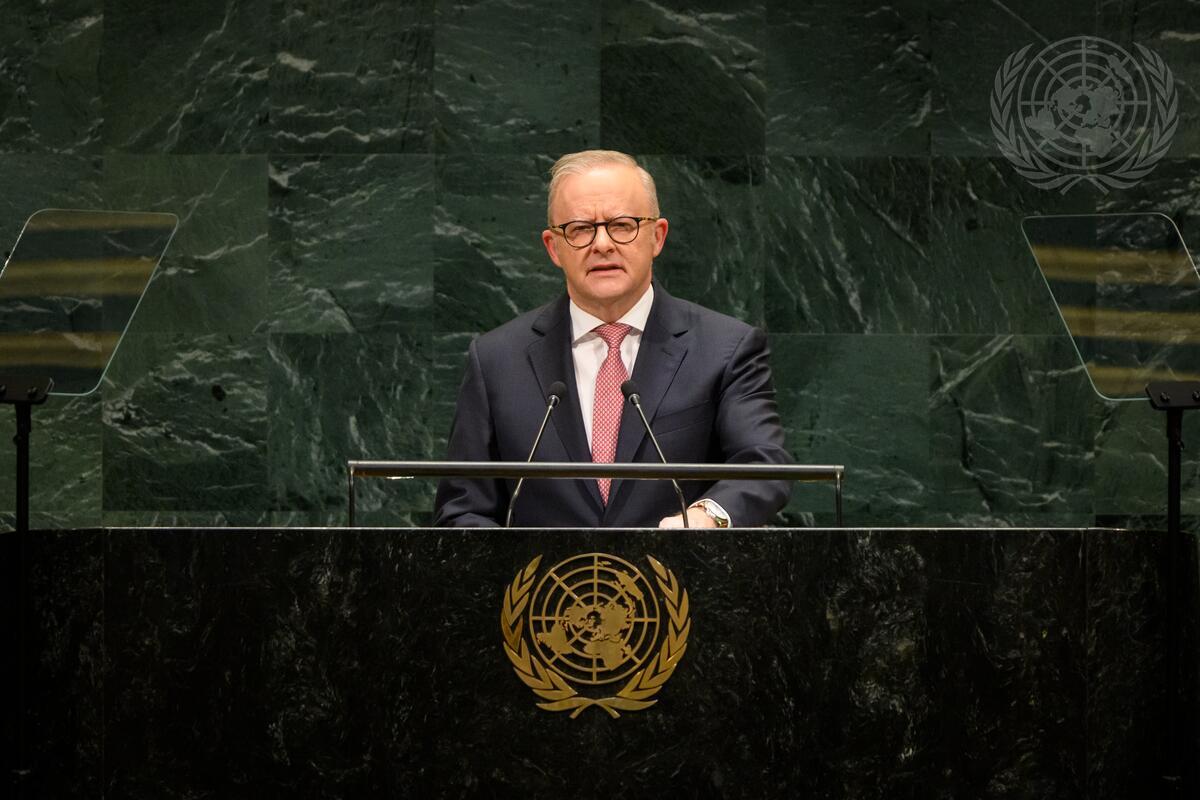
Addressing the UN General Assembly in New York, Prime Minister Albanese highlighted Australia’s role with other partner nations in leading the 2025 UN Declaration on the Protection of Humanitarian Personnel which has the support of 130 countries. Commenting on Australia’s campaign for a non-permanent UN Security Council seat for 2029-30, Albanese said the campaign would be “very modest”. To date, only Finland and Australia have nominated for the two non-permanent seats allocated to the Western Europe and Others Group.
The government has announced an additional AUD3 million in funding and the deployment of specialist drone operators to Nepal to support ongoing recovery from the August flood disaster, bringing Australia’s total contribution to date to AUD11 million. The government of Nepal estimates that reconstruction costs will total between USD4-5 billion and has requested USD20 million from a new global climate loss and damage financing facility that is already vastly over-subscribed and yet to disburse any funding.
The government has rejected a recommendation from a Senate committee inquiry that it provide regular updates to the parliament on Australia’s response to the ongoing conflict in Myanmar, including the implementation of its development and humanitarian programs.
DFAT’s latest update on the AUD4.55 billion Australian Infrastructure Financing Facility for the Pacific (AIFFP) provides a breakdown of loan and grant commitments for major projects. As at the end of 2025, the AIFFP had committed under a third of its AUD3 billion non-concessional loan finance cap, which is down from June 2024, and over two-thirds of its expanded AUD1.55 billion grant finance cap. The update does not include reporting on AIFFP’s loan and grant disbursements.
Regional and global aid
Fiji has officially declared its ongoing HIV outbreak as a “national emergency” with new statistics showing that one in 60 adults are now living with the disease and that reported cases have increased by 27% in the last year. HIV rates are also continuing to increase in Solomon Islands and PNG.
PNG has commenced the rollout of the human papillomavirus vaccine under its national immunisation program. The rollout is being supported by a range of partners, including Australia, the Vaccine Alliance (Gavi), the World Health Organization and UNICEF.
Indonesia’s finance ministry has said that it will take a controlling stake in the country’s China-financed high-speed rail line connecting Jakarta and Bandung. Repayments on the project’s debts were extended out to 80 years by Beijing’s state-backed financiers following large cost overruns during the project’s construction phase. The joint consortium that controls the rail line continues to incur losses. Commenting on the debts, Indonesia’s outgoing finance minister said, “I’m relaxed. I will probably be dead [in 80 years], so it’s not as scary as we imagined”.
China is also shaping up as a possible financier for a freight rail line in Kalimantan.
Members of the Shanghai Cooperation Organization — a grouping that includes China, India, Iran, Russia and several central Asian states — have stopped short of a final agreement to establish a new development bank. Questions around the bank’s membership, governance, capital and the location of its headquarters reportedly remain unresolved.
Meeting in the US, G20 finance ministers and central bank governors were again unable to reach consensus on a joint communique. The US chair’s statement did not explicitly mention the economic impacts of the US-led Iran War nor the Russian invasion of Ukraine, referring only to “continued disruptions to energy trade” in the Strait of Hormuz and need to resolve “ongoing wars and conflicts”. The G20 Summit is scheduled to be hosted by President Trump in December.
Norwegian People’s Aid, a humanitarian NGO, has refused US State Department funding for its demining and disarmament work citing “conditions that would require us to abandon our commitment to equality and diversity not only in programs it funds, but across all our work, including activities supported by other donors”.
Hundreds of thousands of children in Gaza have returned to in-person schooling for the first time in almost three years. UNICEF estimates that 98% of school buildings have been destroyed by the war and an estimated 22,000 students and 770 education workers have been killed since October 2023.
Books, reports, articles, podcasts
The UK-based Active Learning Network for Accountability and Performance‘s (ALNAP) latest State of the Humanitarian Sector report finds that between 2022 and 2025 “just as needs peaked, the international humanitarian system experienced its greatest financial contraction, with funding falling by 30% from a record high in 2022 as major government donors cut their support” (Figure 1). Further cuts by large humanitarian donors like the UK and Germany have been announced since 2025.
Figure 1: Change in international humanitarian assistance from top-20 public donors, 2024-2025
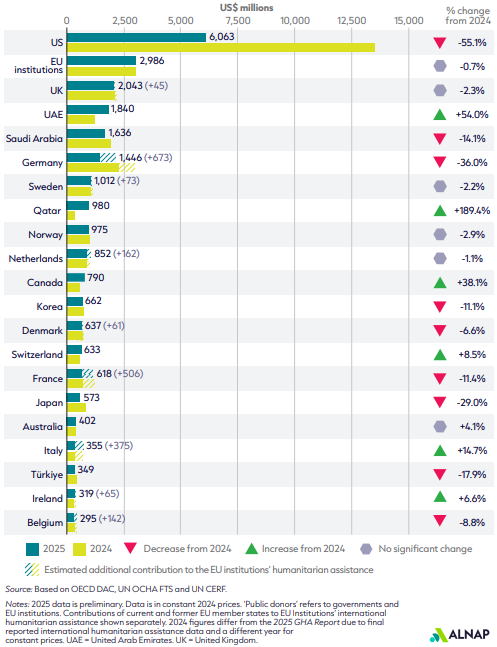
Source: ALNAP (2026), The State of the Humanitarian System 2026, London.
The report also finds that despite repeated donor commitments to change, longstanding barriers to channelling humanitarian aid through local and national actors persist — “heavy compliance requirements, limited funding flexibility, and disproportionate risks when operating in insecure areas”.
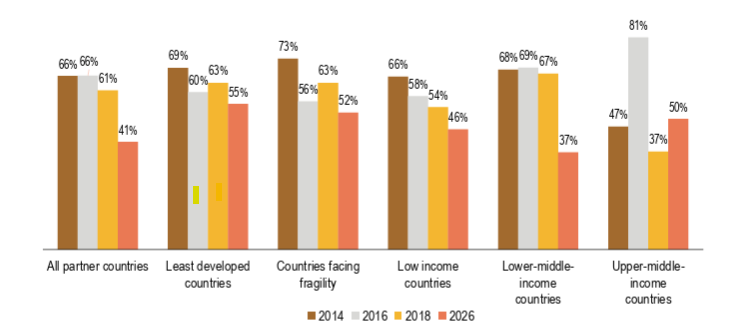
Similarly, the OECD and UN’s latest joint update on the effectiveness of development cooperation finds that despite continued donor commitments to strengthen “localisation”, “country ownership” and “partnership”, the share of aid recorded on developing countries’ national budgets declined significantly between 2014 and 2026 across almost all country categories (Figure 2).
Figure 2: Proportion of development co-operation funding recorded on national budgets by developing countries, by type of developing country
Source: OECD/UNDP (2026), Making Development Co-operation More Effective Progress Report 2026, OECD Publishing, Paris.
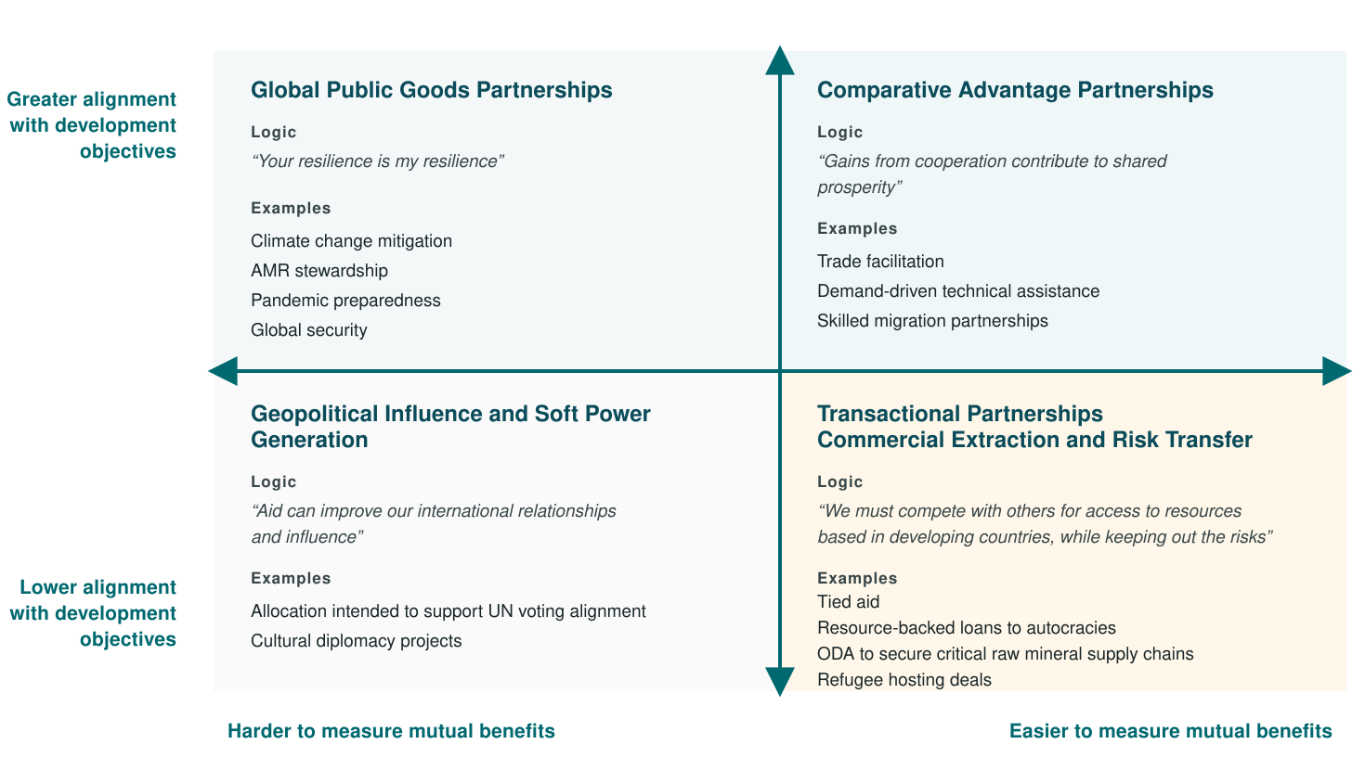
And experts from the Center for Global Development have produced a useful framework for assessing development cooperation programs that rest on claims of “mutual benefit” (Figure 3).
Figure 3: examples of “mutual benefit” in development cooperation
Source: B Chichocka and S Casadevell Bellés (2026) “When is development cooperation really mutually beneficial?“, Center for Global Development, blog, 18 September, Washington DC.